


SpaceX in the Nasdaq-100 after 15 days: funds have to buy, but there isn't much to buy
Because of SpaceX $SPCX the Nasdaq has essentially rewritten the rules. The company behind the largest IPO in history is joining the Nasdaq-100 just 15 trading days after its debut, long before most of its shares are even available for trading. That's exactly what creates a situation you don't usually see with a company this size.
Index funds have no choice. If they track the Nasdaq-100, they have to buy SpaceX and at the same time trim their other positions so the portfolio still matches the benchmark. JPMorgan estimates the passive demand tied to the inclusion at $4.3 billion, as CNBC describes, BNP Paribas goes further and, across funds tied to the index, talks about a figure approaching $8 billion.
The catch is supply. At the IPO only about 4% of the shares reached the market, the rest is held by insiders, employees and early investors who can't sell yet. So the forced buyers arrive at a moment when the float is extremely thin - which props up the price (now around $162 versus the offering price of 135) in the short term.
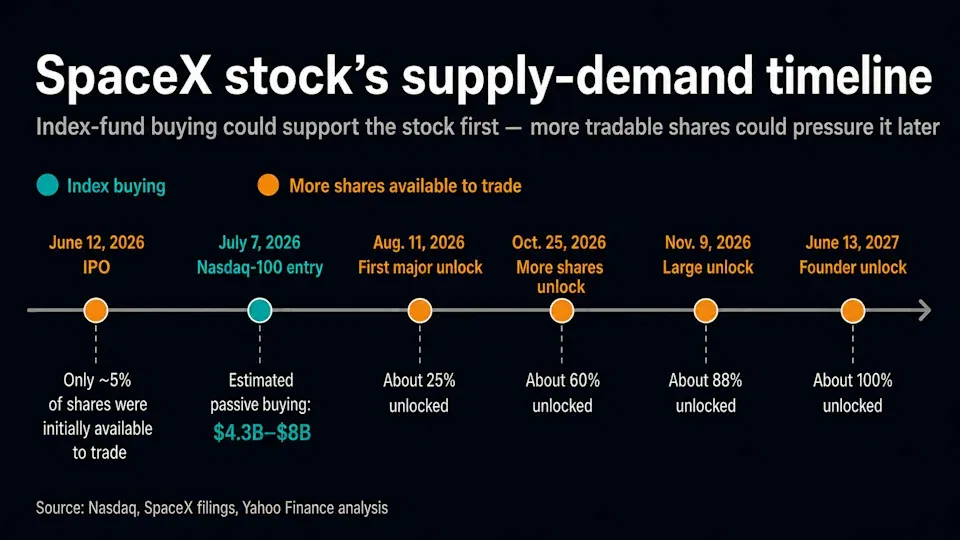
The turning point may come in August, when the first large wave of unlocked shares arrives, with another toward the end of the year. SpaceX has already shown how quickly sentiment can turn: after the IPO it jumped 50% in three days and then gave back almost all of the gain right afterward. Technically, the battle now is over the $172 to $180 range - a breakout brings the record around 200 back into play, and below $150 the chart starts to send a markedly more bearish signal.
What about you? Did you buy the IPO?


