


Joby Aviation: flying taxi leader faces a decisive year

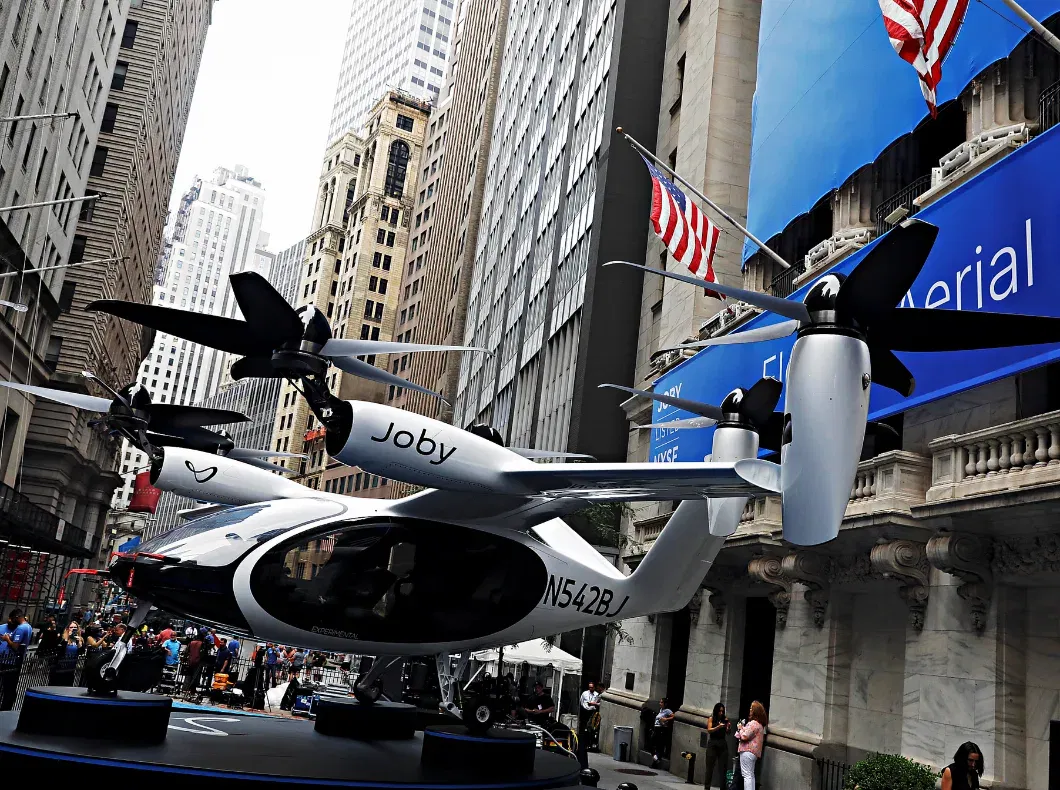
A pilotless flying taxi that lifts vertically into the sky in the middle of a city and quietly carries passengers above traffic jams sounded like a science‑fiction movie scene until recently. But right now, exactly this is starting to happen in reality. The world’s first officially approved terminal for electric flying taxis stands in Dubai, test aircraft have completed piloted flights over the city, and one particular manufacturer has reached the very end of the approval process that is meant to turn an experiment into everyday transport.
Key points
While the company is actually flying its electric aircraft, has opened the world’s first certified commercial vertiport in Dubai, and is nearing the end of certification, its stock has fallen roughly 43 percent since the start of 2026.
Joby is in the final phase of type certification with the US authority and is considered the most advanced applicant for flying‑taxi approval anywhere, yet a firm date is still missing.
In 2025 the company posted revenue of just $53 million, but a net loss of $930 million and an operating cash burn of over $500 million, with profit not expected before around 2030.
It has strong allies on board – a manufacturing alliance with Toyota, investor Uber, and agreements with Delta Air Lines and Virgin Atlantic – plus it bought the transport business Blade, which is bringing in the first real revenue.
Its cash cushion of about $2.5 billion is among the strongest in the sector, yet according to some analysts the company will need roughly another $1.5 billion of new capital by 2027.
That manufacturer is Joby Aviation, long regarded as the leader of the entire industry. The company not only designs and builds its own electric aircraft, but also plans to operate it as an air‑taxi service itself, and it has names at its side that many a competitor would envy, from Toyota to Uber to airlines. At first glance, therefore, it seems that the story investors have been waiting years for has finally reached the point where vision turns into revenue.
All the more peculiar is what the stock is doing. While operational progress is heading unequivocally upward, the share price has dropped by tens of percent since the start of the year and the company has sunk deep below its recent values. The market therefore clearly sees something other than just enthusiastic headlines about the first vertiport and piloted flights over the desert. And it is precisely this discrepancy between what the company can do in the air and how the stock exchange values it that lies at the heart of the whole consideration.
The question is therefore not whether the technology works, because the aircraft are actually flying. The question is different. How much more time and cash will elapse before a flying prototype becomes a profit‑making enterprise, who will pay for this journey, and why is the market backing away despite tangible progress? The answer lies in numbers that are nowhere near as photogenic as the flight itself.