
Artificial intelligence has fueled one of the most powerful stock market rallies of the decade — but Michael Burry, the man who famously predicted the 2008 housing crash, sees a dangerous bubble forming. The legendary investor’s latest move has sent ripples through Wall Street: his firm, Scion Asset Management, placed massive put options against two of the hottest names in AI — Nvidia and Palantir.
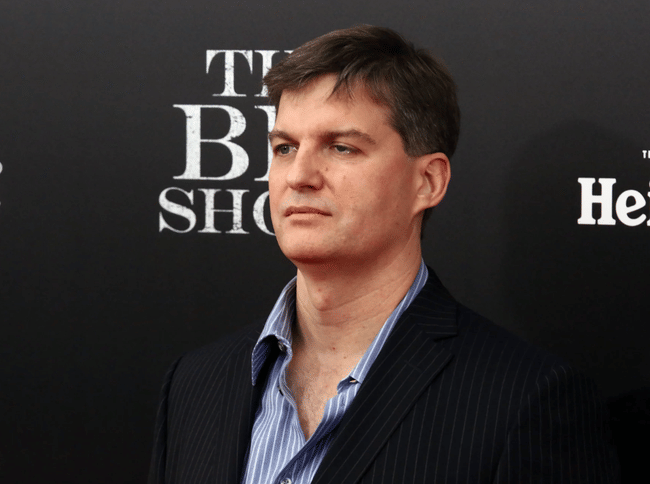
According to SEC filings, Burry bet roughly $188 million against Nvidia $NVDA and another $912 million against Palantir $PLTR, wagering that their meteoric rise is unsustainable. The timing is striking: both companies have been among 2025’s best-performing stocks, yet concerns about overheated valuations and speculative excess are beginning to echo across the tech sector once again.
The return of the sceptic
Burry, known for his somewhat apocalyptic nature, has also returned to social media after a long hiatus. On X, he posted a photo of actor Christian Bale from the film The Big Short with a caption: "Sometimes we see bubbles. Sometimes we can do something about it. And sometimes the only winning strategy is not to play." Four days later, the Scion fund announced its new positions - and the market reacted immediately.
The technology index Nasdaq Composite fell more than 2% that day, its worst day since August. S&P 500 lost 1.17%. And while such corrections are common after a long run-up, Burry's move added a symbolic dimension to the whole situation.
According to the analyst Angel Zin of CFRA Research the weakening of technology stocks was "inevitable". Both Nvidia and Palantir have grown at a meteoric pace over the past year - Palantir was even the best performing stock in the S&P 500 and is in the top five so far this year. Its stock has lost nearly 8% since the beginning of the year after announcing strong results, but it remains 150% higher than last year..
Zino adds that the revenue and earnings growth of these companies no longer matches the valuations the market is willing to pay. "Palantir has excellent numbers, but its valuation is extreme," he says. Similarly Nvidiawhose market capitalization has exceeded $3 trillion, remains emblematic of the AI euphoria, with trillions of dollars swirling into infrastructure, datacenters and startups - often within funding roundswhere tech companies invest in each other's projects.
AI: revolution or illusion?
Burry does not deny the importance of artificial intelligence with his bets, but warns against unrealistic expectations. In his view, the market has come to see AI as "the new electricity" - a force that will transform everything. But real returns have so far lagged behind the huge investments. Many companies are spending massively on GPUs, development teams and cloud services, but few are able to turn those costs into sustainable profits.
The data confirms this: according to a mid-2025 Goldman Sachs analysis, roughly 70% of publicly traded companies reporting investments in AI have yet to show a measurable impact on margins or revenue. This sets the stage for exaggerated expectations - exactly the type of overheating that Burry has recognized in the past with mortgages.
Palantir against all
Palantir's CEO Alex Karp reacted sharply to Burry's move. In an interview with CNBC, he called investors betting against the company "fools," adding that such attacks are more likely to motivate the company. "When someone shorts us, we redouble our efforts to deliver better numbers - in part to deprive them of money," he said with typical confidence.
Yet Palantir is not a typical AI firm - its data analytics software and government contracts have a real basis in fact - but the firm's valuation shows that investors expect excellence. And that tends to be the signal of overheating in the history of markets.
Who's right this time?
Burry has been both wrong and right in the past. In January 2023, he urged investors to "sell everything," only to admit he was wrong two months later. But his words carry weight - and in an environment where Nvidia and Palantir valuations have moved into realms few could have imagined just a year ago, they feel like a cold shower.
So far, the markets are reacting with a short-term correction rather than panic. But the question Burry raised remains up in the air: Is artificial intelligence a real industrial revolution - or just another bubble waiting to burst?