
The European Union is preparing a significant recalibration of its climate strategy as policymakers acknowledge that the transition away from internal combustion engines is proving more complex than originally planned. Mounting pressure from major automotive nations and manufacturers has exposed structural weaknesses in Europe’s industrial competitiveness, particularly as Chinese and U.S. rivals accelerate ahead in scale, pricing, and technology.
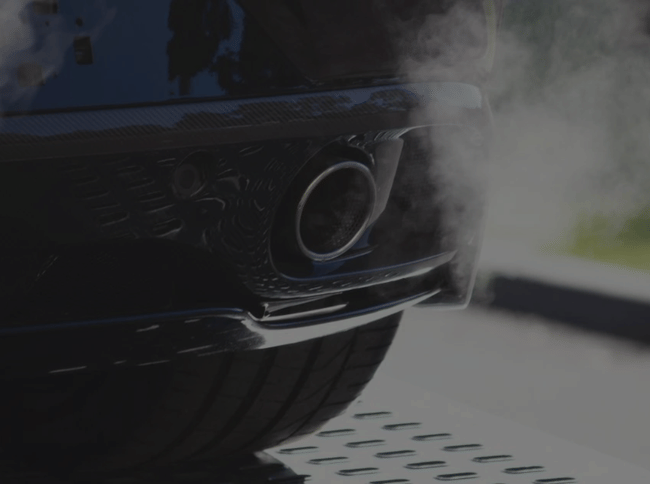
Rather than a clean ideological retreat, the shift reflects a pragmatic response to economic reality. Slower EV adoption, uneven charging infrastructure, and margin pressure on European automakers have forced Brussels to consider flexibility—whether through delays, exemptions, or broader acceptance of alternative powertrains. The green transition is not ending, but it is clearly entering a more market-driven phase.
Why the original plan stopped working
The 2023 law was intended to accelerate the transition to electromobility by allowing only new cars with zero CO₂ emissions to be sold from 2035. But reality showed that the pace of the transition was overestimated. Electric cars remain expensive, charging infrastructure is uneven across Europe and some consumers are still reluctant to buy.
In addition, European carmakers have come under pressure from cheaper Chinese manufacturers such as BYD $BY6.F or Geely $GELYY and US technology leaders such as Tesla $TSLA. This has gradually turned what was originally an environmental debate into a question of industrial survival.
Automakers vs. the EV sector: a clash of two visions
Traditional manufacturers like Volkswagen $VWA.BR or Stellantis $STLA are pushing for a relaxation of the rules arguing that strict emissions targets threaten production, employment and price competitiveness. They say it is unrealistic to rely solely on battery vehicles within a decade.
On the other side is the pure electric segment, which warns that any retreat from the internal combustion engine ban will weaken investment certainty and further open the door to Chinese dominance in electric mobility. EV manufacturers point out that the technology and infrastructure are ready - and the problem is more one of political courage.
The multi-technology path: compromise instead of prohibition
The debate is thus shifting from ideology to pragmatism. The European Commission has previously indicated openness to e-fuels and advanced biofuels, which would allow the operation of internal combustion engines with a significantly lower carbon footprint. At the same time, carmakers are pushing for a mix of technologies - battery electric cars, plug-in hybrids, extended range cars and CO₂-neutral combustion engines.
From the industry's perspective, it is not about going backwards, but about spreading the risk and time. The internal combustion engine would not disappear, it would only be gradually transformed.
What this means for investors
For investors, this is a major signal of a change of course. If the EU does indeed back down from a hard ban, traditional car companies will have time to stabilise their portfolio, monetise existing platforms and spread capital expenditure over a longer period. This can improve their cash flow and valuations.
Conversely, the pure electric segment may face greater regulatory uncertainty. At the same time, new investment space is opening up for companies focused on alternative fuels, hybrid drive components or internal combustion engine upgrades.
Europe between the US and China
The decision reflects a broader geopolitical shift. The European Union finds itself caught between the United States, which massively subsidises its domestic industry, and China, which dominates both batteries and low-cost electric cars. Climate policy is thus becoming subordinated to the issue of competitiveness and industrial security.
The internal combustion engine is not coming to an end. It is changing
Whatever the final form of the proposal, one thing is clear: the internal combustion engine will not end in Europe in 2035. Its role, technology and the way it fits into the wider transport transformation is changing. For investors, this means having to rethink the stakes across the entire automotive value chain - because the game is being played again.