
Ford’s decision to write down nearly $19.5 billion marks a turning point in the global electric vehicle narrative. What was once framed as an inevitable and rapid transition has collided with slower consumer adoption, persistent cost pressures, and an unforgiving competitive landscape. The move signals that scale alone does not guarantee success in EV manufacturing, especially when pricing power remains elusive.
More importantly, Ford’s reset is a warning shot for legacy automakers. Electrification is proving to be capital-intensive, margin-dilutive, and far less predictable than early forecasts suggested. The industry is entering a phase where discipline, hybrid strategies, and profitability matter more than headline EV targets.
Electric cars have hit market realities
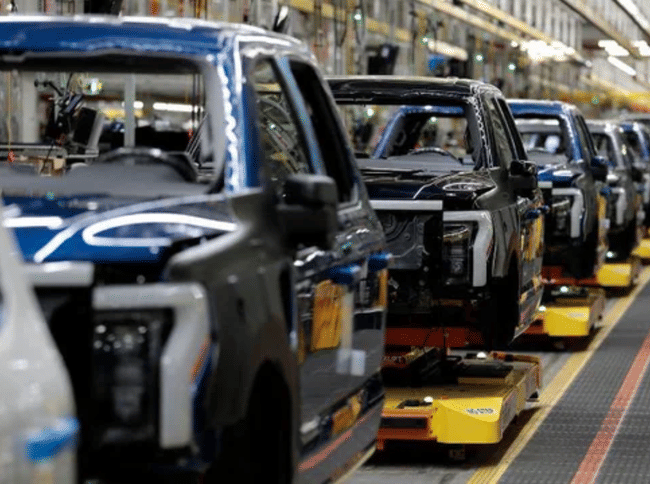
Symbolic of the end of the current generation of electric F-150 Lightning pickup truck. The model that was supposed to be proof that even the "American truck" could be electric sold well below expectations. So Ford is shifting capacity and staff back to internal combustion and hybrid versions, where margins and demand remain stable.
The problem has not been the technology itself, but a combination of factors: high prices, uncertainty around range, inadequate infrastructure and customers' willingness to pay a premium. Ford thus faces the same barrier as most traditional car companies - the mass customer does not yet want to be an early adopter.

The new course: less ideology, more pragmatism
Instead of a further escalation of investment in clean EVs comes a change in philosophy. Ford $F is betting on hybrids, EREV models and a gradual transition. Electromobility remains part of the portfolio but no longer as the only right way to go.
The main pillars of the new strategy:
- Hybrid drives as the main source of volume
- EREV solutions that combine an electric motor with a generator
- cheaper EV platforms for a wider audience
- emphasis on return on capital rather than growth at any cost
The goal is not to beat Tesla $TSLA, but to stabilize the business.
Unexpected move: Ford wants to make money on batteries, not just cars
One of the most interesting elements of the change is the decision to use battery capacity outside the automotive sector. Ford plans to produce battery energy storage for data centres, energy and industry.
This is strategically important:
- Demand for storage is growing with AI and renewables
- margins are more stable than for cars
- Ford monetises CAPEX already spent
The car company is partly becoming an energy-technology supplierwhich may reduce the cyclicality of the business in the long term.
The bill for the experiment: $19.5 billion
The price for changing course is high. Ford announced:
- Cancellation of EV projects
- asset write-downs
- restructuring of factories
- taking full control of the battery plants
Most of the costs will be short-term, which will weigh on results, but it also "clears the table". This is a classic situation for investors: pain today, less risk tomorrow.
What this means for investors
- Short-term pressure on stocks - The $19.5 billion write-down will weigh on results and sentiment. The market will view Ford as a company in a correction mode, not a growth mode.
- Positive impact on cash flow going forward - Retreat from aggressive EV strategy reduces capital expenditures and risk of further "cash burn".
- Hybrids and EREVs stabilize sales - Ford returns to segments where there is demand and margin. This increases the predictability of the business.
- Battery storage as the new bonus story - Getting into energy storage can bring less cyclical revenue outside the automotive market.
- Ford $F remains a value play - It is a bet on stability, dividends and gradual transformation, not rapid EV growth.