
After years of regulatory threats and political brinkmanship, TikTok’s future in the United States is taking a decisive turn. ByteDance has agreed to restructure its U.S. operations under a new ownership framework that places effective control in the hands of American investors. The move marks a fundamental shift away from confrontation toward compromise, easing fears of an outright ban that had loomed since the early days of the Trump administration.
For Washington, the deal offers a pragmatic solution to a complex problem: preserving a platform deeply embedded in American digital culture while reducing foreign influence over sensitive data and recommendation algorithms. For ByteDance, it represents a calculated retreat designed to protect the platform’s largest and most lucrative market. And for investors, the outcome signals a broader change in tech geopolitics—one where forced exits are replaced by structural realignments.How the deal works: TikTok's new structure in the US
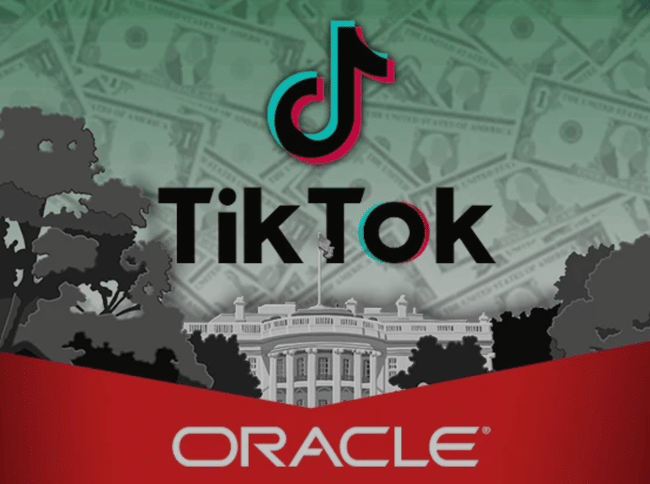
https://www.youtube.com/watch?v=D-14QybfZTYAt the heart of the deal is the creation of a new company TikTok USDS Joint Venture LLCwhich will be responsible for operating the TikTok app in the United States. This entity is to operate as a technologically and legally separate structure from the parent ByteDance.
Key parameters of the agreement:
- U.S. and global investors will own 80,1 % of the new company.
- ByteDance will retain 19,9 % Share
- Major investors include Oracle $ORCL, Silver Lake and Abu Dhabi'sMGX fund
- Oracle becomes a "trusted security partner" for the entire solution
Formally, TikTok thus ceases to be a Chinese-controlled platform in the US, at least in terms of ownership structure. This is exactly what US legislation has long required.
Algorithm as the key question: who really controls it?
The most sensitive point of the whole deal remains the algorithm - the "heart" itself TikTok. It is the recommendation system that decides what content users are shown that has been the main security argument of the app's critics.
According to a statement from TikTok's management, the new US entity has:
- full control over the protection of U.S. data
- responsibility for the security of the algorithm
- authority over content moderation and technical audits
At the same time, it remains unclear whether the algorithm was:
- fully transferred to the ownership of the new entity
- only licensed
- or remains effectively under the control of ByteDance
It is this ambiguity that has drawn criticism from some in the security community and US lawmakers, who point out that a formal change in structure does not automatically imply a real change of control.
The political dimension: Trump, China and the "American compromise"
The deal has a strong political dimension. President Donald Trump, who has sought to ban TikTok in the past, now openly supports the project and credits the app with playing a significant role in his election campaign. In doing so, the administration is sending a signal that it prefers direct bans to capital and institutional solutions.
From the US perspective, this is:
- The effort to maintain influence over the digital space
- limiting direct Chinese control without open escalation
- setting a precedent for resolving other technological disputes with China
From Beijing's perspective, the deal is a pragmatic concession - ByteDance retains a minority stake and does not lose the entire US market, which is strategically key for TikTok.
Market and investor reaction.
The markets reacted immediately. Oracle's shares strengthened significantly after the announcement of the deal, as the company finds itself in an extremely advantageous position at the intersection of cloud, regulation and geopolitics.
For investors, the deal is interesting for several reasons:
- Oracle wins long-term contract to manage and secure TikTok data in the U.S.
- TikTok itself eliminates a major regulatory risk
- a new model of "separate technology ownership" between the US and China is created
At the same time, however, it remains an open question how revenues from advertising, e-commerce and other commercial activities, which are to remain partially under ByteDance's control under the agreement, will be distributed.
What this means for the future
If the deal is completed as planned, it will close one of the longest-running chapters of the US-China technology conflict. TikTok thus becomes the first global digital product to be fractured by geopoliticsnot technology.
Going forward, this could mean:
- A precedent for other platforms with global reach
- pressure to 'localise' digital services by region
- a new way for states to regulate tech giants without outright bans
TikTok survives in the US - but no longer as a single global platform. Rather, as a symbol of a new era where data, algorithms and capital are more subject to borders than ever before.