
CES 2026 made one thing clear: Nvidia’s ambitions now extend far beyond selling faster chips. The company outlined a coherent vision in which data centers, autonomous machines, robotics, and simulation software are no longer separate domains, but interconnected layers of a single AI system.
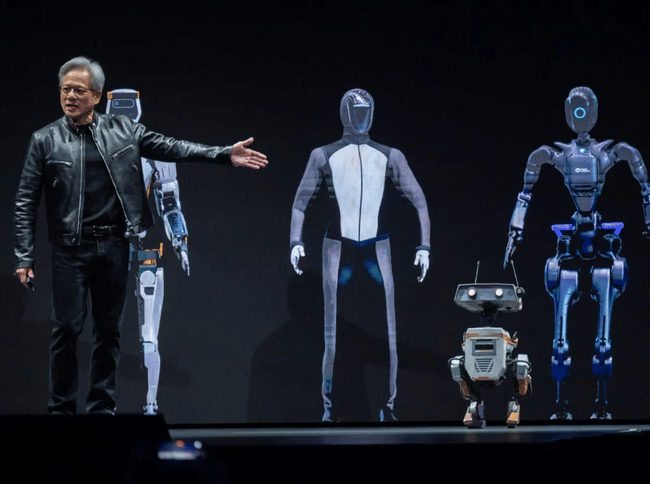
What matters for investors is the strategic direction. Nvidia is positioning itself as the architect of how artificial intelligence is built, deployed, and embodied in the physical world. By linking compute, data, and real-world interaction into one platform, the company is moving from enabling AI demand to structurally shaping it.
Ruby: the computational foundation for the next generation of AI
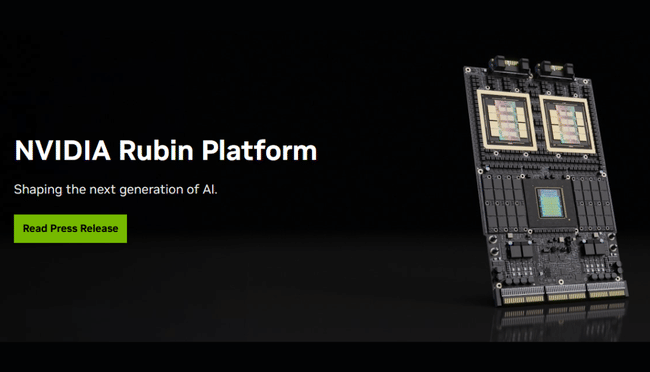
At the heart of the entire strategy is the new Rubin computing platform, which Nvidia has introduced as a direct successor to the Blackwell architecture. What's crucial is not just the increased performance, but the change in philosophy: Rubin is designed for agent-based AI, advanced reasoning and mixture-of-experts models, i.e. systems that decide for themselves which "expert" should tackle a given task.
The combination of one Vera CPU and two Rubin GPUs in a single superchip greatly increases efficiency in both training and inference. Nvidia $NVDA claims that Rubin will enable:
Reduce the number of GPUs needed to train the same models by up to four times.
Reduce inference costs by an order of magnitude due to better token handling
scale extremely large models with trillions of parameters more efficiently
But Ruby is not just a chip. It's an entire ecosystem that includes new network elements, DPUs, NVLink 6, and the ability to build massive systems like NVL72 and DGX SuperPODs. It is these systems that are now being bought by hyperscale players like Microsoft $MSFT, Google $GOOG, Amazon $AMZN and Meta $META at volumes in the tens of billions of dollars per year.
Humanoid robots: when Ruby leaves data centres
https://www.youtube.com/embed/x5lFw6nz3t0?rel=1
The fundamental shift of CES 2026 is that Nvidia has shown where it wants Ruby's computing power to go. One major area is humanoid robotics - and not as a futuristic demonstration, but as an industrial tool.
Nvidia isn't trying to make its own humanoid. It's repeating a strategy from the AI cloud: it wants to be the platform on which robots are created. He adds:
AI models capable of perception, planning and decision making
simulation environment for risk-free training
hardware and edge AI for real-time control
Companies such as Boston Dynamics, Caterpillar, LG Electronics and NEURA Robotics are using Nvidia technology to develop robots to operate in environments designed for humans - factories, warehouses, logistics or services.
The key argument is economic: a humanoid robot does not require rebuilding infrastructure. It can use the same tools, move in human space and adapt to new tasks. This significantly reduces the barriers to deployment compared to conventional industrial robotics.
Autonomous systems and physical AI
The extension of AI models for autonomous driving and so-called physical AI fits into the same strategy. Nvidia has introduced new models for self-driving vehicles that use reason chaining and context work - a similar principle to what Rubin is targeting for advanced language models.
Importantly, Nvidia is increasingly relying on virtual training. Whether it's robots or cars, the goal is to teach systems in simulation millions of scenarios, before releasing them into the real world. This reduces costs, risks and regulatory barriers.
One strategy, not three separate stories
Ruby, humanoids and autonomous systems are not separate topics. They are three layers of one strategy:
Ruby provides extreme computing power
the software stack enables training and inference
physical AI (robots, cars, machines) creates a new source of demand
In doing so, Nvidia is trying to address a key investor question: what comes after data centers? The answer is: moving AI from screens to the physical world.
Investor insight: why CES 2026 is more important than the chip itself
In the short term, Rubin is likely to maintain Nvidia's lead in AI infrastructure. But in the long term, something else is more important: Nvidia is systematically building its position as an indispensable layer for physical AI.
If humanoid robots and autonomous systems make even partial inroads in industry, logistics or services, a new investment cycle will emerge - and one that will again require:
computing power
network infrastructure
software for training and simulation
These are precisely the areas where Nvidia has the strongest market position today.