
Tensions between American politics and the country’s largest bank are resurfacing. Donald Trump has publicly accused JPMorgan Chase and its long-time CEO Jamie Dimon of politically motivated account closures following the events of January 6, threatening legal action and reviving the contentious debate around “debanking.”
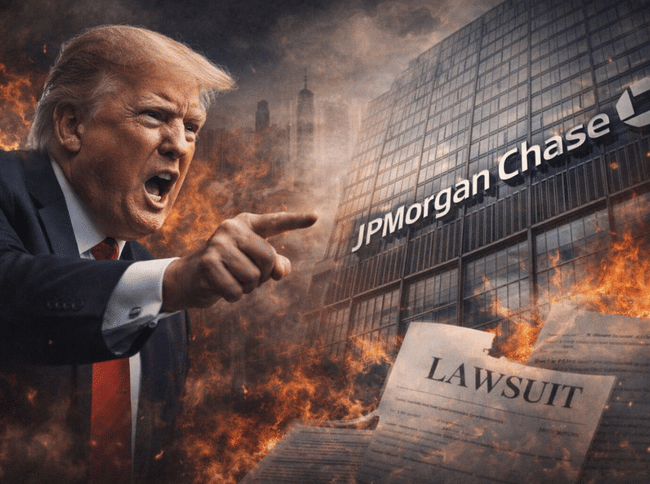
For investors, the dispute matters less for its legal merits and more for what it signals. Large banks operate at the intersection of regulation, compliance, and public scrutiny, where client decisions are rarely neutral. As political pressure intensifies, the risk is not a single lawsuit, but a broader shift toward the politicisation of banking relationships and regulatory exposure.
"Debanking" as a political weapon
The issue of debanking has gradually become a political symbol in the US. The conservative part of the political spectrum uses it as evidence of alleged discrimination by financial institutions, while banks argue for compliance with anti-money laundering rules, sanctions regimes and reputational risks.
JPMorgan $JPM finds itself in a delicate position in this context. As the largest U.S. bank with over $4 trillion in assets, it is under constant scrutiny by regulators, and any decision on client relationships has the potential to escalate into a political issue. The bank has therefore been at pains to publicly stress that it does not support closing accounts based on political or religious views, but at the same time it must respond to regulatory risks that could otherwise lead to much harsher sanctions.
What does Debanking actually mean?
Debanking refers to a situation in which a bank cancels or refuses to provide banking services to an individual or business without a traditional default type problem. Typically, it involves closing accounts, terminating a relationship with a client or refusing to open an account for reasons that are related to the risk to the bank, not the financial creditworthiness of the client.
The most common reasons for debanking tend to be:
Regulatory and legal risk (concerns about violation of laws, sanctions or money laundering)
Reputational risk (client is politically, socially or media controversial)
political or ideological sensitivity (e.g. extremist groups, controversial public figures)
Jamie Dimon between the Fed and the White House
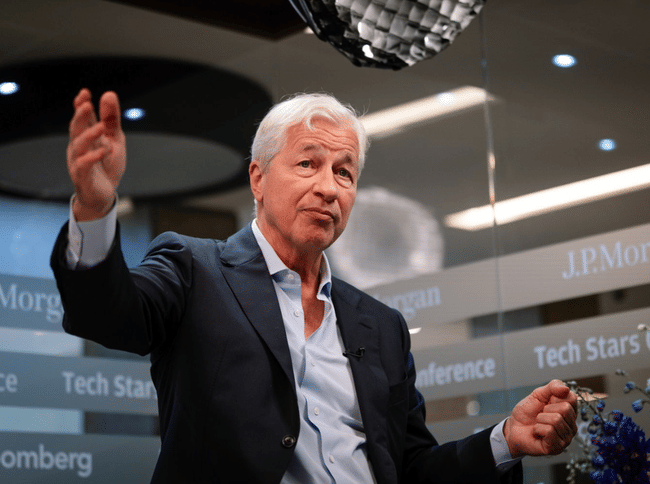
Tensions increased further after Trump responded to media speculation that Dimon was informally being considered as a possible head of the Federal Reserve. Dimon firmly rejected this and publicly stated that he would not accept the position under any circumstances. He also took the liberty of criticising efforts to weaken the Fed's independence, which he said could lead to higher inflation and interest rates in the long run.
These are the key words. Dimon has clearly come down on the side of institutional stability, which is a positive signal from the point of view of investors, but it also puts him in direct conflict with the President, who has repeatedly attacked the central bank and its leadership.
Legal risk: reality versus rhetoric
From a purely legal perspective, Trump's threat of legal action does not yet pose an immediate financial threat to JPMorgan. To be successful, a lawsuit would have to show that the bank violated the law or contractual obligations, not just that it chose to terminate a client relationship that posed an elevated risk.
For investors, however, something else is important: it is not the amount of the potential fine that matters, but precedent and reputation. If "debanking" becomes the subject of litigation or new legislation, it could:
limit banks' ability to manage reputational and regulatory risks
increase compliance costs
and create pressure to change client policies across the sector
What this means for investors
In the short term, JPMorgan remains extremely strong financially and any legal tussles would not in themselves have a material impact on profitability. Longer term, however, the dispute raises several issues that investors should not overlook:
The politicization of banking: pressure from the government may gradually change the way banks manage risk.
Regulatory uncertainty: the debanking debate may lead to new rules that will increase costs for the whole sector.
Trump-Dimon personal conflict: this makes JPMorgan a symbolic target, not just one of many banks.
Conclusion: it's not just about Trump and JPMorgan
This dispute is not an isolated episode. It is part of a broader trend of financial institutions being at the centre of political battles. For investors, the key to watch is whether it remains just a strident rhetoric or whether the "debanking" actually turns into a legal and regulatory issue with real implications for the banking business.
At the moment, JPMorgan is still more of an observer than a victim, but the risk premium associated with the political pressure on the big banks from this litigation is certainly not diminishing.