
Plans by the German carmaker Volkswagen to build an Audi plant in the United States are in serious doubt. What two years ago seemed like a logical step towards strengthening its position in a key market is now running up against the harsh realities of trade policy. According to a statement by the group's CEO(Oliver Blume), Volkswagen will put the project on hold if import tariffs on European cars are not reduced.
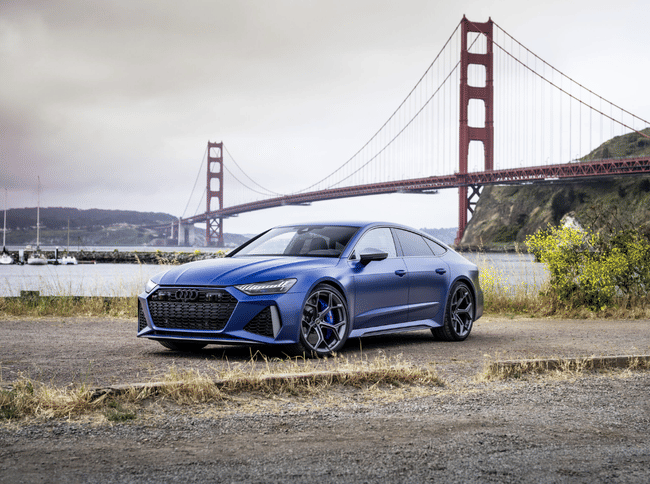
The issue comes at a time when the United States is once again becoming a less politically and economically predictable market. While the US administration previously lured European manufacturers with generous incentives, it is now tariffs that are fundamentally changing the investment math.
From incentives to barriers: how the Audi investment story has changed in the US
Audi has been considering building a production plant in the U.S. since 2023. The motivation was obvious: local production would allow it to better compete with American and Asian brands, reduce logistics costs and partially avoid import barriers. Government incentives also played a key role in making the investment economically sensible.
But this framework changed after the administration of President Donald Trump imposed new tariffs on European carmakers. The result is a situation where Volkswagen has paid €2.1 billion in tariffs in the first nine months of 2025 alone, according to Blume, which represents a direct hit to the profitability of the entire group.
From a management perspective, this is a crucial signal: an environment that was supposed to encourage investment has become one that actively penalises it.
Why Volkswagen is saying 'no' to billions more

Blume is not sparing in his statements. In his view, it is not possible to finance large-scale new investments in a situation where the basic business conditions remain uncertain. The automotive industry is extremely capital-intensive and the return on factories is calculated over decades, not terms.
Stopping the Audi project is not a question of technology or demand, but of risk. Tariffs increase unit costs, make cars less competitive, and complicate long-term planning. Without a clear and stable trade policy, an investment of billions of dollars becomes more of a bet than a strategic decision.
Volkswagen is indirectly sending a message not only to Washington, but also to other European manufacturers: without adjustments to the terms, the entire US expansion may be rethought.
The US market remains important, but the objectives are changing
Despite the harsh criticism of the tariff policy, Volkswagen is not leaving the United States. Blume speaks of a "strategy for the future" to stabilise, not dramatically expand, American business. But the fundamental change is a rethinking of ambition.
The earlier target of a 10% share of the US market is no longer realistic, according to management. Instead, the group is focusing on gradual, incremental growth, better margins and more efficient capital allocation. This means fewer large investments and more optimization of the existing presence.
For Audi, this may mean a continuation of the import model, higher prices for end customers and slower expansion in the electric car segment, where competition from the US and Asia is growing significantly.
Wider implications: it's not just about Volkswagen
Volkswagen's $VOW3.DE situation is a symptom of a wider problem. If the tariffs remain in place, other European carmakers considering US production may do likewise. Ironically, this would undermine the original goal of tariff policy: to attract industry and jobs back to the US.
From an investment perspective, this is an important signal. While the US car market remains huge, its attractiveness to foreign capital is declining. Uncertainty around trade policy increases the discount rate at which companies assess the return on projects - and some investments simply stop paying off.
Impact on Volkswagen and Audi shares in the context of competition
For Volkswagen shares, the possible freeze of the US Audi plant is primarily a signal of a strategic slowdown, not an immediate financial shock. What the market is currently addressing is not the absence of a new factory per se, but the fact that Volkswagen is openly admitting that the US environment is no longer predictable for investment. This increases the discount that investors have been applying to VW stock for a long time - mainly because of the group's complex structure, weaker brand profitability and slower adaptation to local markets.
Audi, meanwhile, is a key premium leg of the group. If it remains without local production in the US, its price competitiveness against brands that already produce directly in the US worsens. This limits Audi's margin potential in the very market where premium cars have long been most profitable. As a result, investors may come to see Audi as more of a 'European premium brand with limited global reach', which has a negative impact on the valuation of the group as a whole.
In comparison, BMW's $BMW.DE position is significantly stronger. BMW has a long-established manufacturing presence in South Carolina, from where it exports SUVs around the world. This makes it much less vulnerable to US tariffs, with a better cost structure and greater pricing flexibility. The market rewards BMW with more stable margins and the fact that the company does not have to make investment decisions contingent on political concessions. In the eyes of investors, BMW thus confirms its status as "the best-managed German car company".
Tesla $TSLA remains the biggest competitor. It not only manufactures in the US, but also benefits structurally from US industrial and trade policy. Any tariffs on imports of European or Chinese cars improve its relative position without having to change strategy. From an investor's point of view, Tesla acts as a 'hedge against trade wars' - exactly the opposite of Volkswagen.
What to watch next
Future developments will depend on several key factors:
whether tariffs will be adjusted or eased.
how the next administration behaves after a possible change in political representation
and whether Volkswagen will find alternative ways to boost US production without a new Audi plant
For investors, it's a reminder that geopolitics and trade policy play as important a role today as technology or demand. And that even a global giant like Volkswagen may be forced to take its foot off the gas if the rules of the game change too quickly.