
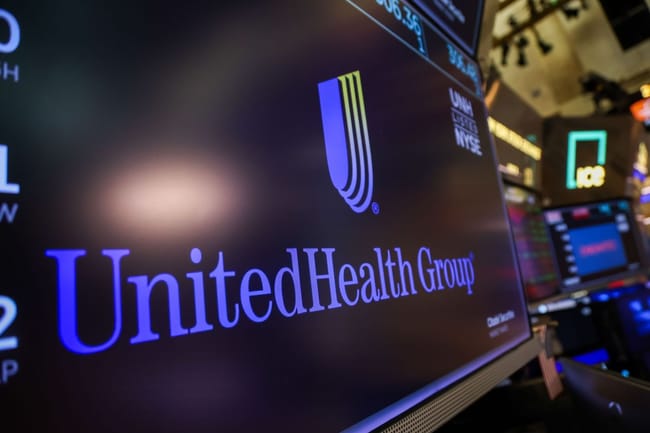
Healthcare sector stocks have slid sharply in recent sessions, with UnitedHealth Group $UNH and other leading insurers suffering heavy losses after disappointing earnings and policy developments weighed on investor sentiment. UnitedHealth’s shares plunged after the company forecast a decline in revenue for the year ahead the first annual revenue contraction in decades and flagged ongoing cost pressures within its core Medicare Advantage business. This negative surprise has rippled through the sector, dragging down fellow insurers such as $HUM and $CVS.
Earnings Shortfalls and Shifting Guidance Shake Confidence
Investors were also unsettled by UnitedHealth’s fourth-quarter results, which revealed softer revenue and a cautious outlook that fell short of Wall Street expectations. Although adjusted earnings per share ticked slightly above consensus, the forecast for full-year revenue came in below projections and included substantial restructuring and cyberattack charges. Analysts noted that the combination of muted top-line performance and a conservative outlook triggered margin concerns that extend across the group of major health insurers.
This earnings shock followed broader sector dynamics earlier in the year, including firms revising guidance due to rising medical costs and higher utilization of healthcare services in Medicare Advantage plans. Those headwinds have eroded confidence and contributed to outsized price swings relative to more defensive sectors.
Policy Developments Compound Sell-Off
Healthcare insurers also faced additional pressure from proposed changes to federal reimbursement policies. The Centers for Medicare and Medicaid Services (CMS) announced a nearly flat rate increase for 2027 Medicare Advantage payments far lower than expected by analysts which disappointed markets reliant on robust reimbursement growth to support future earnings . This proposed adjustment, which included revisions to diagnostic coding rules, translates into roughly $700 million in projected industry revenue versus the much larger gains seen in prior years, exacerbating uncertainty about future profitability.
This policy surprise also weighed on stocks beyond UnitedHealth. Peers including Humana, CVS Health and Elevance Health experienced double-digit declines as investors reassessed valuations in light of changing payment dynamics. The market response illustrates how sensitive healthcare insurers are to federal policy adjustments that influence reimbursement rates and risk scoring formulas.
Sectorwide Ripples and Broader Market Impact
The weakness in major insurance stocks has not been isolated. Market indexes such as the Dow Jones Industrial Average saw significant downward pressure due to UnitedHealth’s weighting and sharp declines in its share price, which concluded one session down nearly 20 percent. Other parts of the healthcare sector including pharmacy benefit managers and healthcare providers have also felt the knock-on effects, with defensive ETF exposures to healthcare stocks falling as investors reduce risk.
Dates earlier in the sell-off also saw major moves. UnitedHealth shares experienced some of their worst performance in decades after guidance revisions, triggering sharp drawdowns not only in the company but in associated ETFs and sector indexes. This divergence between healthcare stocks and broader equity benchmarks highlights the sector’s unique challenges amid rising costs and regulatory scrutiny.
Drivers of the Decline and Structural Headwinds
Several structural issues are contributing to this downturn. Analysts have cited rising medical costs, especially within Medicare Advantage plans, which are more expensive to administer than expected, squeezing margins and pressuring projected growth. Regulatory scrutiny, including investigations into billing practices and billing risk adjustment methodologies, has added to uncertainty. Leadership changes and large restructuring charges have also unsettled investors looking for consistency at the top of major insurers.
What Investors Should Watch Next
Looking ahead, investors will monitor key factors that could influence a turnaround or further declines in healthcare equities. These include clarity on Medicare Advantage rate setting and reimbursement rules, updated guidance from insurers on cost trends, and signals from policy makers regarding healthcare spending and regulation. Should reimbursement rates improve or trend back toward prior expectations, sentiment could stabilize, easing some of the downward pressure.
However, if medical cost inflation remains high and political scrutiny intensifies, healthcare stocks could continue to lag broader markets. For now, the sell-off in UnitedHealth and its peers serves as a reminder that even historically defensive sectors are vulnerable to concentrated policy and operational risk.