
This week, the tech world is buzzing as Nvidia unveiled its latest generation of artificial intelligence processors, designed to power everything from large language model training to real-time inference at massive scale. Unlike incremental refreshes of the past, this launch signals a strategic inflection point not just for Nvidia but for the entire AI compute ecosystem. According to initial reporting and previews shared via Bloomberg and CNBC, Nvidia’s newest chips dramatically increase performance while focusing on energy efficiency, positioning the company to maintain hard-earned leadership in AI silicon. Early market reaction has already lifted Nvidia shares and boosted chip sector sentiment.
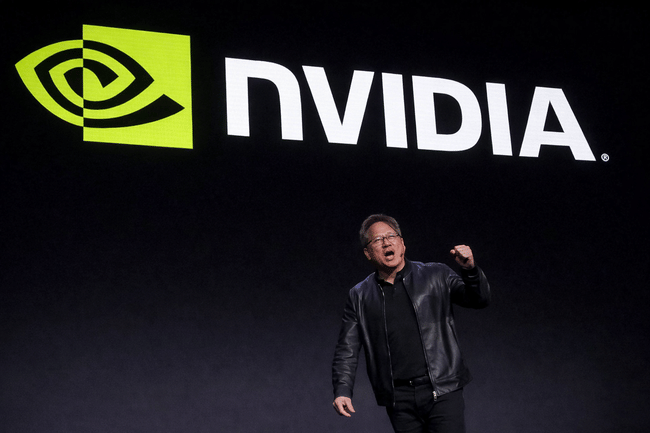
Why This Chip Launch Matters: The AI Arms Race Intensifies
Nvidia’s newest architecture isn’t just about faster math cycles it is built to handle extremely large models, complex multi-tenant workloads, and integrated AI services at scale. As demand for generative AI grows across industries from healthcare diagnostics to autonomous systems and financial services the need for specialized hardware is exploding. Nvidia’s strategy of coupling hardware with comprehensive software support (including CUDA, cuDNN, and AI model libraries) creates an ecosystem that competitors find hard to replicate. Analysts cited in Fortune and Reuters suggest this gives Nvidia a durable competitive advantage as tech companies and cloud providers expand AI deployments.
Cloud Demand: A Tailwind for Nvidia’s Compute Engines
One of the most interesting aspects of this launch is the symbiotic relationship between Nvidia’s chips and cloud demand. Major cloud providers including Amazon Web Services, Microsoft Azure, and Google Cloud are already scaling their AI instances built on $NVDA silicon. Nvidia’s latest processors are designed to drive the next wave of cloud-based AI services, enabling customers to train larger models faster and at lower relative cost. This trend not only deepens Nvidia’s revenue streams but also ties its growth directly into the growth curve of cloud AI adoption.
The Enterprise AI Boom and Nvidia’s Addressable Market Expansion
At the enterprise level, corporations across sectors are investing heavily in AI transformation. Nvidia’s new chips come at a moment when companies are shifting from proof-of-concept experiments to full production AI deployments in customer service automation, predictive analytics, cybersecurity, and more. The expanded addressable market means Nvidia is no longer just selling processors — it’s selling infrastructure-level capability. Analysts featured on MarketWatch note that enterprises are increasingly prioritizing AI compute ROI over traditional IT budgeting, which boosts demand for high-performance GPU clusters.
Competition and Strategic Positioning: Can Anyone Catch Nvidia?
Despite its dominance, Nvidia isn’t without challengers. AMD, Intel, and emerging players like Graphcore and Cerebras are vying for niche segments of AI compute. Meanwhile, some cloud providers are exploring custom silicon designs to reduce dependency on external vendors. However, Nvidia’s entrenched ecosystem anchored by widespread developer adoption and robust toolchains makes it exceptionally difficult for competitors to gain meaningful market share quickly. Research at semiconductor industry forums confirms that transitioning workloads to alternative hardware often requires significant engineering effort.
Tariffs, Trade Policy, and Geopolitics: External Forces Shaping Nvidia’s Path
Nvidia’s landscape is shaped not just by raw technology but by global trade policy as well. As U.S.–China tariff dynamics and export control regimes evolve, Nvidia’s ability to access key markets and supply chain components is influenced by policy decisions. Recent export controls on advanced chips have restricted certain high-end GPUs from entering China, which can create both challenges and opportunities for Nvidia’s global sales mix. While some analysts worry about lost markets, others see opportunities as geopolitical shifts spur domestic chip strategies in other regions.
Market Reaction: Stocks, Valuations, and Investor Sentiment
The market’s response to Nvidia’s chip announcement has been striking. Shares rose on launch news, signaling investor confidence in continued revenue expansion and structural dominance in AI workloads. Yet the valuation conversation remains nuanced. Growth is priced aggressively into Nvidia’s multiples, and some institutional investors express caution around execution risk and capital intensity. Retail traders, conversely, often view Nvidia’s AI leadership as a once-in-a-generation growth story, driving robust trading activity and sustained interest in derivatives markets tied to Nvidia stock. (Read Barron’s analysis on market sentiment.
Looking Forward: Nvidia’s Role in the Next Decade of AI Innovation
In summary, Nvidia’s latest chip release isn’t just another product cycle it’s a strategic landmark that underscores the central role of high-performance silicon in the age of artificial intelligence. With industry demand outpacing supply, cloud integration solidifying recurring revenue streams, and global adoption accelerating, Nvidia’s technology could define the economics of AI compute for years. For stock blog readers and tech investors alike, this week’s developments highlight how hardware innovation and ecosystem dominance remain competitive differentiators even in a software-driven era. As Nvidia navigates competitive pressure, geopolitical headwinds, and extraordinary growth opportunities, it stands at the intersection of AI’s most transformative trends and the market is watching closely.