
Paramount Skydance is set to take over Warner Bros. Discovery is not taking a loan from a big American bank, but is going to the Persian Gulf to raise the money. According to the Wall Street Journal, three sovereign funds from Saudi Arabia, Qatar and Abu Dhabi have pledged nearly $24 billion in fresh capital to help finance the roughly $110 billion deal, including debt. It's one of the largest deals ever bought by the region's sovereign funds in Hollywood, and a move that immediately sparked a political backlash in the US.
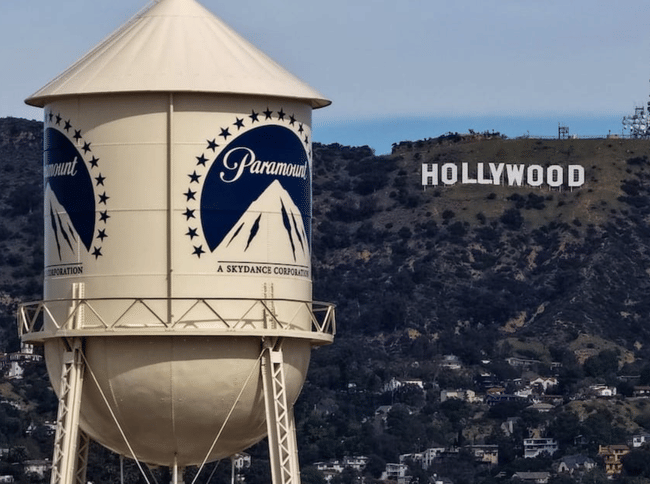
For David Ellison, the head of Paramount Skydance and son of Oracle co-founder Larry Ellison, this solves the fundamental problem with the whole deal: a company with a market capitalisation of around $12bn is buying a business valued at more than $110bn including debt, in a package that includes an obligation to pay Netflix $2.8bn in severance for the cancellation of a previous deal. Without a massive injection of outside capital, it simply wouldn't have worked.
How the Gulf money is put together
According to leaks so far, the structure is supposed to look like this: the Saudi Public Investment Fund (PIF) will supply about $10 billion, the Qatar Investment Authority and the Abu Dhabi entity L'imad Holding the remaining roughly $14 billion. This money will be added to the equity of Ellison and RedBird Capital and debt financing from banks and private-equity partners such as Apollo Global Management.
Crucially, the Arab funds are to be formally non-principal. As structured, they enter with no voting rights, no board seats and no direct control over the combined firm. This structure has two functions:
reassure regulators that this is not about "selling CNN to the Saudis" or about direct control of the media house
and to allow the funds to share in the proceeds of a potentially very profitable consolidation of global media brands
Paramount therefore argues that the transaction should not come under the sharp scrutiny of the Committee on Foreign Investment(CFIUS) because foreign capital does not receive corporate control.
The political reaction: money yes, influence no - really?
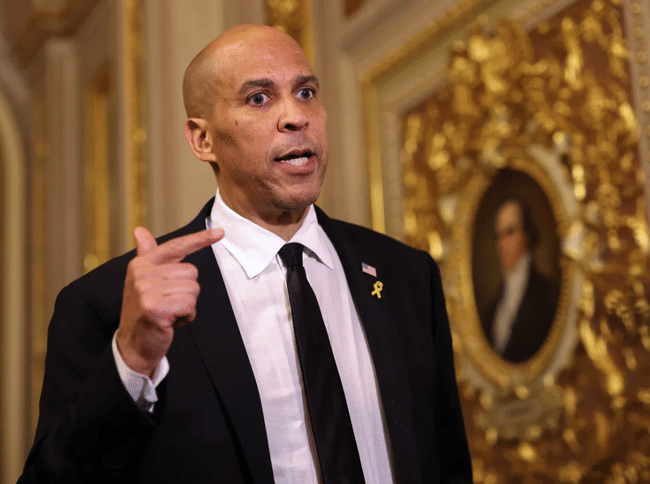
Seven Democratic senators, led by Cory Booker, have already sent a letter to the FCC chairman expressing "deep concern" that billions of dollars from PIF, QIA and Abu Dhabi investors are helping to fund the takeover of Warner Bros. Discovery $WBD, including such brands as CNN and HBO.
Their argument is twofold:
Even without formal voting rights, there is room for some power - through joint projects, content financing, future investments
and the combination of capital from the Middle East region and from China (for example, through Tencent for other media assets) creates complex, sometimes competitive relationships that deserve more than a "superficial review"
The Senators therefore call for a thorough examination of whether such structured participation increases the risk that foreign governments may be indirectly involved in influencing editorial decisions and business priorities in sensitive areas - for example, just for CNN's news coverage or content licensing for markets where they have political interests.
As a result, even if the legal structure formally envisages 'money without a voice', the regulatory and political level may not agree. The FCC, DOJ, and potentially CFIUS will be under pressure to look at the scheme not only from an antitrust perspective, but also from a national security perspective.
Regulatory hurdles and timeline
The DOJ has already begun issuing subpoenas as part of its antitrust review of the transaction. That's standard for a deal of this size, but it suggests that everything won't just run on a fast track. Antitrust experts don't expect a ban yet - the combination of Paramount and WBD will indeed create a very strong player, but the market is still fragmented (Netflix $NFLX, Disney $DIS, Amazon $AMZN, Comcast $CMCSA, others).
Still, it's to be expected:
A long approval process
possible conditions (sale of some assets, commitments to continue open licensing of content, etc.)
the involvement of European and Canadian regulators, who have already begun informally gathering input
Time is running out: the deal provides for a "ticking fee" - if the deal does not close by September 30, 2026, WBD shareholders will start collecting $0.25 per share for each additional quarter of waiting, which means a total of about $650 million per quarter extra for the buying party. Paramount thus faces a double whammy: convincing regulators and getting it done in time so the deal doesn't start eating into its own costs.
Why Paramount is doing this in the first place - and what the GCC investors are doing about it
From Paramount's perspective, the motivation is clear: to acquire Warner Bros. movie studios, the HBO and Max brands, CNN news and other assets in a single transaction and create a media group that can match Netflix or Disney in size and catalog. In an environment where streaming services are under margin pressure and where the price of talent and sports rights is rising, consolidating the library and brands makes strategic sense.
For Gulf funds, it is in turn part of a broader strategy to diversify the economy beyond oil and buy the global brands they bring:
long-term cash flow from content, licensing and rights
the opportunity to develop their own film and entertainment projects at home (studios, festivals, production)
a reputation as a player who co-determines what the world watches
Just because they don't formally have voting rights doesn't mean they won't have a voice at the table when it comes to major co-productions, filming in the region or strategic investments.