
Micron is stepping out of the commodity DRAM shadow and into the critical path of Nvidia’s next AI platform. The company has moved its 36 GB, 12‑high HBM4 stacks into high‑volume production in Q1 2026, shipping volume parts for Nvidia’s Vera Rubin accelerators with pin speeds above 11 Gb/s and bandwidth north of 2.8 TB/s per stack – roughly 2.3× the throughput of Micron’s own HBM3E at the same capacity and more than 20% better power efficiency. That combination of higher bandwidth and lower energy per bit is exactly what large‑context, multimodal AI models need as they push more parameters and tokens through each GPU without blowing out power budgets in hyperscale data centers.
Just as important as the specs is the scarcity. Micron says its entire high‑bandwidth memory output for calendar 2026 is already fully committed under long‑term, binding contracts, locking in all of next year’s HBM4 supply and most of its premium HBM capacity before many AI projects have even left the whiteboard. That “sold‑out before it ships” status gives Micron unusually high revenue visibility in what used to be a brutally cyclical business and underlines a simple reality of the current AI infrastructure race: for at least the next couple of years, it’s not just who designs the fastest GPU that matters, but who can actually secure the stacks of ultra‑fast memory to feed it.
HBM4: 36 GB today, 48 GB tomorrow and 2.8 TB/s per stack
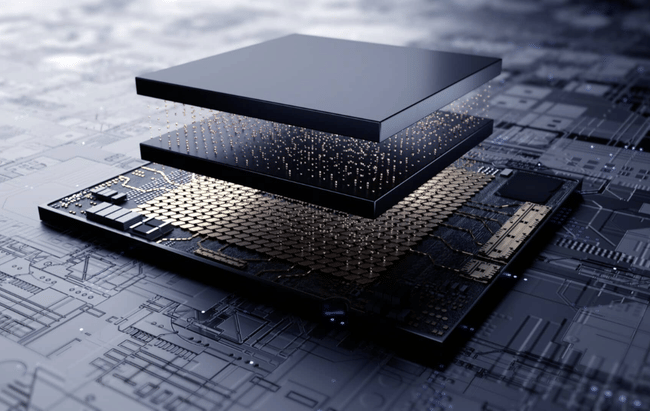
The HBM4 36GB 12-Hi (12H) is built on Micron's 1-beta DRAM process and uses a wider 2048-bit bus that enables throughput greater than 2.8 TB/s per stack at pin rates above 11 Gbps. Compared to the previous generation HBM3E in the same 36GB 12H configuration, this is roughly a 2.3X increase in throughput and more than 20% improvement in power efficiency according to Micron's internal $MU metrics.
In addition to the 36GB variant, the company also demonstrated a 16-layer HBM4 48GB 16H version, which it is already shipping in sample form to select customers. Adding four layers means a roughly 33% increase in capacity per HBM "location" over the 36GB 12H while maintaining high throughput, which is key for accelerators looking to maximize both memory space for giant models and data access speed.
In terms of the Vera Rubin architecture, Micron points out that it is the first manufacturer to simultaneously mass-produce a trio of key components for this platform: the HBM4 36GB 12H, the Micron 9650 PCIe Gen6 SSD, and the 192GB SOCAMM2 module. This positions the company as a "full-stack" memory and storage partner for the next wave of GPU clusters.
Micron shares at record highs
The market took the HBM4 news as confirmation that Micron is one of the major structural winners of the AI cycle. Following the announcement of a mass production HBM4 36GB 12H for Nvidia at GTC 2026, the stock jumped and has continued to rise since. Then on Tuesday, the share price reached $465.
But even more important than the short-term price movement is the outlook. Micron confirmed that all HBM production for the full calendar year 2026 has already been pre-sold under long-term contracts, giving the company unprecedented revenue and margin visibility. Analyst commentary points out that such a sell-through means a de facto locked-in business for 22 months ahead, including pricing and volumes, and moves the memory segment from its traditionally cyclical phase to one where demand for AI memory exceeds supply over the long term.
By some estimates, Micron plans to invest up to around $200 billion in expanding DRAM and HBM capacity over the next few years to capture long-term demand for AI infrastructure. Some analysis suggests that with HBM capacity fully sold, gross margin around 68% and EPS over $8 in fiscal 2026, the stock may still be conservatively valued given its growth profile.
Tough fight: SK Hynix, Samsung and the race for HBM4
But Micron is not alone in the HBM4 race. SK Hynix in particular dominates the market, followed by Samsung $SSNLF, and the HBM4 market for Nvidia $NVDA is quickly turning into a fierce battle for every wafer. According to UBS and South Korean media, SK Hynix could capture around 70% of the HBM4 supply share for NVIDIA's Rubin platform by 2026, with Micron and Samsung as smaller but fast-growing players.
Counterpoint Research's data for the HBM market in the third quarter of 2025 shows SK Hynix holding around 53-55% of the market, Samsung 27-35% and Micron around 11%. Samsung, meanwhile, has announced plans to increase HBM capacity by around 47-50% by the end of 2026, to around 250k wafers per month, up from around 170k currently, and highlighted that customers praise the competitiveness of performance and power efficiency in its HBM4 chips.
According to TweakTown and other sources, Nvidia has asked all of its key suppliers - SK Hynix, Samsung and Micron - to supply 16-Hi HBM4 chips by the fourth quarter of 2026, with mass shipments of 12-Hi HBM4 to kick off in early 2026. The outcome of this selection will affect how HBM4 shares are split between the three firms in the second half of the decade.
What's next?
Micron is already looking beyond the HBM4 horizon. The company said it plans to sample HBM4E in the second half of 2026, a generation that should further increase both throughput and power efficiency and push the standard for GPU and AI accelerators even higher. In parallel, development of 16-Hi HBM4 modules is accelerating - as indicated by requested sample shipments by the end of 2026 - which will push stack capacities further above today's 48GB.
In addition to HBM, Micron is also expanding its portfolio for AI infrastructure:
Micron 9650 PCIe Gen6 SSD - the first PCIe 6.0 datacenter SSD in volume production, with up to twice the sequential read performance of Gen5, 100% better efficiency per watt, and optimization for agent-based AI workloads on NVIDIA BlueField-4 STX architecture.
192GB SOCAMM2 - A low-power, high-density server memory module designed for AI inference and other data-intensive applications, also now in volume production.
This combination of HBM4, high-end SSDs and server modules means Micron is profiling itself as a key supplier of not just "raw memory" but the entire memory and storage tier of AI datacenters, from GPU modules to storage.