
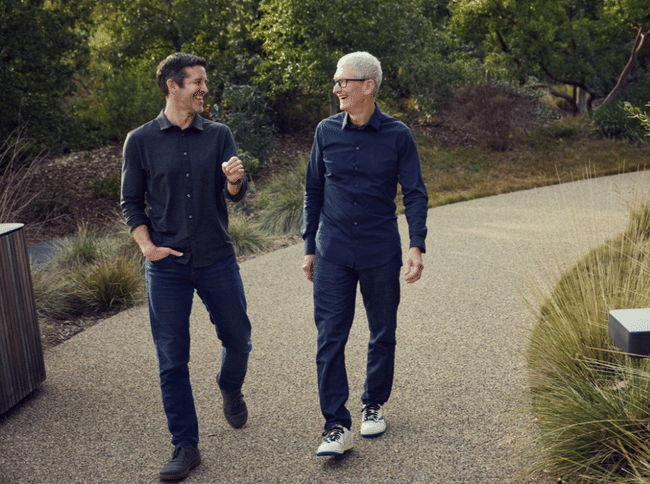
Tim Cook is stepping away from day‑to‑day management after more than 13 years as Apple’s CEO, moving into the role of executive chairman of the board and handing the reins to John Ternus, the long‑time head of hardware engineering who has overseen iPhone, iPad and Mac development since 2013. Ternus, 50, has spent over two decades at Apple and is widely seen inside the company as the continuity candidate: calm, operations‑savvy and deeply embedded in Apple’s global supply chain – a leadership profile much closer to Cook’s managerial style than to Steve Jobs’ product‑vision persona.
What investors will focus on now are the problems he inherits, not just his résumé. Analysts highlight a cluster of strategic challenges that will define his tenure: closing Apple’s perceived AI gap versus rivals after years of under‑investment, navigating rising regulatory and geopolitical pressure around China and antitrust actions, stabilising iPhone unit and revenue growth in a saturated premium market, finding the next meaningful hardware or services growth driver after mixed results with devices like Vision Pro, and managing a broader leadership transition while keeping Apple’s massive capital‑return programme attractive to shareholders. In other words, Ternus takes over a company that is still hugely profitable but faces harder questions about where the next wave of growth comes from than it did at the start of the Cook era – and his first years as CEO will be judged on whether he can turn Apple’s hardware and silicon strengths into a more convincing AI‑first, post‑iPhone story.
Tim Cook is handing over a company in extraordinary shape: Apple $AAPL is worth about three trillion dollars, has a strong balance sheet and a giant base of loyal users, but it also faces slowing growth, pressure in artificial intelligence and more regulation. So John Ternus, who has worked his way up at Apple from engineer to hardware chief to new CEO, will not just "stay the course" but must take the company through another major change in direction.
Unlike Steve Jobs - the visionary - and Tim Cook, the supply chain master, Ternus is first and foremost a product and technical details man. That's why his first few years at the helm of Apple will be defined mainly by three areas: how quickly Apple can catch up with its AI backlog, how it keeps key products attractive, and how it handles pressure from politicians and regulators on both sides of the Atlantic.
What are the challenges ahead?
Catching up with the AI backlog
The biggest issue is artificial intelligence. While Microsoft $MSFT, Google $GOOG, Meta $META or Nvidia $NVDA are investing tens of billions of dollars in generative AI, Apple is seen as lagging behind in this wave. The company shelved a major update to its Siri voice assistant last year and had to reshuffle the leadership of its AI division, with a veteran from Google replacing the old boss.
Apple plans to launch a new version of Siri this year built on Google's Gemini model, which is expected to vastly improve natural speech understanding and context work. Ternus will need to ensure that "Apple Intelligence" appears across products in a way that makes sense to everyday users - that is, that AI actually saves time and improves how you work with your iPhone, Mac and other devices, not just impresses with technical demonstrations.
Dependence on China and tense geopolitics
Another big challenge is the supply chain. Apple has long manufactured much of its products in China, and this makes it vulnerable to trade disputes, tariffs and political tensions. President Donald Trump's administration has kept in place some tariffs on Chinese goods and added new export controls on chips and technology, complicating electronics makers' plans.
Cook has begun shifting some production to India, Vietnam and other countries, and Ternus will need to continue that strategy without compromising quality and production capacity. The challenge is to diversify more into final assembly of products, but also protect the development and production of key components - such as Apple's own Silicon chips - that are at the heart of the company's competitive advantage.
Keeping iPhone as Apple's engine
The iPhone still accounts for the largest portion of Apple's revenue and is a major gateway to other products and services. But sales growth has slowed in recent years, leaving investors wondering where the next wave of demand will come from. The iPhone 17 may be selling well, but Apple faces pressure to deliver more compelling news than just camera and performance improvements.
As the "hardware" boss, Ternus has a good understanding of what else can be wrung out of the iPhone - whether it's better AI integration, longer battery life, new types of photo/video features, or better connectivity with other products. His challenge will be to strike a balance between technological innovation and margins so that Apple doesn't overspend while losing its appeal to users who today often replace their phones after three or more years.
New products and the "next big thing" after the iPhone
Apple has been searching for several years for the next big product that could even partially build on the success of the iPhone. AirPods and the Apple Watch are successful, but they are far from replacing the iPhone in sales and profits. The Apple Vision Pro headset was supposed to be a ticket to the world of spatial computing, but so far it is more of an expensive device for enthusiasts and professionals.
Ternus will have to decide how much further to bet on Vision Pro and similar projects and whether it makes sense to accelerate the development of other forms of wearable devices, such as smart glasses. At the same time, he's expected to have a clearer plan for where the company will take the iPad, Mac and other devices so that it doesn't appear fragmented and so that users know exactly what each product is for.
Reassure investors and keep the stock attractive
Finally, there's shareholder relations. Tim Cook has been very successful in the eyes of Wall Street - under his leadership, Apple's market value has increased manifold, the company has generated huge free cash flow, paid dividends and bought back its own stock in large numbers. John Ternus comes at a time when growth is not so obvious, competition in AI is growing, and some investors are nervous that Apple has "slept through" the new technology wave.
The new CEO will need to present a compelling story - how he plans to jumpstart innovation, where he will grow in the coming years, and how he will maintain high profitability in the process. His first big moves, whether on AI, products or working with capital, will set the tone for the "John Ternus era" and show whether Apple can remain one of the major winners in the tech sector in a post-Tim Cook era.