
For the first time since 2021, Amazon is pulling its flagship shopping event out of July, scheduling Prime Day for June 23–26, 2026. The shift is more than a calendar tweak: with Prime Day now landing in Q2, Amazon's management has set a revenue outlook of $194–199 billion for the quarter - well ahead of the analyst consensus of $188.86 billion. The backdrop, however, is tricky. U.S. tariffs on Chinese imports are squeezing seller margins and limiting discount depth, while consumer confidence stateside remains fragile.
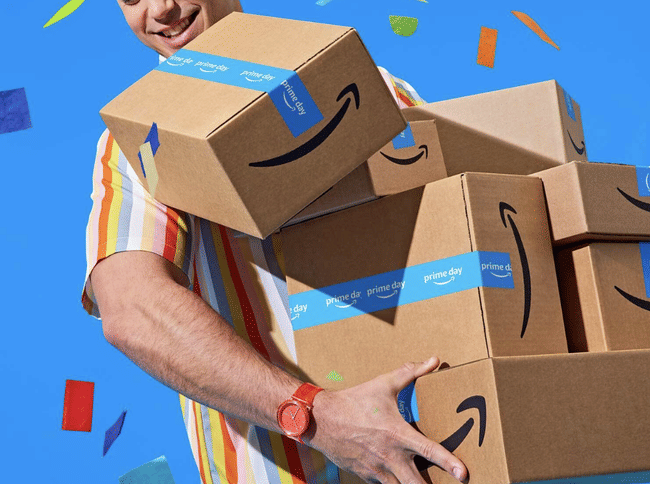
Prime Day as an accounting tool
Moving Prime Day from July to June has a direct impact on the structure of Amazon's quarterly results $AMZN. Historically, the event has always fallen in Q3 - so sales, ad revenue and operating results have all been reflected in Q3. In 2026, Amazon is moving the event to Q2 for the first time, significantly boosting the outlook for the current quarter. Management explicitly stated when releasing the Q2 outlook that the outlook assumes Prime Day will take place in Q2 in most major markets. This is a deliberate strategic choice: event-related advertising spend and attributable sales now fall in the same quarter, reinforcing the readability of Q2 results for investors.
Event size in numbers
Before assessing what moving Prime Day to Q2 means for Amazon's results, it is useful to put the event in context. Total spending by U.S. consumers online during the four-day Prime Day 2025 event reached an estimated $24.1 billion, according to Adobe Analytics data - a figure that includes all of U.S. online retail, not just Amazon. By comparison, Black Friday 2024 generated $10.8 billion in online spending, so Prime Day was equivalent in spending scale to more than two Black Fridays. The eMarketer forecast for Prime Day 2026 projects Amazon's direct sales at $15.67 billion, which would represent 7 percent year-over-year growth while maintaining the four-day format.
Advertising as a driver of Prime Day
Prime Day isn't just a sales event, it 's one of the most significant catalysts for advertising revenue throughout the year. In the first quarter of 2026, Amazon's ad revenue grew 24 percent year-over-year to $17.24 billion, above the analyst consensus of $16.87 billion. Meanwhile, advertising is one of the most profitable segments of the entire group - with higher margins than e-commerce alone. Moving Prime Day to Q2 means that the event's advertising momentum (sponsored products, display campaigns and brand spend on visibility) will fall in the same quarter as the revenue it generates for the first time. The data from Prime Day 2025 shows just how big that boost is: paid search accounted for 28.5 percent of revenue during the event and grew 5.6 percent year-over-year, while partner networks and influencers accounted for 19.9 percent with 15 percent growth.
Customs are a drag on discounts
U.S. tariffs on Chinese imports are squeezing margins and changing discounting strategies - products that previously could offer a 30 percent discount now only allow about 15 percent in many categories. Meanwhile, the depth of discounts directly affects conversion rates and overall sales volume, so lower discounts can affect the resulting GMV (gross merchandise value sold). Paradoxically, however, the same duties also act as a motivator: a Tinuiti survey showed that nearly 45 percent of Prime members who planned to shop on Prime Day 2025 indicated an interest in buying inventory before the next price increase. Thus, the two forces work in tandem - lower discounts dampen the impulse to buy, but fear of future price increases buying interest.
June changes the summer sales calendar
Walmart $WMT and Target $TGT have so far anchored their competitive promotions in July, where they benefit from the attention that Prime Day generates around them. Amazon's June deadline presents them with an awkward choice: stay in July and let Amazon reach customers first, or adapt and disrupt their own established promotional rhythm. Plus, Amazon gets a strategic head start on the back-to-school season - spending on school supplies, electronics, and student equipment typically increases from mid-June. The logistics infrastructure also plays into this momentum: Amazon delivered over a billion packages in 2026 in same-day or next-day delivery and now offers 1-3 hour delivery on over 90,000 products in the US. Speed of delivery is one of the main arguments for retaining Prime membership.
Q1 results as a basis for outlook
Amazon reportedQ1 2026 earnings per share of $2.78 versus consensus of $1.64 and revenue of $181.52 billion, above the estimate of $177.30 billion. The AWS cloud segment grew 28 percent year-over-year to $37.59 billion, the fastest growth rate in more than three years.The Q2 revenue outlook of $194-199 billion is well above the original consensus of $188.86 billion, with Prime Day being one of the key assumptions on which management is basing this estimate. It remains an open question whether the June date will actually support the outlook or whether the lower depth of discounts due to tariffs will undermine the Q2 results.
What to watch next
Q2 2026 results: Prime Day will impact Q2 for the first time; key will be whether online sales beat estimates and how the advertising segment performs
Depth of discounts and GMV: tariffs limit retailer margins to 15% vs. earlier 30%; if average discount falls below threshold that triggers impulse buys, total spending will fall short of eMarketer's $15.67 billion forecast
Competitive response from Walmart and Target: both players have so far anchored summer promotions in July - the shift in decision whether to accommodate the shift will directly impact Amazon's share of summer spending
Q2 ad revenue: Prime Day is the largest single event for Amazon Ads; the year-over-year growth trend following the quarterly shift is an indicator of the overall health of the ad business