


🚨 One of the biggest AI deals of the year. The US and South Korea are significantly strengthening cooperation in the semiconductor sector.
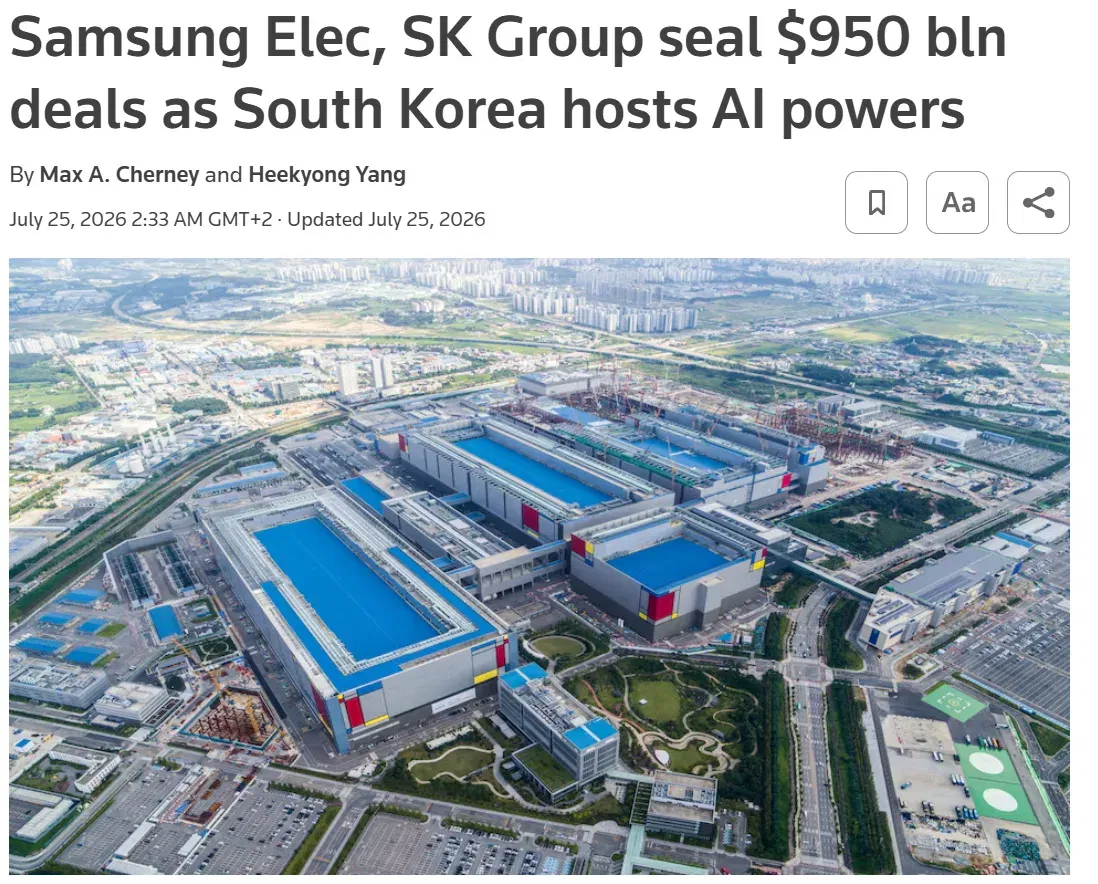
Last week, strategic agreements were announced between South Korean companies SK Group (including $SKHY SK Hynix) and $005930.KS Samsung Electronics and the largest US tech firms. The total declared value of these partnerships reaches approximately USD 950 billion
----------------------How are the deals split?---------------------------
📌 SK Group (including SK Hynix) – approximately USD 750 billion
SK Group announced long-term partnerships with US tech companies worth a total of approximately USD 750 billion. This package also includes a strategic collaboration with Nvidia $NVDA , which alone exceeds USD 500 billion. This amount is already included in the total USD 750 billion – so it is not an additional separate deal.
The cooperation focuses primarily on long-term supplies of HBM (High Bandwidth Memory), which are essential for Nvidia's most powerful AI accelerators. The companies will also work closely on the development and optimization of future HBM generations for new AI chips and on building AI data centers.
The chairman of SK Group also confirmed expanded cooperation with OpenAI and Anthropic, but the specific financial terms of these partnerships have not yet been disclosed.
📌 Samsung Electronics – approximately USD 200 billion
Samsung Electronics announced a memorandum of cooperation with Broadcom $AVGO worth up to USD 200 billion by 2030. The partnership includes memory supplies, AI chip manufacturing (foundry) and advanced chip packaging.
-----------------------Why is this news important?---------------------------------
In my view, the most important thing is not the USD 950 billion figure itself.
Much more important is what these partnerships say about the future of the entire AI sector. The largest US tech companies want to secure long-term access to key components without which the further development of artificial intelligence cannot happen.
HBM memory is now among the most important components of AI servers. The most powerful AI accelerators cannot function without it, which is why there is huge demand. SK Hynix is currently the technology leader in this area, while Samsung is trying to gradually strengthen its position.
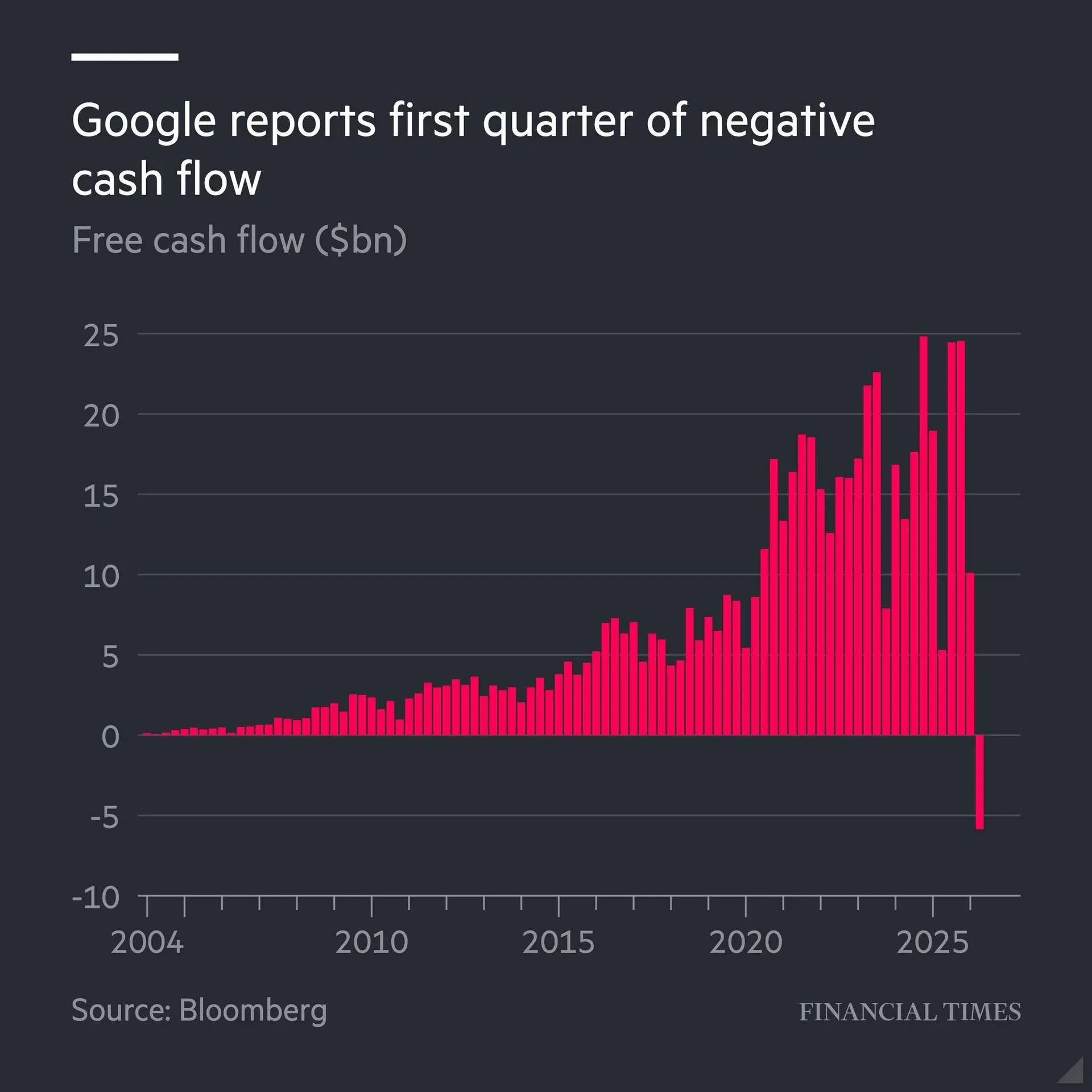
Moreover, these deals come at a time when the largest tech companies are not slowing down their AI investments. On the contrary – for example, Alphabet this year reported negative free cash flow for the first time due to record investments in data centers and AI infrastructure. This, in my opinion, clearly shows that demand for computing power and HBM memory remains exceptionally strong.
--------------So why are SK Hynix and Samsung shares falling?------------------------
Despite this being very positive news, shares of both companies have weakened in recent days.
The reason, in my opinion, is not the deal itself. Investors are currently focused mainly on short-term concerns about growing competition from Chinese memory manufacturers, possible normalization of DRAM prices, or simply profit-taking after the very strong growth of the entire semiconductor sector.
--------------------------------My view------------------------------------------
For me, this is one of the most important pieces of news in recent months for the entire semiconductor sector.
It's not just about the high declared value of the partnership. Above all, it confirms that the world's largest AI companies are counting on South Korean manufacturers as their long-term partners in building AI infrastructure.
If companies like Alphabet $GOOG , Microsoft $MSFT , Meta $META , Amazon $AMZN or OpenAI continue with record investments in data centers, demand for HBM memory will also grow. And it is from this trend that companies like SK Hynix and Samsung Electronics can benefit significantly in the coming years.