


5 companies with net margins above 75%

Net margin over 75%. Of every koruna or dollar of revenue, after deducting all costs, depreciation, interest, and taxes, more than three-quarters remains as net profit. For comparison, at a solid industrial company the threshold for a quality business is already around 10 to 15%, and at software giants like Microsoft or Adobe net margin typically ranges between 25 and 35%. A number above 75% therefore acts as a signal of an exceptionally high-quality, almost unrivalled business.
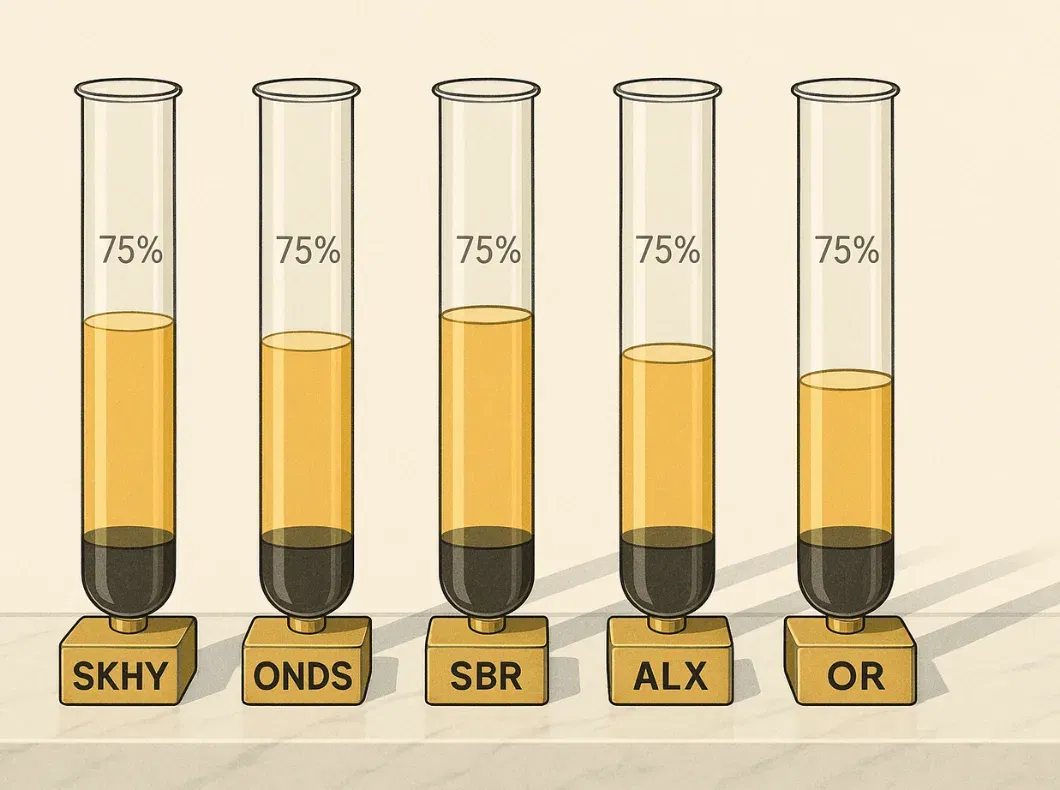
Key points
Of the 5 companies with net margins above 75%, only two of them actually follow the same path to that number. The rest are cycle, accounting, or a single transaction.
A high net margin does not necessarily mean the condition has been met. At one company the filter only works over a different period or calculation, and on an annual basis it does not really reach the threshold.
Operating margin can be extraordinary and yet net profit is artificially boosted still further. A one-off investment gain can double the number without being related to the core business.
A single asset sale can temporarily push the margin to a level that ordinary operations never reach. Actual repeatable profitability is then often only a third.
Only where a company does not bear costs associated with physical production or mining is a high margin truly structural and sustainable. Everywhere else it is worth checking where exactly it comes from.
But such a high margin can arise in at least five different ways, and only some of them have anything to do with business quality. One company can profit from a cyclical demand boom, when the price of its product has detached from costs for a few quarters. Another can operate on a model where it actually produces nothing and mines nothing, merely collecting a share of someone else's production. At a third, high net profit can come from a single accounting item that does not repeat in the next quarter. And at a fourth, the margin can genuinely be evidence of an extraordinary competitive advantage that rivals have been unable to copy for years.
Exactly that applies to the five companies that passed the current net margin over 75% screener. On the surface they are linked by a single number. Beneath the surface there are five completely different businesses, from a trillion-dollar technology giant to a tiny fast-growing name to a passive trust that itself produces nothing and mines nothing, where the same metric means something different each time.
What does net margin actually say?
Net margin is a simple ratio: net profit divided by revenue. A company with revenue of 100 million dollars and net profit of 76 million dollars has a net margin of 76%, meaning that out of every dollar of revenue, after deducting all costs, depreciation, interest, and taxes, 76 cents remain. Such a high number is practically a rarity outside technology giants with dominant positions or companies without real operating costs.
The problem arises the moment net margin is used as the only filter. Between revenue and net profit there are several intermediate stages, and each says something different:
Margin | What it deducts on top of revenue | What it primarily indicates |
|---|---|---|
Gross margin | direct costs of producing or acquiring goods | basic product profitability |
Operating margin | + wages, marketing, depreciation and other operating costs | profitability of the company's main activity |
EBITDA margin | depreciation and amortization are added back | comparison of capital-intensive businesses |
Net margin | + interest, taxes, extraordinary and one-off items | final accounting result |
FCF margin | + investments in operations and development (capex) | how much of revenue is actually converted into cash |
That is why a company whose operating margin is deeply negative can make it into a net margin over 75% screener. It only takes a one-off gain, whether from an asset sale, revaluation of a financial instrument, or a tax break, to outweigh the loss from ordinary operations. Net profit then looks impressive even though the company is losing money in its main business. This exact mechanism appears more than once in the five companies examined.