


Broadcom promised billions, shares fell | Weekend Intelligence #28

September started cautiously. Tensions in the Middle East sent markets into defensive mode on Monday, and weaker US jobs data ultimately closed the week in the red. In Europe, the rate debate turned one hundred eighty degrees as inflation accelerated again. And a US court ruled that Google does not have to sell its advertising exchange—a relief few at Alphabet expected.
Weekend Intelligence is an exclusive analytical report published once a week and available only to Bulios Black members. Members receive it automatically every Saturday morning by email—in full length, including specific scenarios and market implications. Permanent access to the report is obtained through Bulios Black membership.
Key points
Why Broadcom lost after results despite 86% revenue growth and a promise of AI chip orders
What the acceleration of eurozone inflation to 3.3 percent means for the ECB's tone a week before the meeting
Why the judge rejected the split of Google's advertising division and what she ordered instead
How the start of September knocked down US indices and what jobs data did to the market
Which of the three tracked stocks trade with the largest deviation from fair price
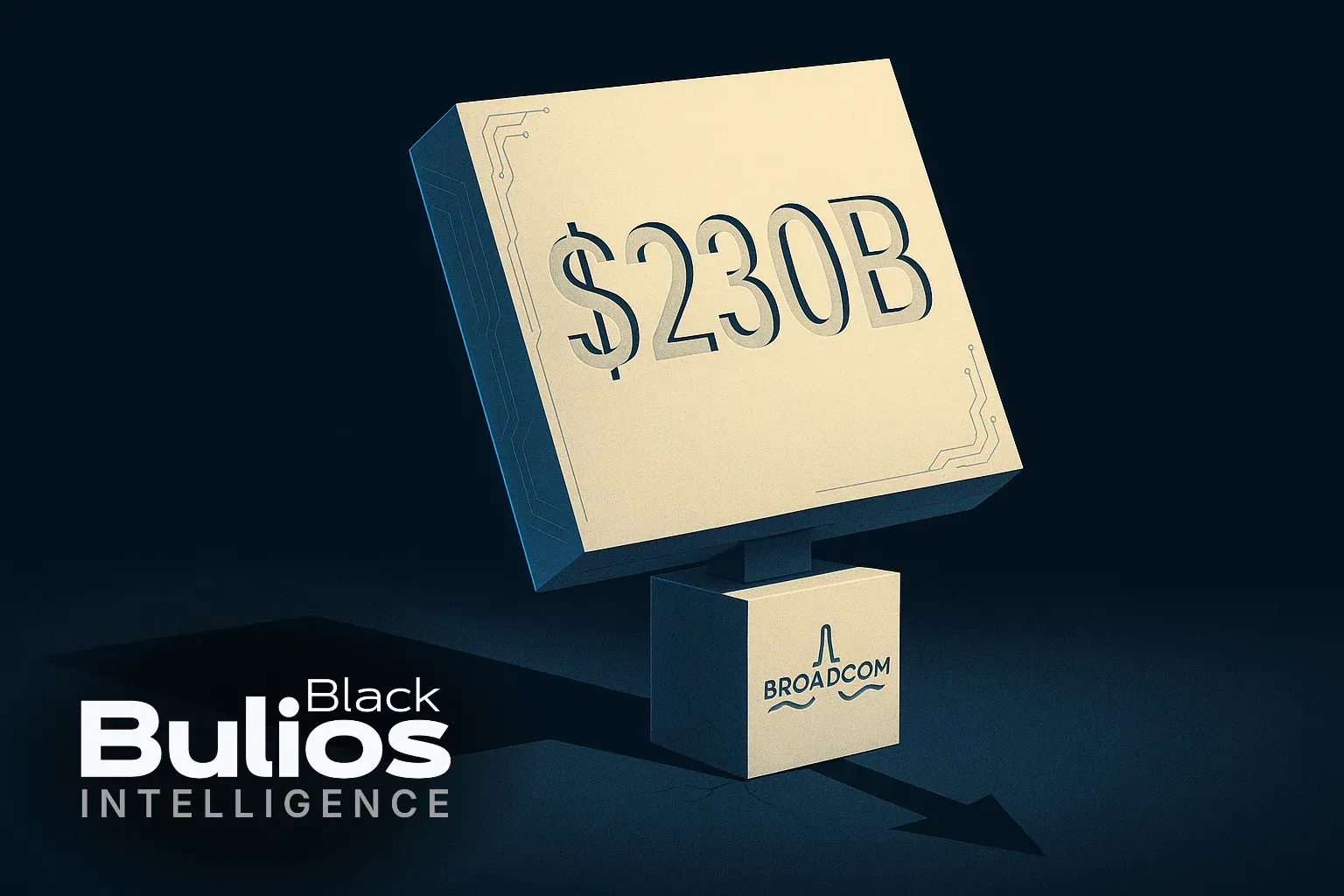
Broadcom promised $230 billion from AI chips by 2028. Shares fell 5%
Broadcom reported third fiscal quarter results on Wednesday, September 2, after the close. Revenue rose 86% to $29.6 billion, adjusted earnings per share reached $3.32 versus $3.24 expected by LSEG. Yet shares lost roughly 5% in extended trading, sliding from a close of $367.24 to a range of $348 to $350.
The trigger was a difference of a few hundredths. Management expects fourth-quarter revenue of $34.8 billion, growth of 93%; LSEG consensus was $35.03 billion. The outlook misses by less than 1%—yet AI semiconductor revenue is expected to accelerate to $21.7 billion, up 236% year over year. In the third quarter it was $16.7 billion, up 221% and 54% above the previous quarter.
On the other side are numbers that in any other regime would have lifted the stock. On the conference call, Hock Tan moved the AI revenue target for fiscal 2027 to roughly $115 billion from the previous "over $100 billion" and for the first time quantified 2028 at $230 billion, about four times this year's expected $58 billion. Earnings per share in 2028 should exceed $30 versus LSEG consensus of $25.86.
The tension between a three-year promise and one quarterly number is the core of the reaction. The market discounts capacity that can be documented by an order more heavily than capacity described in gigawatts: 5 GW of TPU 8i chips for Anthropic in 2027 with an outlook for another 10 GW and 1.3 GW of Jalapeno chip deployment for OpenAI. Tan said deliveries for both years are secured.
CFO Amie Thuener also described that the company is helping two strategic customers bridge the gap between their current cash flow and the necessary upfront investments, including residual value guarantees as contingent liabilities. The supplier thus bears part of the customer's risk—an item that no AI chip model currently prices in as standard.
The contrast of the same week is instructive. Dell raised its AI server revenue outlook for fiscal 2027 to $74 billion from $60 billion and adjusted EPS to $25.50 from $17.90; shares added 9%. Oracle, on the other hand, fell 4% to $142.82 and is down 23% year-to-date as the ten-year US Treasury yield climbed to 4.78% and made debt-financed expansion more expensive.
Analyst opinions split accordingly: DA Davidson cut its price target to $350 from $400 with a neutral rating, while the consensus of 29 analysts as of September 5 remains buy with a target around $509. The December report will decide—whether AI chip orders continue to outpace deliveries, whether operating margins hold at the promised 66%, and whether bond yields do not make financing more expensive for the labs that are supposed to pay the $230 billion.
Eurozone inflation at 3.3%: ECB to raise rates into weakening demand
August eurozone inflation accelerated to 3.3%, the highest in almost three years, driven mainly by energy prices. The data came a week before the ECB meeting and turned the debate from when rates will fall further to whether they will be raised. The stronger-than-expected result bolsters the hawkish wing of the Governing Council.