


These stocks pay dividends over 10%

Double-digit dividend yield belongs to the strongest magnets for income-oriented investors. But the number that shines in a classic screener often hides something completely different. It could be a reduced dividend, a yield calculated from old payouts, or on the contrary, a statistic so distorted that it scares even an investor who shouldn't be afraid. We analyzed stocks with yields around 10% and looked at how much of it is truly sustainable income, because that is something a classic screener often conceals.
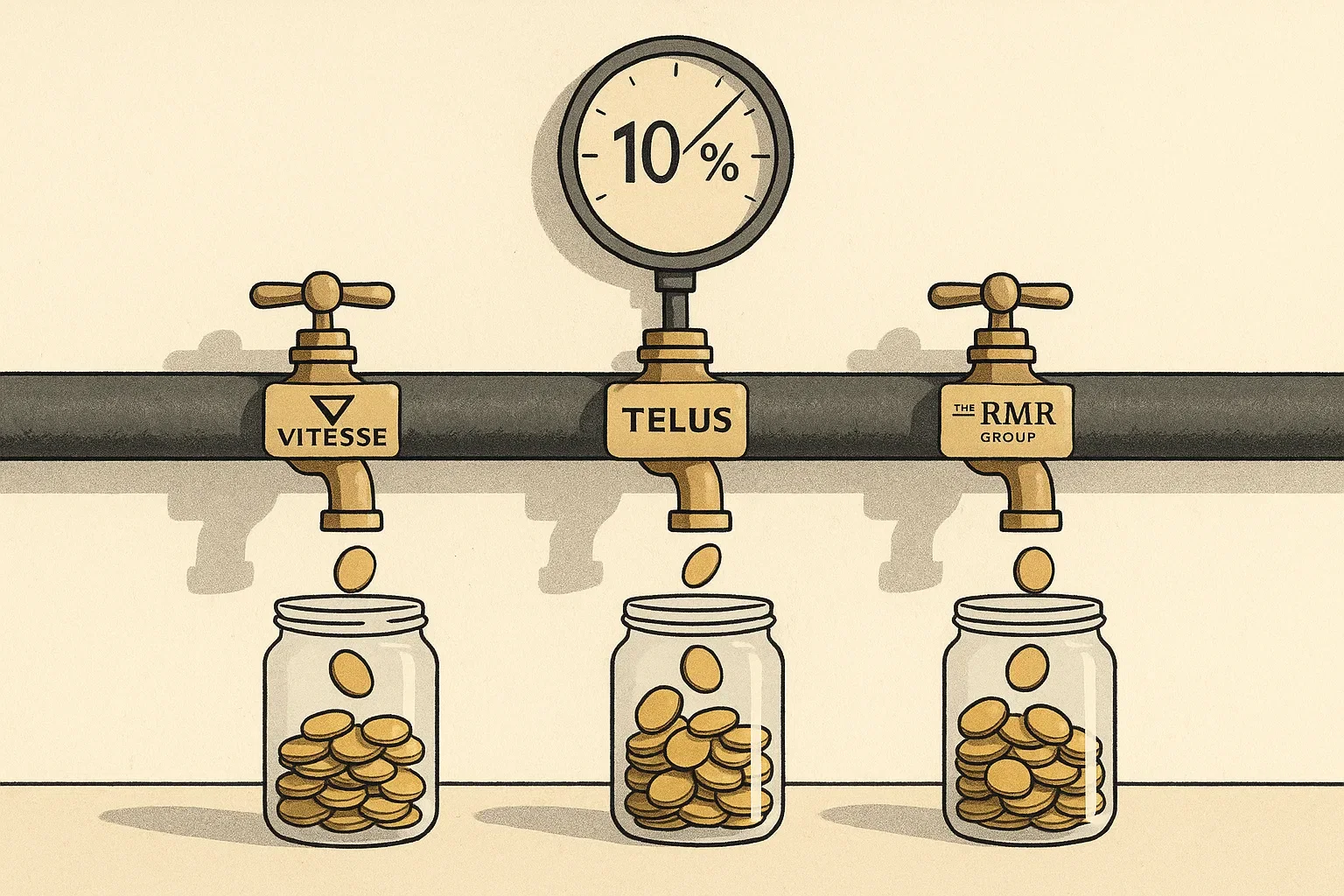
Key points
A 10% dividend sounds like every investor's dream. But with such a high yield, it is much more important to find out what lies beneath the surface.
Three similar dividend yields, three completely different stories. The differences become visible only when looking at cash flow, debt, and the way the payout is financed.
A common screener can create a surprisingly distorted picture of dividend stocks. Some numbers, without knowledge of their construction, say something completely different than they seem. We reveal where the truth lies.
A high dividend is not only about its coverage. Commodity prices, debt, acquisitions, hedging, and the quality of the business itself all come into play.
Where is a 10% yield an interesting opportunity and where already too expensive compensation for risk? The difference can be much greater than the dividend yield alone suggests.
A dividend yield around 10% is exceptional in the US market. The broad S&P 500 index has long offered only a fraction of this value, and most traditional dividend aristocrats also move in single digits. So when a stock shows a double-digit yield, the market is usually saying something. Either the company pays out most of its cash and doesn't invest much in growth, or the share price has fallen so much that the dividend yield rose purely mathematically, i.e., due to the drop in share price. The second variant tends to be a warning signal, because a price decline often precedes a dividend cut.
The trio of companies we analyze in this article is interesting precisely because each illustrates a different type of high yield. You will learn how a screener can display a yield that no longer exists. All prices and yields in the article are based on data as of late September and early October 2026.