


Japan is making money more expensive, and your U.S. stocks will feel it sooner than you think...
The last time Japan raised interest rates, roughly $1.3 trillion disappeared from U.S. stocks in a single day. Today, Japanese 10-year bonds are yielding over 3%, the first time since 1996, and the central bank is holding rates at their highest level in 31 years.
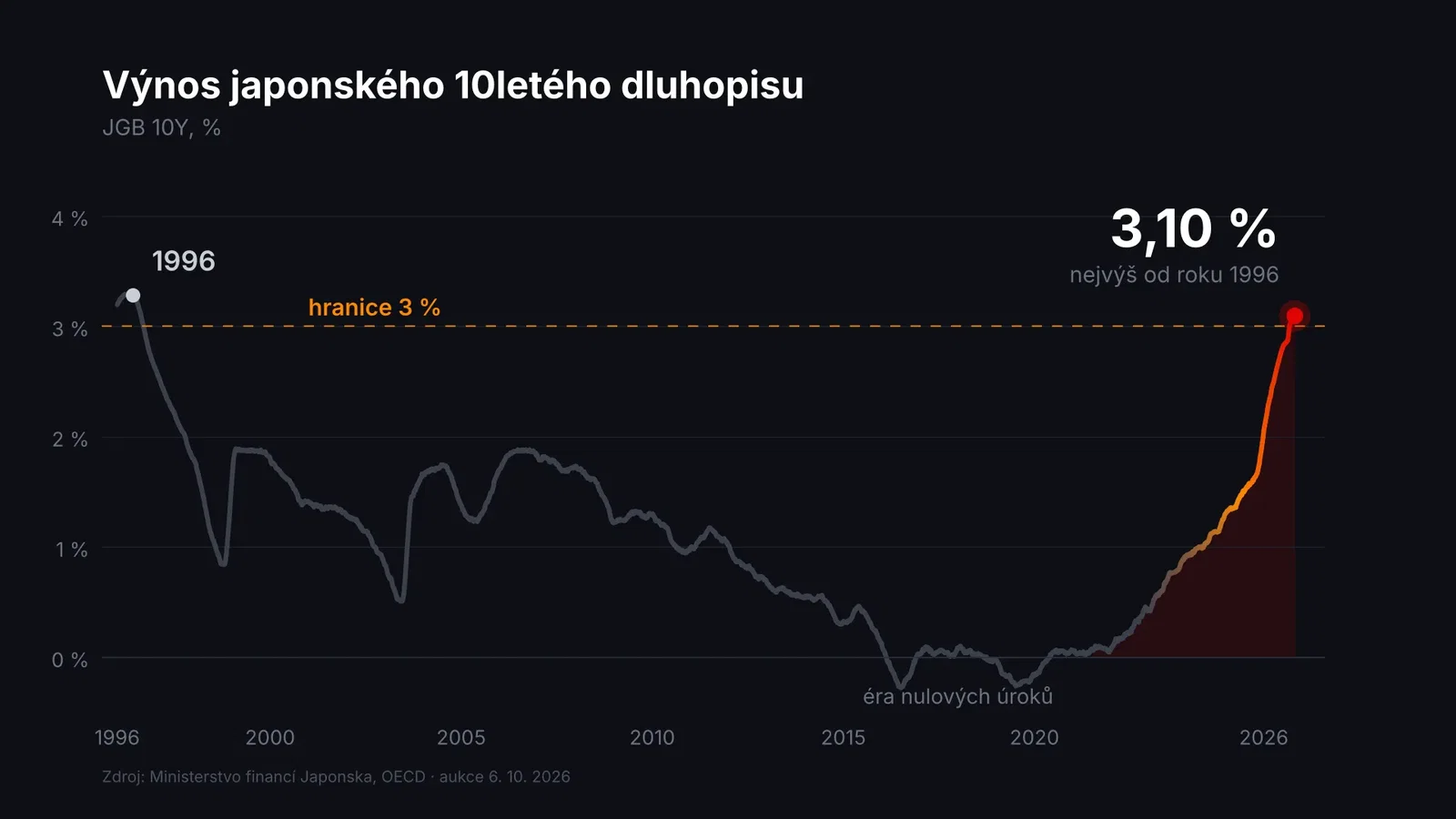
This time, it didn’t happen all at once. Instead, pressure built gradually. But that can be more dangerous for investors, because few people notice it in time.
The world’s cheapest bank is calling it quits
For decades, funds borrowed yen at almost no cost, converted it into dollars, and bought U.S. assets. Estimates of the size of this “carry trade” range from $1 trillion to $4 trillion.
But when the Bank of Japan raised rates to 0.25% on July 31, 2024, the yen strengthened and funds began panic-selling. On August 5, the Nikkei fell 12.4%, its biggest drop since 1987, the S&P 500 lost 3%, and the fear index, VIX, briefly surged above 60.
By Friday of that same week, however, the S&P 500 had recouped its losses. Since then, the BoJ has raised rates several more times, most recently to 1.25% on September 18. But the market crash never came. The yen even weakened, because two board members voted against the increase and Governor Ueda didn’t promise further hikes. That’s a bit paradoxical, isn’t it? If rates are going up, why did the currency of the samurai nation weaken?
The answer is that money is getting more expensive in the U.S. too. In September, the Fed raised rates to 3.75% to 4%, and the U.S. 10-year bond briefly reached 5.34% in October, its highest level since 2002. That gives capital a reason to keep staying in the U.S.
But the gap between U.S. and Japanese yields has roughly halved over the past 3 years, from almost 4 percentage points in October 2023 to about 2 points this September. For Japanese insurers, which manage around $2.5 trillion and hold a quarter of those assets overseas, that’s a significant change to their business.
According to BlackRock $BLK, a U.S. 10-year bond yields them roughly 2% after hedging currency risk, while a Japanese bond yields around 3% without any currency risk. As a result, Japanese investors have already sold more than 5 trillion yen worth of foreign bonds.
Japan’s debt exceeds 200% of GDP. Interest payments on it are set to rise by about a third this year compared with 2024, and in 2029 debt servicing is expected to cost 41.3 trillion yen, or 30% of the budget—more than the social security system. The central bank is also gradually pulling out of the bond market, so the government has to find buyers at home. And much of that domestic capital is now in America.
Japanese investors hold $1.14 trillion in U.S. Treasuries, but even more in U.S. stocks—around $1.4 trillion. Much of it isn’t bought by institutions, but by households through tax-advantaged NISA accounts (something like the equivalent of our DIP). There were more than 30 million of these accounts at the end of June, with purchases through them reaching around 85 trillion yen—well above the government’s 2027 target. In just the 3 months through the end of September, households bought a record 3.9 trillion yen in foreign stocks through funds.
The most popular funds track the S&P 500 and don’t hedge against exchange-rate movements. Japanese investors were therefore earning twice over: from rising stocks and from a weakening yen, which was at its weakest level in 40 years this July. But if the yen were to strengthen sharply, these loyal buyers of the same index you hold in your
$VOO or $SPY would lose some of their gains, and their motivation to stick with it would disappear. The Nikkei (Japan’s stock index) is very concentrated today. Advantest, Tokyo Electron, SoftBank $SFTBY, and Fast Retailing make up around 35% of its weighting.
On October 13, Tokyo Electron fell 7.2%, SoftBank 8.5%, and the Nikkei lost more than 1,250 points, even though most stocks on the exchange rose. On the same day in the U.S., $CRWV fell 16% amid concerns about debt tied to AI infrastructure.
The mechanism is still the same. Higher borrowing costs hit hardest companies whose valuations depend on earnings 5 or 10 years from now.
Yesterday, we saw the NASDAQ’s worst day in several months. Volatility is here, and although it may not seem that way, Japan is clearly playing a part.