
Hollywood has been shaken by one of the most consequential deals in its modern history. Netflix announced a definitive agreement to acquire the studio and streaming assets of Warner Bros. Discovery in a transaction valued at $72 billion plus assumed debt. The deal unites the world’s largest streaming platform with one of the most storied studios in entertainment, handing Netflix its first major production empire complete with iconic franchises, decades of film and TV archives, and the premium HBO and HBO Max brands. For Netflix, long dependent on licensed partners and outsourced production, the acquisition marks a strategic transformation that positions it as a fully integrated entertainment giant.
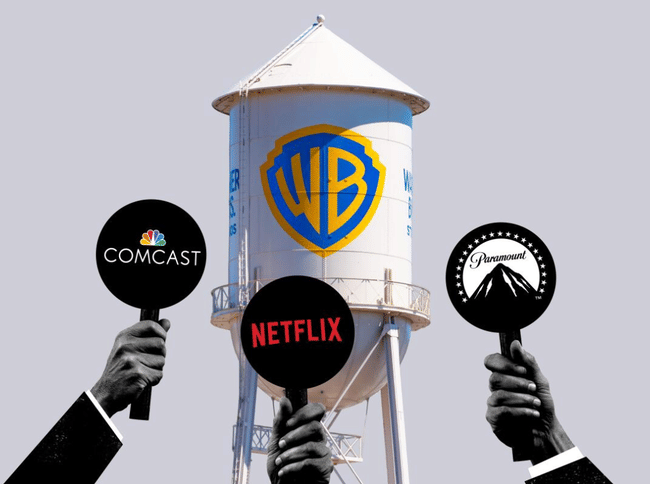
According to the announced timeline, the transaction will close after Warner Bros. Discovery completes a corporate restructuring planned for summer 2026. Before the deal is finalized, WBD will spin off its Global Networks division — including CNN and a portfolio of cable channels — into a separate public company called Discovery Global. Netflix will acquire only the studio and streaming operations, the segments considered the future drivers of media growth. Market reaction was swift: WBD shares jumped 6%, while Netflix dipped nearly 3%, reflecting both enthusiasm about unlocking asset value and concerns about leverage and regulatory scrutiny.
What Netflix actually wants to buy: The content that defined an era
The deal would give Netflix $NFLX not only production capacity for the first time, but more importantly, key elements of its Hollywood identity. Warner Bros. $WBD has iconic studios in Burbank, hundreds of thousands of hours of film and television archive, and brands that generations of viewers have come to regard as cultural symbols. HBO delivers prestigious, world-class productions. Combining these assets with the distribution power of Netflix would create an unmissable media entity that would make it very difficult for competing players to compete.
And while Netflix has long built original programming from the ground up, it has never had its own extensive library of legacy content. That may be the reason the company committed to the largest acquisition in its history. For Disney or Paramount, such a combination would further escalate competitive pressure, as Netflix could redefine its distribution and licensing strategy with the newly acquired rights.
Regulation as the biggest obstacle to the whole deal
The acquisition raises immediate antitrust concerns. The combined company would have around 450 million subscribers and control two massive content libraries. Some U.S. lawmakers are already warning that such a move could harm consumers because Netflix could gain too strong a bargaining position and limit competition. Netflix, on the other hand, argues that the deal would allow it to lower prices through bargain packages and that its real competitor is YouTube, not the traditional Hollywood studios.
The fight for regulatory approval is likely to be long and complex. Paramount Skydance $PARA even sent Warner Bros. a legal letter calling the whole process unfair and tilted in Netflix's favor. Even more pointedly, some politicians have commented on the situation, openly expressing concerns about the erosion of media plurality.
Why Warner Bros. is backing down: Traditional TV is in decline
Warner Bros. has gone into selling mode at a time when the traditional television business is going through the biggest slump in history. Their cable division is reporting a 23% year-over-year drop in revenue, and the outflow of subscribers and advertising continues to accelerate. The streaming war that Netflix unleashed more than a decade ago is now hitting the original media houses hard. Selling the studio for tens of billions of dollars may be the last chance for Warner Bros. to stabilize its finances and restructure its entire portfolio.
Netflix is benefiting from this competitive weakness. The company enters the negotiations in an exceptionally strong position: it ended 2024 with more than $39 billion in revenue and a market value of over $430 billion. Its subscriber growth and financial discipline also position it as one of the best-managed media companies today.
What could the merger mean for Hollywood?
This deal would redefine the rules of the game. Netflix would cease to be an "outsider" and become a full-fledged studio giant with the ability to produce, archive and distribute content in the manner of traditional studios - only with a huge data base and algorithms that can predict viewing behaviour. A future strategy could include exclusive premieres, more aggressive licensing, and new models of collaboration with creators.
Hollywood, on the other hand, has traditionally relied on theatrical releases, and Netflix has so far refused to put movies into theaters on a larger scale. This merger may further increase tensions between filmmakers, movie studios and platforms. A scenario in which Netflix is owned by Warner Bros. would have been unimaginable just five years ago - and yet it's within reach today.
The financial structure and logic of the deal
If Netflix had indeed completed its acquisition of Warner Bros. Discovery, it would be one of the largest media transactions of the century - and the first purchase of this magnitude in Netflix's history. Early information available suggests that negotiations are underway with a value of around $30 per share, which would value Warner Bros. at approximately $70-75 billion. In addition, Netflix is offering a record "breakup fee" of $5 billion, which Warner Bros. would receive if the deal is blocked by regulators. Such a high guarantee alone shows how serious Netflix is about the deal and that it is prepared to absorb significant regulatory risk.
From a financial standpoint, it is crucial for Netflix that it buys primarily assets, not cable networks. Warner Bros. plans to spin off CNN, TNT and TBS before the deal closes, clearing the portfolio of the traditional TV business, which is in steep decline. Netflix will thus take the most valuable things on the balance sheet - movie and TV studios, the content library, HBO Max and the rights to premium franchises. The company has ample market capitalization (over $430 billion), robust cash flow and very stable subscription revenue, allowing it to structure the deal with a combination of cash and new bonds without jeopardizing its investment-grade rating.
In practice, the acquisition would not only strengthen Netflix's ownership structure, but also dramatically change its cost base: the company would stop spending billions a year licensing outside content and become the de facto owner of one of the most valuable Hollywood libraries ever. At the same time, it would gain direct control over production and distribution, allowing it to dramatically reduce long-term operating costs and increase margins.
Why Netflix is doing it: The strategic motivations that are changing its future
The acquisition of Warner Bros. Discovery would represent a major strategic change that comes at the exact moment when the streaming market is starting to slow down. Netflix has been looking for several years for additional growth engines beyond traditional subscriptions - introducing an advertising plan, expanding into the gaming business, investing in live streaming and sports. Yet the company is missing one key pillar that competitors like Disney or Paramount have: an extensive library of legacy content that has held its value for decades. Warner Bros. addresses this weakness in one fell swoop.
Another theme is independence from licensing. Netflix has historically depended on temporary licenses of other studios' movies and series, costing it billions of dollars a year while reducing the stability of its catalog. A Warner Bros. acquisition would mean permanent ownership of the hits that have defined television culture. The company would gain IP that it can adapt, expand, sell or combine across media - just as Disney does with its franchises.
In terms of the future of the streaming economy, it's also a defensive move. Netflix doesn't want to wait for competitors to complete their own consolidations and create a counterweight to its global dominance. A merger with Warner Bros. would give the company not only content, but also the prestige of a traditional movie studio, physical production capacity, experienced creative teams, and infrastructure that it would have had to build itself over years and at multiple costs.