
The United States has entered a new phase of artificial intelligence governance, one that decisively shifts power away from individual states and toward Washington. President Donald Trump has signed an executive order that sharply limits the ability of states to introduce their own AI regulations, placing federal policy as the sole benchmark for what is permitted. For states like California and New York, long seen as regulatory trendsetters, this marks a major loss of influence. The administration’s intent is now unmistakable: accelerate AI development by removing regulatory fragmentation, even if that means sidelining local oversight.
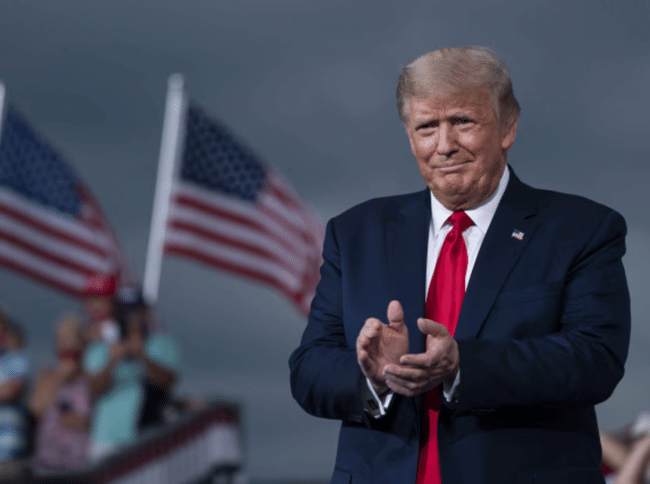
Trump argues that AI is too strategically important to be governed by fifty different rulebooks. According to the White House, a patchwork of audits, safety mandates, and liability regimes would slow innovation and weaken US competitiveness. The executive order establishes a new federal enforcement mechanism under the Department of Justice, tasked with challenging state-level AI laws that conflict with national policy. It also introduces a powerful lever: the federal government may withhold funding from states that pursue regulations deemed to obstruct technological progress. For Big Tech, the signal is clear—Washington is choosing scale, speed, and global competition over decentralized control.
The regulation is also a victory for big tech companies. OpenAI, Google $GOOG, Andreessen Horowitz, and hardware manufacturers led by Nvidia $NVDAlobbied intensively for its enforcement for many months . According to several sources, the architect of the plan was the president's "AI advisor" David Sackswho has long promoted the idea that datacenter, model and chip development cannot be coordinated in an environment of legislative chaos. That's why a number of tech leaders welcomed Trump's executive order as a move that could put the US ahead of both Europe and China in the pace of technological development.
Moreover, Trump argues for a geostrategic necessity: artificial intelligence is key to American competitiveness, he says. He warns that China could gain a technological edge if the US is unable to accelerate the construction of data centres, energy infrastructure and the development of AI models. That's why the federation wants to keep control of crucial permits and regulations that affect the sector. In his mind, it's not just about technology, but about national security and the economy.

But the opposition is reacting sharply. Critics point out that executive orders limit the ability of states to protect their own citizens from the risks associated with artificial intelligence. Organizations such as Center for Democracy & Technology warn that the move puts Washington on the side of corporations and weakens corporate accountability to the public. The backlash is also coming from some governors, including Republican ones, who see the encroachment on states' rights as an unacceptable precedent. The dispute is thus moving from a technological to a political and constitutional dimension.
The effects of the regulation could be profound and far-reaching. If the federal government does indeed begin to challenge state AI laws, it will open up a new legal battle that could end up in the Supreme Court. States will have to carefully consider whether to embark on legislation that could be immediately challenged. For technology companies, on the other hand, an era of greater predictability and easier scaling of their AI products and data infrastructures is opening up. The US approach is thus moving away from the European model of regulation and towards maximising the speed of innovation - albeit at the cost of weakening local democracy and control over algorithm behaviour.
Trump's decision is therefore more than just an administrative act. It is a turning point in how the United States understands AI and what price it is willing to pay to stay ahead in the race with China. The outcome of this clash will show whether the centralisation of power in the hands of the federation will actually accelerate innovation, or unleash another political crisis in which AI itself is a means - not an end.