
Lockheed Martin quietly strengthened one of the most stable pillars of its defense portfolio. The U.S. Department of Defense approved a major expansion of an existing airlift framework agreement, pushing its total potential value to roughly $25 billion. Rather than a single procurement wave, the deal reinforces a long-term production, modernization, and sustainment pipeline that stretches well into the next decade.
What makes the contract strategically important is not the aircraft count alone, but the scope. The agreement embeds Lockheed deeper into allied logistics systems through upgrades, engineering services, and lifecycle support. In practice, this turns the C-130J platform into a recurring-revenue defense ecosystem, insulating cash flows from short-term budget volatility while tying multiple NATO and partner countries into a common operational standard.
Why the C-130J: an old concept but strategically indispensable
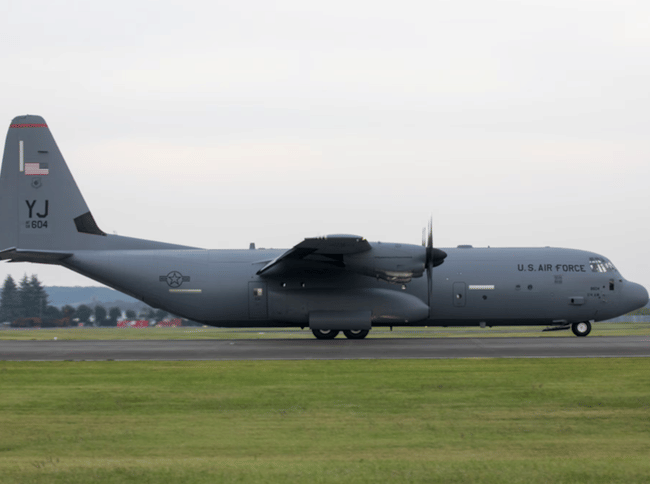
C-130J is not a new aircraft, but its importance has been growing inrecent years . It is a modernised version of a proven platform that is capable of operating where larger and more expensive transport aircraft fail. The aircraft can handle short and unpaved runways, extreme weather conditions and a wide range of missions - from troop and equipment transport to humanitarian operations and special military missions.
This versatility is the main reason why states keep it in their arsenals even in the era of the advent of unmanned systems and sophisticated fighters. In practice, the C-130J is a "workhorse" that no military with global ambitions can do without.
What exactly does the contract increase include
Increasing the value of the contract doesn't just mean a larger number of newly produced aircraft. The key part is long-term services, which are extremely attractive financiallyto Lockheed Martin $LMT.
In particular, the contract includes:
- production of new C-130J aircraft in various configurations
- avionics and systems upgrades to meet national requirements
- technical support and engineering work
- spare parts, maintenance and lifecycle service
- integration of specific military and communication systems
From a business perspective, it is important that servicing and upgrades generate stable revenues for decadesoften with higher margins than manufacturing itself.
Why the contract is growing now
The timing of the increase is not coincidental. The war in Ukraine, the tensions in the Indo-Pacific and NATO's increasing emphasis on logistics readiness have shown that the ability to move troops and materiel quickly is as important as combat equipment.
At the same time, many European militaries are replacing older versions of the C-130 or other transport types and opting for upgrades rather than developing entirely new platforms. For countries such as Germany or France, this is a pragmatic choice: a proven aircraft, NATO compatibility and relatively fast delivery.
What this means for Lockheed Martin
For Lockheed Martin, the contract increase is significant on several levels. It's not just the increased order volume, but the strengthening long-term revenue visibility. It confirms the C-130J program as one of the company's pillars alongside the F-35 fighter and missile systems.
At the same time, the contract:
- Increases production capacity utilization
- strengthens relations with key US allies
- spreads the risk beyond one dominant programme
- supports stable cash flow even if other parts of the defence budget slow down
Broader impact on the defence sector
Contract increase sends a clear signal to the rest of the market: Defense budgets are not returning to pre-war levels. On the contrary, there is a growing emphasis on logistics, interoperability and rapid deployment of forces. This favours companies that offer proven platforms with a long service life.
For investors, this is further evidence that the defence sector remains structurally strong, even if media attention is often focused on fighter jets, drones or cyber security.
Summary for investors
The increase in the C-130J contract from $15 billion to $25 billion is not a one-off event, but a confirmation of a long-term trend. It secures Lockheed Martin stable revenue, a strong position with allies and a continued role as a key supplier of essential military infrastructure.
It's not about "sexy" technology, it's about a business that works in every geopolitical scenario.. And that is what makes it one of the most solid pillars of the defense portfolio.