
Insider buying only attracts real attention when it carries personal risk. Executives are paid largely in stock and options, but writing a multi-million-dollar check from personal capital is a different signal entirely. Tim Cook’s recent purchase of Nike shares stands out precisely because it is discretionary, material, and executed during a period of strategic uncertainty for the company.
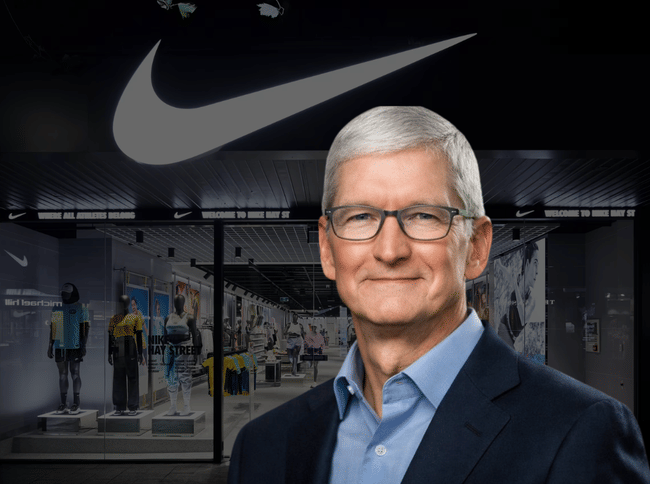
The timing is critical. Nike is navigating a reset of its growth narrative, supply chain strategy, and brand momentum in a more competitive global market. When a board member with Cook’s operational discipline and capital allocation track record chooses to increase exposure at this stage, markets interpret it less as optimism — and more as conviction that downside risk is already priced in.
What exactly did Tim Cook do and why is it important
According to the regulatory report bought Tim Cook (Apple CEO) 50,000 shares of Nike $NKE, bringing his total holdings to about 105,000 shares worth about $6 million. This was not an option bonus or an automatic plan - it was an outright purchase for equity.
Such moves are traditionally viewed by investors as:
- a vote of confidence in the company's long-term outlook
- a signal that management considers the stock undervalued
- confirmation of support for management's current strategy
The move takes on an even stronger meaning when combined with the fact that another board member, Robert Swan, bought about half a million dollars worth of Nike stock. When multiple insiders buy at the same time, the market reads this as a coordinated signal.
The support of CEO Elliott Hill and the ongoing restructuring
Cook's purchase is also a clear statement of support for the current leadership. Nike leads Elliott Hillwho returned to the company as CEO with the task of carrying out one of the most difficult transformations in the brand's history.
Hill took over the company in a state where:
- lost some of its relevance to new, agile competitors
- it had fallen victim to an overemphasis on direct sales and partner limitations
- slipped into excessive discounting that hurt the brand and margins
His "win now" strategy relies on a return to Nike's sporting core - running, basketball, football and training - and a renewal of the brand's marketing power. There is also a renewal of senior management and an effort to reconnect product, story and retail presence.
Issues that continue to weigh on Nike
Despite insider optimism, Nike faces real challenges. The biggest of these is China, where the company reported a significant drop in sales last quarter. Waning consumer demand, growing domestic competition and geopolitical tensions are creating a very difficult environment there.
Tariffs and cost inflation are other pressures. Nike has already openly admitted that it plans to pass some of the impact on to US customers in the form of higher prices, but this risks further weakening demand. The company's shares are still down roughly 18% this year, illustrating that the market is still waiting for tangible results of the turnaround.
Nike and Apple's long-standing relationship
Tim Cook is no newcomer to Nike - he's been a board member since 2005. The partnership between Nike and Apple has deep roots, from fitness apps to special editions of the Apple Watch to a long-term collaboration in health and exercise.
Cook also actively supports Nike symbolically. He repeatedly appears in public in unique Nike sneaker designs, including custom pairs created by Japanese designers. This reinforces the brand's image in the premium and technology-oriented segment.
How to read this from an investor perspective
Tim Cook's stock purchase alone does not solve Nike's structural problems. But it is a strong indicator that people with detailed access to information believe in the company's turnaround. Combined with the purchases of other insiders, the new management strategy, and the still-strong global brand, this is a moment investors can't afford to ignore.
Nike remains in a transition phase. If Hill can stabilize China, restore growth in key categories, and keep margins in check, the current weakness could prove to be a long-term opportunity. Cook's purchase suggests that at least some insiders think so too.