
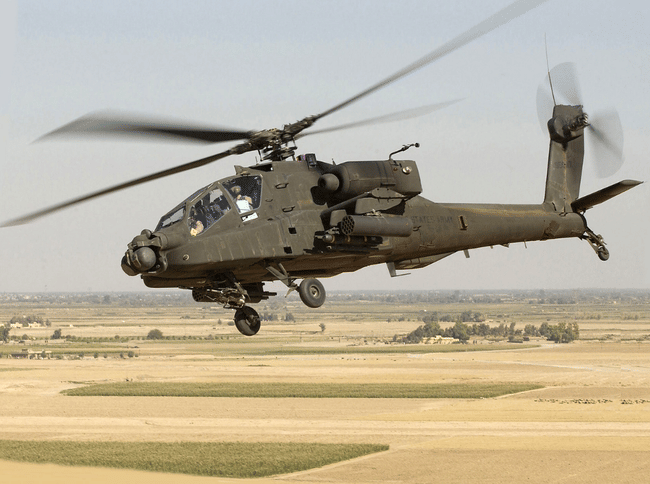
While much of the defense debate revolves around next-generation systems, the US military is quietly reinforcing the platforms it already trusts in combat. Recent funding decisions highlight a clear priority: keeping proven capabilities fully operational, scalable, and combat-ready. Boeing’s expanding role in sustaining the Apache helicopter fleet underscores how maintenance, upgrades, and long-term support now rival production itself in strategic importance.
For investors, the message is straightforward. Defense spending is increasingly about continuity rather than disruption. Multi-billion-dollar service and sustainment contracts provide earnings visibility, margin stability, and long-duration cash flows. In that context, Apache is not a legacy system—it is a recurring revenue engine anchored in US and allied defense planning.
What "post-production support" means in practice
At first glance, post-production support may seem less attractive than producing new machines, but in reality it is strategically vital to the military and to Boeing. This type of contract involves ensuring the long-term operability of the entire Apache fleet and typically involves:
maintenance and repair of in-service helicopters
upgrades to avionics, sensors and on-board systems
software upgrades and cyber security
spare parts supply and logistics support
technical support for U.S. forces and foreign users
It is these services that make up a stable and high-margin part of the defense business. Unlike one-off production of new pieces, they generate recurring revenue over the life of the platform, which for Apache is calculated to be decades.
Apache as a long-term program, not a temporary solution
The AH-64 Apache has been in service with the U.S. Army since the 1980s, yet it is not a "legacy" platform. The AH-64E version is significantly modernized and has been designed to remain relevant in the modern battlefield environment with an emphasis on networking, unmanned systems, and precision fire support.
The U.S. military has reevaluated its plans for replacing manned helicopters several times in recent years and has concluded that the Apache will play a key role at least into the 1940s. That makes it one of the most stable programs in the Pentagon's portfolio.
In addition to the U.S., more than fifteen countries operate or have ordered the Apache, including the United Kingdom, the Netherlands, Japan, South Korea, Saudi Arabia, and Poland. Foreign users in particular are often included in similar support contracts, further increasing their overall value.
Why this is important for Boeing $BA
From Boeing's perspective, this series of contracts is important for several reasons. The company has struggled in recent years with problems in civil aviation as well as margin pressure in some defense programs. But Apache is one of the most stable parts of the company's defense division.
Post-production contracts in addition:
provide predictable cash flow for many years to come
reduce dependence on cyclical civil aviation contracts
strengthens the relationship with the Pentagon at a time of rising defence budgets
Strengthens Boeing's technological role in rotorcraft platforms
In a context of rising geopolitical tensions and increased defense spending in the U.S. and by allies, this is exactly the type of procurement that defense investors consider to be of the highest quality.
Signal from the Pentagon: modernization instead of revolution
At the same time, the current contracts are indicative of the US Department of Defense's broader strategy. Instead of rapidly replacing proven systems, the Pentagon prefers to gradually upgrade existing platforms that can be deployed quickly and are well managed.
In this regard, Apache represents an ideal compromise between technological advancement and operational certainty. And that's why the Pentagon is pouring billions more dollars into it - not just for new pieces, but more importantly to keep the existing fleet combat-capable for decades to come.