
After years of protectionist policy, Canada is making a notable shift in its approach to electric vehicles. The decision to allow limited imports of China-built EVs at reduced tariffs introduces price competition, but more importantly, it rewards manufacturers with global production footprints and ready-made distribution networks.
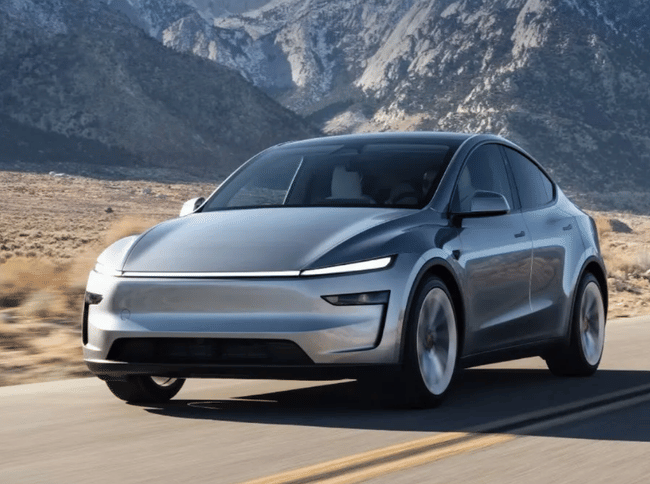
Tesla fits that profile almost perfectly. With manufacturing flexibility, established logistics, and an existing sales infrastructure in Canada, the company is positioned to benefit from the policy change faster than most competitors. The move is less about long-term disruption and more about near-term execution, where Tesla’s scale and operational readiness become decisive advantages.
Why Tesla has a head start
Tesla's $TSLA has a key edge over its Chinese competitors in preparation. It already adapted its Shanghai factory to produce a Canadian version of the Model Y and began exporting those cars to Canada in 2023. At that time, car imports from China to the Canadian port of Vancouver rose 460% year-over-year, to about 44,000 vehicles.
Although this flow was interrupted by the introduction of a 100% tariff in 2024, it may now quickly resume. In addition, Tesla has 39 brick-and-mortar stores in Canada, a major difference from most Chinese manufacturers, which do not yet have a direct presence in the local market.
Another advantage is a simple product portfolio. Tesla works with only a few models, which allows it to quickly shift production between regions based on cost and customs conditions. Meanwhile, the cheaper variants of the Model 3 are mainly produced in China, so this is where the new release of imports makes the most sense.
What this means for Chinese manufacturers
Of course, the easing of the rules is not exclusive to Tesla. For Chinese automakers, this is the first real chance to test the Canadian market on a larger scale. Names like BYD $BY6.F or Nio $NIO are the most frequently mentioned, and they have long been looking for ways to establish themselves outside the domestic market.
Canada is attractive to them not only because of its purchasing power, but also because of its strong Chinese diaspora and more open regulatory environment than in the United States, where imports of Chinese EVs remain virtually blocked. Still, Chinese brands will face higher hurdles - they lack the service network, branding and experience with local consumers.
Established European brands manufacturing in China, such as Volvo $VLVLY or Polestar $PSNY, which already have at least a basic distribution base in Canada, may also benefit to some extent from the relaxation.
The investment view: winners and risks
From an investor perspective, this is a change that puts upward pressure on EV prices, but also rewards manufacturers with global production and strong cost management. Tesla meets all the key conditions here: flexible production, ready infrastructure and the ability to react quickly.
On the other hand, greater competition in the lower price segments may gradually put pressure on margins. If Canada does indeed allow Chinese manufacturers to expand their quotas while encouraging joint projects or local production, Tesla's current advantage may thin within a few years.
In the short term, however, the simple conclusion is that changing the rules favours those who are ready - and Tesla is ready. For Chinese manufacturers, this is more of a first test than an immediate breakthrough, while for Tesla it is an opportunity to reopen a cheaper production channel and strengthen its position in the North American market.
Possible scenarios: how Tesla's story in Canada could unfold
Further developments around the Canadian market opening for EVs from China will not be linear, and it is key for investors to think in several realistic scenarios. The first and most likely scenario in the short term is one where Tesla resumes exports from Shanghai relatively quickly. With the Canadian homologation of Model Y versions already in place and logistics in place, the company could reduce its unit production costs within months, stabilizing margins in the region while maintaining price flexibility relative to competitors. In this scenario, Canada would act as a "relief valve" for Tesla's global overcapacity in China.
The second scenario assumes that the main winners of the new deal will be Chinese manufacturers of cheaper EVs that fit under a price cap of roughly $25,000. If brands like BYD or Geely can build up a sales and service network relatively quickly, the Canadian market could face a price war in the lower end. That wouldn't push Tesla out of the market in volume, but it could force it to discount, or accelerate the development of a cheaper model designed specifically for North American markets.
The third, riskier scenario is political. Canada may come under more pressure from the United States, especially if the geopolitical balance or Washington's trade priorities change. In that case, a revision of quotas, tighter rules or even a return of restrictions cannot be ruled out. For Tesla, this would mean another sudden redirection of production and increased uncertainty about long-term planning in the region.
What investors should watch in the coming months
For investors, it will not be the announcement of the deal itself that is critical, but the specific steps that follow. A key signal will be when Tesla's Shanghai-built cars reappear in Canadian ports. This would confirm that Tesla is able to take advantage of the new conditions faster than its competitors. Equally important will be any changes to Tesla's Canadian pricing - any room for discounts or new model variants may indicate the company's strategy towards cheaper Chinese rivals.
Another factor is the behaviour of Chinese brands. Investors should keep an eye on new brand registrations, plans to build dealerships and initial marketing campaigns targeting Canadian customers. If these steps are delayed, Tesla's advantage will be extended. Last but not least, it will be important to heed political signals from Ottawa and Washington - especially any hint that the deal could be subject to revision or a broader trade debate between the U.S., Canada and China.
Overall, Canada is thus ceasing to be a marginal market for Tesla and becoming a testing ground where it can show how flexible its global manufacturing model is in an environment of increasing geopolitical uncertainty and price competition.