
Apple has gradually filled almost all price levels of the laptop market. Thanks to Apple's own Silicon chips, MacBooks have become a strong alternative to Windows PCs and Chromebooks.
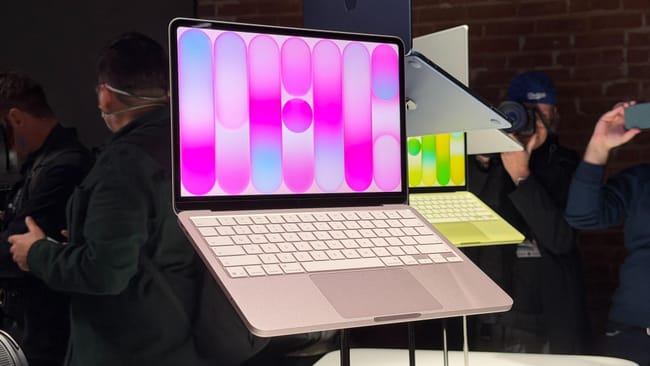
Just a few years ago, choosing an Apple laptop was relatively easy. Customers were faced with a handful of models that varied in size and performance, but were priced more in the premium segment. Today, the situation is markedly different.
With the advent of Apple Silicon chips, Apple has gradually begun to expand its MacBook offerings to cover a wider range of users, from students to professionals working with demanding applications. The result is a portfolio that reaches into price ranges previously dominated by Windows PCs or cheap Chromebooks. For investors watching the tech sector, this isn't just product news. It's a strategy that could change the dynamics of the entire personal computer market. And it also poses a potential problem for the two long-time leaders in the segment - $MSFT and $GOOGL.
Apple has gradually filled the entire notebook market
The strategy of $AAPL began to take shape more significantly in 2020, when the company introduced the first computers with Apple's own M1 processor. This step marked a fundamental change. Apple stopped using Intel processors and began to control the entire technology stack, from the hardware to the operating system. The result was swift. MacBook Air with the M1 chip offered performance comparable to more expensive laptops, while maintaining long battery life and a relatively affordable price. Analysts say it was one of Apple's most important product moves in a decade.
Since then, Apple has expanded its portfolio almost every year. In addition to the entry-level MacBook Air, there are now more powerful versions of the Air, professional MacBook Pro models, and older models sold at a lower price as an entry-level option. Thanks to this strategy, Apple now has laptops for virtually every customer group, from students to professional video creators and developers. Analysts say the company is gradually eliminating one of the Mac's historical problems : limited choice in the lower price ranges.
MacBook Neo: A new era of affordable computers from Apple
The new MacBook Neo, which has become the talk of the tech industry as potentially the most affordable laptop in Apple's history, fits into this strategy. It is reported to be aimed primarily at students and casual users, using Apple's power-saving Silicon chip and offering basic performance at a significantly lower price point than the current MacBook Air. Apple is targeting the lower-priced laptop segment, which has been dominated by Windows devices and Chromebooks. If these speculations are confirmed, it would be one of Apple's most aggressive moves in the affordable computing space.
The price tag of these laptops will climb to 16,990 kc.
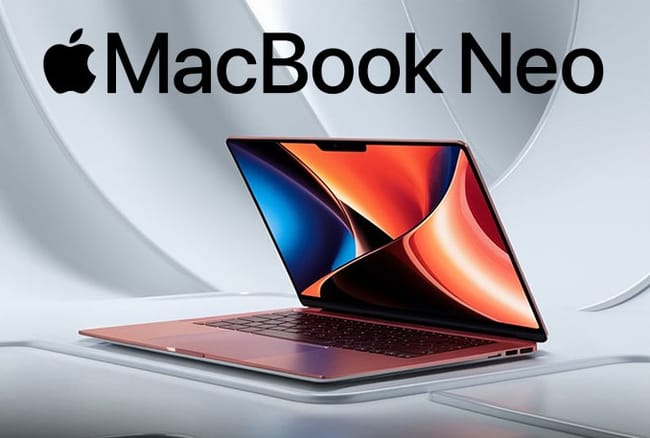
Apple Silicon changes the balance of power
The main reason why Apple can afford this expansion is because of Apple's own Silicon processors. From the M1 to the latest generation, the M-series chips deliver a combination of high performance and power efficiency that traditional notebook processors struggle to match. This allows Apple to create thin and light notebooks with long battery life without sacrificing performance.
According to data from research firm IDC , $AAPL has seen above-average growth in PC market share in recent years. In some quarters, it has even become the fastest-growing PC maker in the world. This situation is particularly troublesome for Microsoft. Although Windows still dominates the global PC market, the success of Macs shows that some users are willing to switch to another ecosystem, especially if it offers better performance and integration with mobile devices.
A problem for Google and Chromebooks too
But Apple is not only threatening Microsoft.
With cheaper MacBook Air models, the company is starting to hit the segment dominated by Chromebooks - simple and affordable laptops running ChromeOS. These have so far been particularly popular in schools and with students.
If Apple can keep the price of entry-level MacBooks down, it may persuade some of these customers to choose a full-fledged macOS computer instead of a Chromebook . This could change the dynamics of the education market, where Google has made significant inroads in the last decade. According to Canalys data, Chromebooks account for more than half of all devices sold in the US school segment.
A quiet change in the laptop market
Apple's strategy is not based on one revolutionary innovation. Rather, it's about gradually filling gaps in the market model by model, price level by price level. As a result, Apple now offers a laptop for almost every customer. And it's this breadth of offerings that may be more important in the long run than the technology specs of individual models alone.
In the past, Apple has dominated the premium segment. If it can keep prices competitive in the more affordable categories, the MacBook could become a more common choice than ever before. And that would mean that the PC market, which for two decades has been almost synonymous with Windows, is beginning to change in ways that seemed unlikely just a few years ago.