Apple beats a shrinking China market while a memory price shock threatens the whole industry

Apple's iPhone sales in China jumped 23 percent year on year in the first nine weeks of 2026 according to Counterpoint Research, even as the broader Chinese smartphone market fell 4 percent over the same period and government subsidies failed to revive sluggish consumer demand. Apple's gains were helped by e‑commerce discounts, the base iPhone 17 model's eligibility for state subsidies and, crucially, its tight supply chain control, which lets it absorb rising memory costs without passing them on to buyers the way many Android competitors are doing.
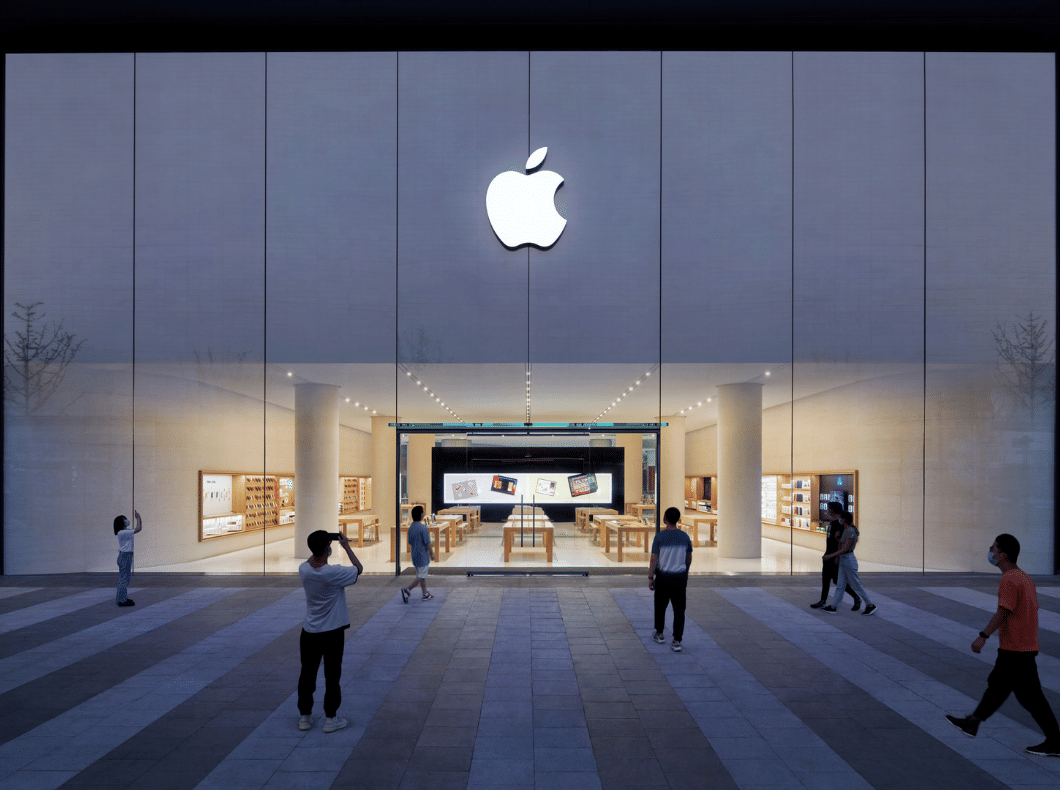
The backdrop is a sector wide memory crisis. Mobile DRAM prices surged 70 percent quarter on quarter and 151 percent year on year in Q1 2026, while NAND flash costs jumped 80 percent quarter on quarter and 360 percent year on year, forcing OPPO, vivo and other Chinese Android brands to announce price hikes on existing models. Jefferies now forecasts global smartphone shipments to fall 31 percent to 867 million units in 2026, and IDC expects a roughly 13 percent decline, with both firms noting that Apple and Samsung are structurally better positioned than Chinese OEMs to weather the crunch because of their premium pricing power and financial strength.
How Apple is growing against the market in China
Counterpoint data shows that China's smartphone market weakened 4% year-on-year from January to early March 2026, despite new government subsidies earlier this year. Cautious consumers and longer upgrade cycles are holding back demand, especially for cheaper Android brands.
But Apple $AAPL has been able to increase the volume of iPhones sold by roughly 23% in this environment, for several reasons:
The basic iPhone 17 qualifies for government subsidies.
E-commerce platforms offered aggressive discounts and promotions, often combined with subsidies.
Apple's strong supply chain control has not yet forced it to price it across the board, unlike some of its competitors.
Counterpoint's commentary points out that Apple is better equipped to absorb some of the pressure from rising memory chip prices without having to immediately pass the entire cost on to customers, thanks to its bargaining power with suppliers and cost optimization. This allows it to keep prices stable where OPPO and vivo have already announced price increases for some models.
Pressure on competition: price increases and the search for balance
Rising memory prices are already being reflected in the pricing policies of Chinese brands. According to Caixin and SCMP:
OPPO and vivo have announced the price hikes of selected models, citing the "steep and sustained rise in memory chip costs".
Memory component costs rose more than 50% quarter-on-quarter in the first quarter for DRAM and over 90% for NAND in some categories.
This drove total manufacturing costs up by 11-25% for many models, and by $100-150 per unit for premium devices.
Counterpoint also points out that Huawei has a partial cushion due to a larger share of domestic memory suppliers charging lower prices than large global manufacturers. This allows Huawei to more aggressively target the lower and mid-range segment with less pricing, which mainly threatens other Chinese brands in this band.
Global picture: memory shock and 31% drop in shipments
In its report, Jefferies portrays 2026 as a memory crisis for the entire smartphone market. Analyst Edison Lee states that:
Global smartphone shipments are likely to fall 31% this year to about 867 million units.
The original estimate was -12%, the revision is in response to the unexpected rate of memory price increases.
Mobile DRAM LPDDR5 prices rose 70% QoQ and 151% YoY in 1Q.
NAND prices added 80% QoQ and 360% YoY, and another 50%+ QoQ growth is expected in 2Q.
According to Jefferies, this means that the cost of memory components:
for the average Android phone will increase roughly 3.6 times YoY.
For Apple devices, approximately 4.2 times, as Apple uses higher capacities and more demanding configurations.
Manufacturers are thus forced to choose between three unpopular options: get more expensive, cut specifications, or sacrifice margin. In an environment of weaker demand, each of these is risky.
Who should emerge stronger from the crisis?
Jefferies expects the memory shock to favor Samsung and Apple at the expense of Chinese brands:
Samsung, thanks to its own memory business and guaranteed access to DRAM and NAND
Apple due to a less price-sensitive customer base and a strong brand.
The bank estimates that these two players will gain around 7 (Samsung) and 5 (Apple) percentage points of market share in the global market, while Chinese OEM volumes will fall significantly. For example:
Xiaomi could reduce shipments by 55% in 2026, partially offset by a 31% increase in average selling price (ASP), according to Jefferies.
Other brands such as OPPO, vivo and Transsion are set to face volume declines of 45-52%.
What this means for the investment view of Apple
For the investor who follows Apple, several things can be gleaned from these two reports:
Relative strength in China: Apple is able to grow volumes in a weak market and rising cost environment, suggesting it can gain share in key regions even in tougher years.
Brand resilience: even as memory costs rise, Apple has more room to manoeuvre - it can absorb some of the costs, pass some on in pricing, and lean on user loyalty and the ecosystem.
Structural share shift: if the Jefferies scenario comes to pass, the global market may shrink, but Apple can slice a larger share of it - especially at the expense of Chinese OEMs in the mid- and high-end segment.
Stocks mentioned