
Microsoft plans to pour about 1.6 trillion yen, roughly 10 billion dollars, into Japan between 2026 and 2029 to expand Azure data centers, AI infrastructure and cybersecurity cooperation with the government, while rolling out a large scale training program for local IT workers. The push is designed to turn Japan into a regional hub for cloud and AI workloads rather than just another sales market, tying the company more tightly into national plans for digital resilience and industrial upgrading.
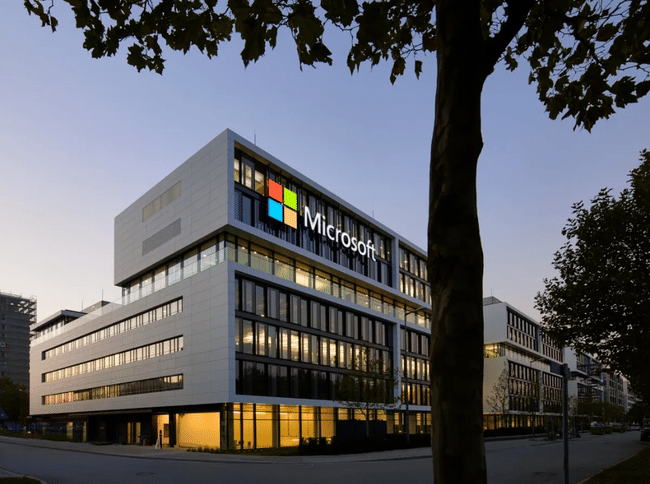
Crucially, the new commitment sits on top of a 2.9 billion dollar pledge from 2024, taking Microsoft’s announced investment in Japan above 13 billion dollars in a few years. Partnerships with Sakura Internet and SoftBank are meant to ensure that the added Azure capacity is physically located in Japan and architected to meet domestic rules on data residency and security, giving local enterprises and public agencies comfort that AI workloads can run at scale without leaving the country.
Why Microsoft $MSFT is focusing on Japan
Japan is a large and rich market, but one that has lagged behind the United States or Western Europe in some areas of digitization and cloud. This creates a strange combination - a lot of room for catching up, relatively high corporate and government purchasing power, and a strong emphasis on data security and sovereignty. By building local AI infrastructure, Microsoft is buying access to these future budgets. For the Japanese government, in turn, having a global technology partner that is willing to invest in-country and tailor services to local regulatory and security requirements is attractive.
The security dimension is also important. The package includes enhanced information sharing with the National Cyber Security Authority and joint projects aimed at protecting critical infrastructure. In the context of tensions in the region (China, North Korea, Russia), this is a signal that Microsoft wants to be seen as a strategic partner of the state, not just a private contractor. This opens the door to segments where contracts are long-term and barriers to entry for competitors are high.
Local partners: what role do Sakura Internet, SoftBank and the "big five" IT houses play
Microsoft will not build everything on its own. It announced that it will partner with datacenter provider Sakura Internet and SoftBank $SFTBY to increase Azure's computing capacity in Japan. It was a strong signal for Sakura, which is listed on the Tokyo Stock Exchange - its share price immediately jumped by around 20% as the market is pricing in the fact that some of the investment and new contracts will physically manifest themselves in its data centres and infrastructure.
SoftBank adds another layer. As a telecom operator and technology investor, it can connect its network, cloud capabilities and portfolio of AI firms with Microsoft's ecosystem. This is particularly interesting in the "we provide the complete solution" play - from connectivity, to infrastructure, to applications and services for end customers. From Microsoft's perspective, this provides a local "leg" that knows the market, the regulation and has its own customer base.
Another part of the programme targets human capital. Microsoft wants to train up to 1 million engineers and developers in cloud, AI and cybersecurity over several years in partnership with major Japanese IT firms - Fujitsu, Hitachi, NEC, NTT Data and SoftBank. This has a twofold effect: first, it will strengthen the overall skills of the country's workforce, and second, it will naturally "glue" this generation of IT professionals to Microsoft's tools and platforms. Those who learn on Azure, Visual Studio and Copilotech are less motivated to move to competing ecosystems.
What's in it for investors: Microsoft and select Japanese players
For Microsoft shareholders, the $10 billion move is a relatively small item given the size of the company, but it makes sense strategically. It helps the company:
Strengthen the position of Azure and AI services in a region where it has not yet been as dominant as in the U.S.
position itself as the preferred partner for the digitization of Japanese corporations (automotive, industrial, finance) and government
and diversify growth outside the US market at a time when competition in AI among the "Big Three" (Microsoft, Google $GOOG, Amazon $AMZN) is intensifying
The risk is execution - whether Microsoft will be able to fill the new capacity quickly with real contracts and projects, and whether market conditions (regulation, security requirements) will inhibit the adoption of AI applications by more conservative Japanese companies. From a valuation perspective, however, the investment fits into a broader trend: Microsoft has been systematically building regional AI hubs around the world, and the Japanese package is one of the more visible steps in that mosaic.
On the Japanese side, three groups of companies in particular are worth watching.
Sakura Internet, as a local datacenter partner, can benefit from higher demand for capacity, technology upgrades and reputational effect. However, the significant rise in the exchange rate also means that market expectations are high and any delay or weaker contract reality may lead to a correction.
SoftBank, which has built its story on investments in technology and AI in addition to telecom services, can leverage partnerships in its investor communications and in specific digitization projects for corporate clients.
Fujitsu, Hitachi, NEC and NTT Data will be at the forefront of integrating AI solutions and training - if Microsoft's program really gets the wave of projects rolling in the corporate and public sector, these companies may see increased demand for consulting and implementation services.
What other questions investors should ask
For the investor looking beyond the announcement itself, there are a few things to keep an eye on:
What proportion of the $10 billion invested goes into physical infrastructure (datacenters, servers, networks) and what proportion goes into the "soft" components (training, security projects, software)
how quickly specific large AI contracts will start to appear in segments such as car companies, banks, industrial conglomerates or government
whether competitors (Google Cloud, AWS) will come up with similarly large programs, or whether Microsoft will manage to temporarily get a head start