TSMC collects $850 million for the sale of its stake in Vanguard. What is the company doing with this?

The world's largest contract chipmaker (TSMC) will sell up to 152 million shares of Vanguard International Semiconductor (VIS) to institutional investors in a block trade, reducing its stake from roughly 27.1% to 19% on a fully diluted basis.
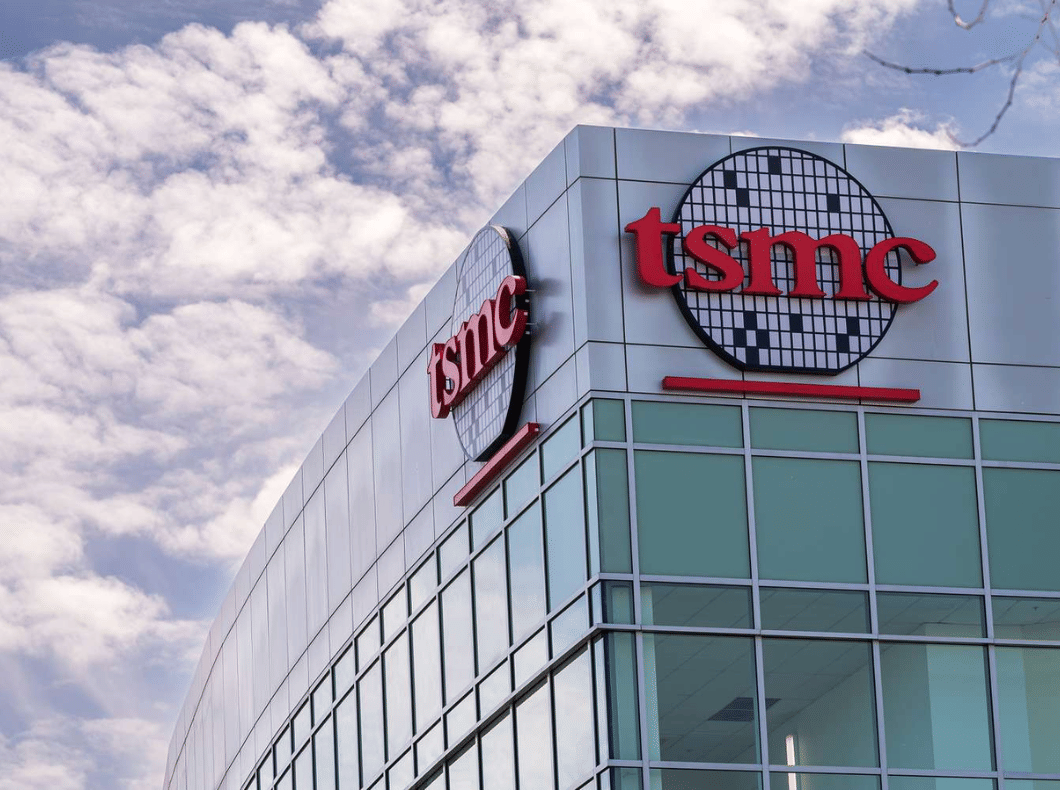
At current prices, such a block is worth about 26.8 billion Taiwanese dollars, or about US$850 million, and TSMC also assures that it has no plans to sell any more VIS shares in the foreseeable future.
What exactly is TSMC selling and why
TSMC $TSM announced that it plans to sell up to 152 million VIS shares through a block trade targeting institutional investors. The transaction represents a roughly 8.1% stake in VIS and will reduce TSMC's ownership to approximately 19% from the previous 27.1% on a fully diluted basis.
The firm commented on the move as part of a broader plan to "rebalance the portfolio" and focus capital on core business activities - i.e. high-end 5nm/3nm/2nm processes and new AI-oriented capabilities - rather than holding a larger equity stake in a dedicated foundry for more mature technologies. So it's a financial, not an operational break-up: TSMC remains the largest shareholder, but frees up the balance sheet for its own capex.
Already in June 2024, TSMC withdrew its representatives from the VIS board, the first visible weakening of formal ties. The share sale logically follows this - the company retains minority influence and strategic cooperation, but ceases to play the role of a "semi-parent" company.
Strategic partnership with VIS
Despite the share reduction, TSMC confirmed that its technical relationship with VIS remains unchanged. This concerns two areas in particular:
Outsourcing interposer and mature-node manufacturing: TSMC has long outsourced part of the more mature processes (40-90 nm) and some interposer components to VIS to free up capacity for high-end processes itself.
GaN technology licensing: in early 2026, TSMC licensed its gallium-nitride (GaN) technology to VIS for both high- and low-voltage applications. As a result, VIS is building a comprehensive GaN-on-Si platform and becomes one of the few foundries that can offer a full spectrum of GaN power chips.
Meanwhile, TSMC is gradually exiting GaN foundry services and focusing on high-end CMOS logic, HPC and AI accelerators. The transfer of GaN technology to VIS thus fits into a broader strategy: TSMC is divesting capital-intensive but less marginal "side" activities, leaving them in the hands of partners while retaining the most value-creating layers itself.
Who is Vanguard and why is it important to TSMC even after the sale
Vanguard International Semiconductor is a Taiwanese specialty foundry, founded in 1994 in Hsinchu Science Park by TSMC co-founder Morris Chang. The company operates five factories in Taiwan and Singapore with a capacity of over 280,000 wafers per month (as of around 2024) and focuses on more mature processes and analog/power chips.
In 2024, VIS and NXP Semiconductors announced a VSMC joint venture in Singapore to build a 12-inch fab and begin production in 2027 - mainly for automotive and industrial applications. This expands VIS's reach from 8" to 12" and strengthens its role as a partner to spillover some of the demand from TSMC and other customers.
For TSMC, having such a partner is advantageous: it can gradually outsource some of the more mature orders (e.g. 40-90 nm) to it, close its own older fabs and optimize its capacity structure without compromising continuity of supply to customers. Therefore, TSMC stresses that the change of stake is a financial decision, not a signal of exit from technical cooperation.
TSMC as the "ultimate pick" of the AI era
The stake sale in VIS comes at a time when TSMC is one of the biggest winners of the AI boom. The Durable Advantage Fund's Baron called TSMC the "ultimate tooling vendor" in the AI era - a company that capitalizes on the growth of AI deployments regardless of whether Nvidia, AMD, specialized ASICs or various model providers win at the application layer.
In its letter to investors, the fund said:
TSMC has an "overwhelming share" of the most advanced manufacturing and pricing power that allows it to hold margins despite rising capex
expects roughly 20% annual earnings growth over the next few years, driven by demand for leading-edge capabilities for AI, HPC, automotive and 5G
The firm also profited in 1Q 2026, with its stock adding over 11% in the quarter alone thanks to strong demand for AI chips
Over the past 12 months, TSMC stock is up roughly 115%, equivalent to a market capitalization of over $2 trillion. TSMC's scale and technological dominance (from Apple to AMD to Nvidia) make it a key infrastructure firm for the entire AI ecosystem - in this context, it makes sense that it wants to concentrate capital there, not in minority stakes in more mature foundries.
How the market has reacted and what the implications are
TSMC shares rose slightly after the announcement, while VIS shares added less than 1% - so investors primarily see the deal as a positive for TSMC. The market appreciates that the company:
Monetizes a portion of its long-term investment in VIS at an attractive valuation
clearly communicates that it has no plans for further sales
and emphasizes that key technical partnerships (interposers, GaN licenses) continue
Strategically, the move makes sense: TSMC is gradually rebuilding its portfolio to:
own fewer smaller stakes in satellite foundries
but continue to spill over some of the more mature processes and technologies
while itself focusing investment and management on leading-edge AI/HP processes, where it has the highest margins and greatest barriers to entry
From an investor perspective, this is consistent with the story of a "capital disciplined AI manufacturing leader" that cleans its balance sheet of side bets and strengthens the core business. For VIS itself, on the other hand, it's a signal of greater independence - but also an acknowledgement that it remains an important link in the Taiwanese and global semiconductor ecosystem, just with a looser capital tie to its biggest customer and partner.
Stocks mentioned