
Forgotten dividend stocks are facing a peculiar fate in the age of artificial intelligence. One has just been removed from the Dow Jones Index, another is fighting for its survival, and a third is earning more from AI than even its owner could have expected.
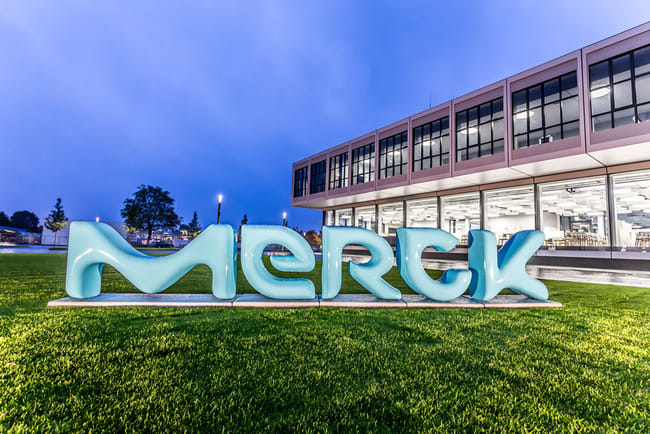
Artificial intelligence has taken over the stock market so completely that we’ve almost forgotten how most long-term investors make money: slowly, through dividends and compound interest. While speculators jump from one AI story to the next, there’s a counterpoint that doesn’t seek the spotlight. Quality companies where time and regular payouts do the heavy lifting—not headlines.
The trio of Merck $MRK, Verizon $VZ, and Equinix $EQIX represents exactly this kind of counterbalance. On paper, these are classic “buy-and-hold” stocks.
A bet that the world won’t go crazy
What these three companies have in common isn’t their sector or the size of their dividends. It’s the kind of certainty they offer. Merck makes money because people get sick and need medicine. Verizon makes money because no one voluntarily turns off their phone. Equinix makes money because data has to be stored somewhere physically. None of those needs will disappear in ten years.
The difference lies in the price you pay for that certainty and in the specific bet each stock is actually making. And this is where the trio diverges far more than the “dividend” label would suggest.
Verizon Was Dropped from the Dow Jones—and That Might Be Good News
Let’s start with some drama. Before the market opened on June 29, Verizon was replaced in the Dow Jones index by Alphabet, Google’s parent company. The symbolism was clear at first glance: out with the old telecommunications wires, in with artificial intelligence.
The reason, however, is more technical than business-related. The Dow is weighted by share price, not by company size. With its share price around $45, Verizon accounted for only about half a percent of the index’s weight, whereas Alphabet, at over $340, has a much greater influence.
"Stocks that are consistently undervalued have a negligible impact on the index."
S&P Dow Jones Indices, announcement of a change to the index
The market reacted with a sell-off. Shares fell during the first trading sessions following the delisting, as funds tracking the Dow were forced to mechanically sell off the shares. New concerns also emerged: a new international joint venture with Britain’s BT is expected to cost Verizon $700 million to $800 million in the second quarter, along with restructuring costs of up to $750 million. Furthermore, the industry faces the threat of SpaceX breaking into the mobile market with its Starlink service. And the company’s debt stands at around $192 billion.
Nevertheless , one historical pattern is worth noting. CNBC pointed out that in five of the seven most recent Dow rotations since 2015, the delisted stock outperformed its replacement over the following year. The logic is simple: forced sales drive the price artificially low and create a discount. When rival AT&T was dropped from the index in 2015 in favor of Apple, it wasn’t the end of the world either.
Verizon’s fundamentals haven’t changed as a result of the rotation. The company serves over 94 million postpaid customers, is quietly growing in the domestic wireless internet market, and, through its AI Connect division, provides network infrastructure to companies such as Alphabet and Meta $META. It is targeting free cash flow of over $21.5 billion for this year. And most importantly: the dividend, yielding around 6.3%, has been growing for nineteen years in a row, while the company trades at just under 11 times earnings. Being removed from the index doesn’t change that.
Merck Is Competing Against Itself
Merck faces the opposite problem to Verizon. No one is kicking it out of anywhere, yet for years the market has lived in fear of a single date. In 2028, patent protection for the blockbuster cancer drug Keytruda will expire in the U.S., and two years later in Europe. That single drug accounted for roughly 46% of revenue in 2024—about $32 billion. It’s a classic situation where a single drug is propping up the entire company.
What’s interesting is what has happened in the meantime. While there is talk of a slump, the stock has climbed to $128—just below its annual high—and has returned nearly 50% to shareholders over the past twelve months. The market has begun to appreciate the plan to replace Keytruda before Keytruda itself is phased out.
That plan is ambitious. Merck promises around twenty new product launches and a total of up to $70 billion in commercial potential by the mid-2030s. On top of that, there’s a subcutaneous version of Keytruda, to which it aims to transition 30 to 40 percent of patients by 2028, and a series of acquisitions: Verona, with a COPD drug expected to generate up to $4 billion annually on its own, and, more recently, the biotech firm Terns.
“And we’re not done yet.”
Robert Davis, CEO of Merck, on the conference call discussing the 2025 results
The risk hasn’t gone away. Hanging over Merck are U.S. negotiations on drug prices in the Medicare system, softening demand for the Gardasil vaccine in China, and a recent investigation into clinical trials in China. But with a yield of around 2.6% and a forward P/E of just around 13 times earnings, you’re paying for a company that is actively defending itself against looming dangers, rather than just sitting idly by and waiting for them.
Equinix: A dividend below 2%, yet perhaps the purest AI player of the trio
The last name is the least well-known and the most paradoxical. Equinix is a real estate investment trust (REIT) that builds and leases data centers. Customers ranging from Coca-Cola to VMware to Zoom $ZM lease server space from it because they don’t want to build their own data centers. And because it’s a REIT, it doesn’t pay corporate income tax on its profits, most of which it distributes to shareholders.
The dividend yield on a dividend-paying stock sounds almost insulting: around 1.8%. But that’s the whole magic of it. Equinix has just raised its quarterly dividend to $5.16 and has been increasing it for eleven years in a row, while revenue has been growing continuously for 88 quarters. Over the past twelve months, the stock has gained 26 percent to roughly $1,083, and Citi analysts have set a price target of $1,260.
Here’s the irony: of the three “defensive” stocks, Equinix is the most direct bet on artificial intelligence. The market for AI data centers is estimated to grow by an average of a quarter annually through 2031. Anyone who wants to capitalize on the AI boom but doesn’t want to speculate on individual chip companies can buy a position as a landlord through Equinix. The risk lies on the other side of the scale: the company is investing heavily, its debt isn’t fully covered by operating cash flow, and the stock is expensive. You’re essentially buying peace of mind at full price here.
What Does “Holding for Ten Years” Actually Mean?
When you line up these three stocks side by side, the comfortable notion of a “boring dividend trio” falls apart. Verizon is a bet that AI won’t be able to break people’s habit of paying for a signal. Merck is a bet that the company will manage to build a new business before its old one collapses. Equinix is a bet that AI needs concrete and cooling, not just algorithms.
And the very idea of “holding for ten years” tests not so much the companies as the patience of their owners. It tests whether you can weather the day when your stock is kicked out of the Dow Jones and everyone is writing that it’s all over. Whether you can endure the countdown to patent expiration, which takes years. And whether you mind receiving an almost symbolic dividend today in exchange for growth that may not come for another decade. Because ten years isn’t about what the company can do. It’s about what you can endure.