


30% growth outlook and contracted orders worth 14 billion

There is a rare type of company where no one questions the quality of the business. It is growing at a rocket pace, dominates its market, has loyal customers who rarely leave, and has mountains of orders for years ahead. Its technology is also transforming an entire industry, and customers love it. And it is precisely with such a company that the hardest question an investor can face begins: how much are they willing to pay for that quality.
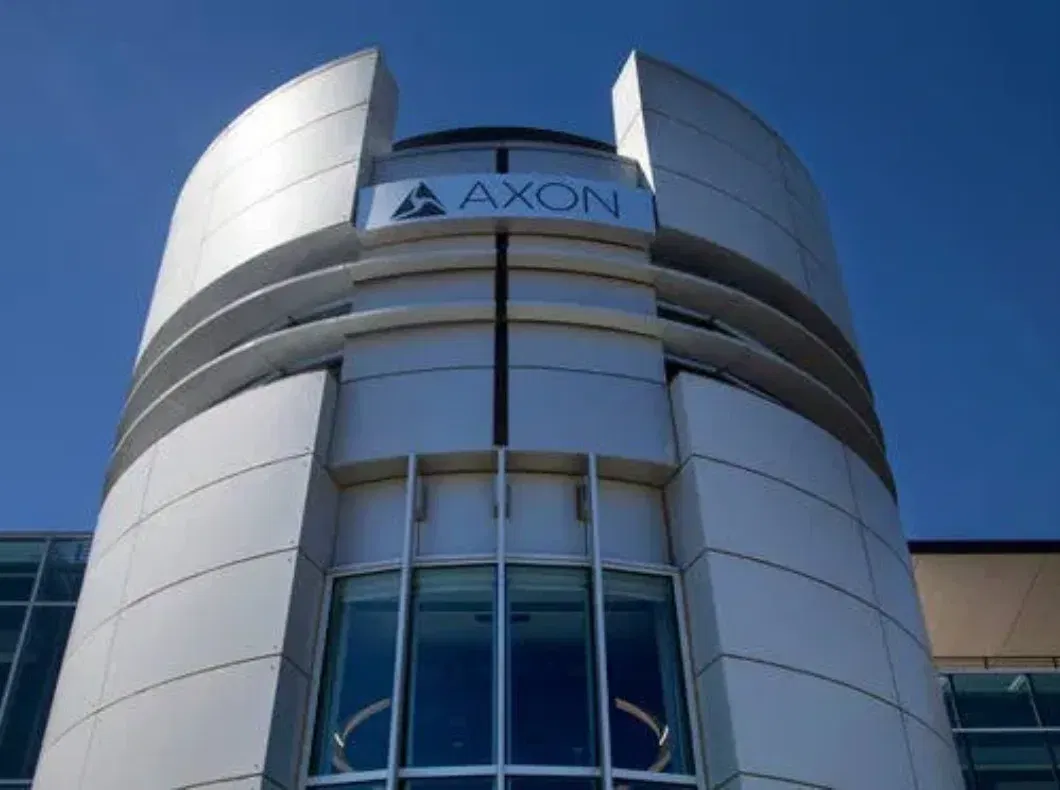
Key points
The company has been growing for nine consecutive quarters at a pace exceeding 30% and expects revenue growth of 30 to 32% this year.
It sits on contracted orders worth 14.3 billion dollars, giving it unprecedented visibility into revenues for years ahead.
Revenues from artificial intelligence products jumped by more than 700% year-on-year, and revenues from drone defense by more than 300%.
A price-to-earnings ratio of 192 looks insane, but it is distorted by stock-based compensation. The real valuation is lower, though still high.
It is nicknamed the operating system for police. It dominates the market for stun guns and body cameras and holds one of the largest collections of police data in the world.
We are talking about a company that has become almost indispensable for police forces. It makes stun guns, body cameras, and, most importantly, software into which officers upload and manage their evidence, write reports, and manage field operations. It has gradually built such an interconnected ecosystem around itself that once a police force adopts it, it can practically never leave. On top of that, the company has added artificial intelligence that saves officers hours of paperwork, and its sales in this area are exploding.
There is only one catch, but a fundamental one. For this exceptional quality, the market charges one of the highest prices on the entire exchange. The stock trades at earnings multiples that leave practically zero room for error, and opinions on whether this is justified diverge dramatically. Some see a company that will grow for decades and consider today's price still cheap. Others warn that it is dangerously overvalued and that the cash it actually earns is coming in much more slowly than such a high price would require.
The question for an investor, therefore, is not whether it is a great company. That is beyond debate. It is whether that great company is also a great buy at today's price, or whether the investor is buying years of perfect growth that still need to materialize. And exactly where a reasonable value lies, what the scenarios are, and how serious the risk is, we analyze in the paid section.