


Overlooked Costco rival with more attractive valuation and room to grow

BJ's Wholesale beat estimates and raised its full-year outlook. But the fastest-growing part of the chain isn't groceries. It's gas stations, where gallon sales jumped 10.5 percent while the whole industry reported a five percent decline. It's driven by member discounts at the pump and gas above four dollars. So the food retailer profits from record fuel prices too.
Key points
Comparable sales rose 11.9 percent. Excluding gas stations, 3.1.
Capital expenditures have grown from $324 million in 2021 to $702 million and are expected to be $800 million this year. Operating margin stayed at 3.8 percent.
Texas, according to management, is more than thirty percent above membership plan, and two local pumps rank among the top ten percent of the entire chain.
Hidden in the results is an eleven million one-time gain from selling an option on a distribution center, which the company did not exclude from adjusted figures.
Share buybacks for the half-year exceeded free cash flow. The difference was covered by a revolving credit facility.
The U.S. average gasoline price on August 23, 2026 climbed to $4.10 per gallon. According to AAA, that's the highest value ever recorded for that date, and this August will become the most expensive August in measurement history. Behind it all is the March escalation in the Middle East, after which the pump price jumped from $2.98 to $4.02 in a single month. For the vast majority of American retailers, this is bad news: expensive gasoline takes money from household wallets that they would otherwise spend elsewhere.
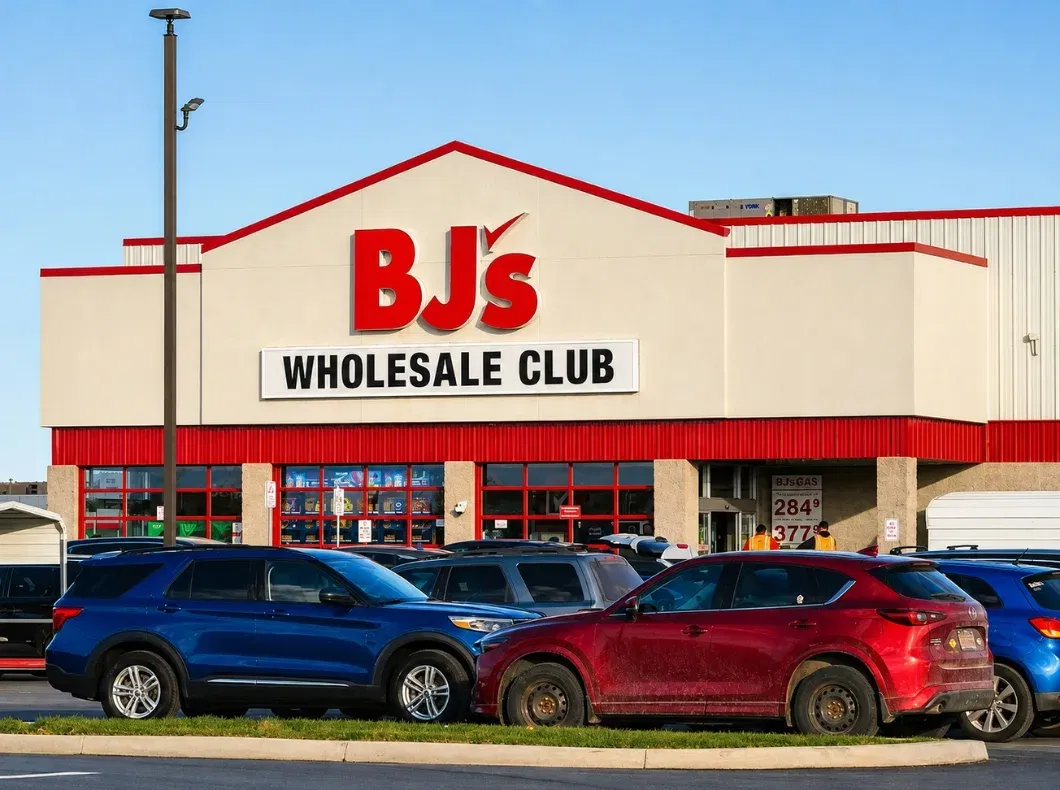
For BJ's Wholesale Club $BJ, it's a different story. The New England warehouse club chain operates 206 gas stations at 267 clubs and sells gasoline to members cheaper than the surrounding area. When the price on the street corner spikes, the discount suddenly amounts to tens of dollars a month and people drive for it. In the quarter ended August 1, the company sold 10.5 percent more gallons than a year ago, while the industry as a whole reported a decline of about five percent.
On paper, the results looked great. Comparable sales rose 11.9 percent, revenue 15.9 percent, earnings per share 19.3 percent to $1.36 versus a consensus around $1.16. Management raised the full-year outlook. The stock added 5.6 percent on Friday and closed at $96.42.
And yet, even after that jump, the stock costs about a fifth less than on April 14, 2025, when it climbed to a record $120.49. Since the start of the year, it has added about seven percent, roughly five percentage points less than the S&P 500. In June this year, it traded below $84. Meanwhile, the company beat analyst estimates in all four of the last quarters.
So the market sees something. The question is what. The obvious answer is that it simply doesn't believe in gasoline, and that's partly correct. But gasoline is just the surface. Beneath it lies a number that appears once in the press release and not at all in headlines: BJ's plans to spend about $800 million this year on new clubs, gas stations, and distribution centers. At today's market capitalization, that's more than six percent of the entire company's value buried in the ground every year. Will it come back?