


Decades of dividends, billions in profit. Why do investors overlook this insurer?

Financial media headlines and discussions at investor conferences are dominated by stocks whose estimates are recalculated every quarter and where debate rages over whether they deserve 30x, 40x, or 50x annual earnings. Almost anyone who is even slightly interested in the markets knows the ticker of such a stock.
Key points
Dividend history: The company has paid shareholders a dividend continuously since 1942 and has increased its regular dividend for 45 consecutive years, making it one of a handful of American companies with such a long unbroken payment history.
Two faces of the business: the company does not rely on a single insurance product. Alongside classic insurance, it operates one of the largest title insurers in the US, whose economics work completely differently from classic P&C insurance.
Profitability under pressure: operating results remain solid, but the combined ratio has progressively deteriorated over the last five years and in the second quarter of 2026 crossed the threshold that shareholders were accustomed to from the previous decade.
Low valuation: the stock trades at a significant discount to some competitors in the industry, with the market giving the company no premium for business stability or the length of its dividend history.
Dividend and low P/B do not yet mean opportunity: what matters is whether the insurance, investment portfolio, and capital allocation together justify the price the market offers today.
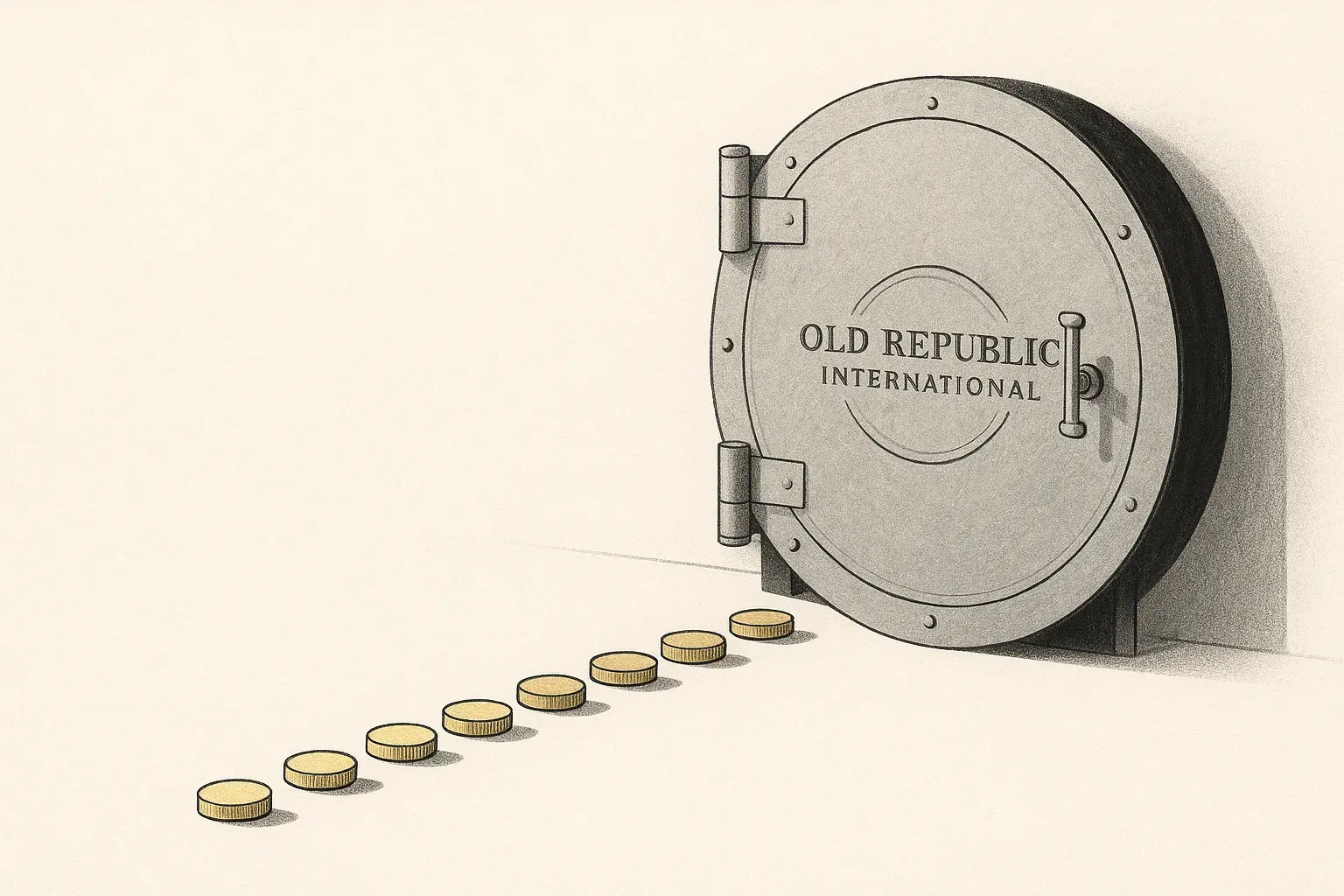
One particular company lives a completely different life. It has paid shareholders an uninterrupted dividend since 1942 and has increased it regularly for 45 consecutive years, longer than the career of the vast majority of today's portfolio managers. Over the last five years, its earnings have fluctuated with the mood of the capital markets, but the operating business has been profitable every single year. The balance sheet is conservative, debt is low, and rating agencies give it one of the highest financial strength ratings in the entire industry. The vast majority of investors have never heard of it.
Yet it trades on the stock exchange at less than ten times earnings and only a small premium over book value. The market assigns it no growth premium, no AI story, no media attention. Is it an overlooked dividend compounder that the market undervalues out of mere neglect? Or is the low valuation a perfectly rational response to the fact that this is an insurer whose business will never grow at a pace that would justify a higher multiple? The answer lies in numbers that most investors have never properly opened.