


Will this small biotech survive an aggressive short seller attack?

When you find this company through a classic screener, you will be amazed. A revenue growth rate of 64.6% annually since 2020 sounds like a dream for every investor looking for growth treasures. But one well-known short seller pointed out that this could be just a big bluff by company management, and sent the shares drastically downward.
Key points
Screeners show a growth rate of 64.6% annually, but this year the company added only one percent to revenue.
The short seller published a report, after which the stock lost 16 percent in a single day.
In February, the company promised one billion dollars in revenue; ten weeks later, it withdrew the entire plan.
Two customers accounted for 73% of revenue, and days sales outstanding jumped from 43 to 113 days.
Analysts expect almost double today's price; the Bulios model expects 57% less.
The rearview mirror shows 65%, the windshield 1%
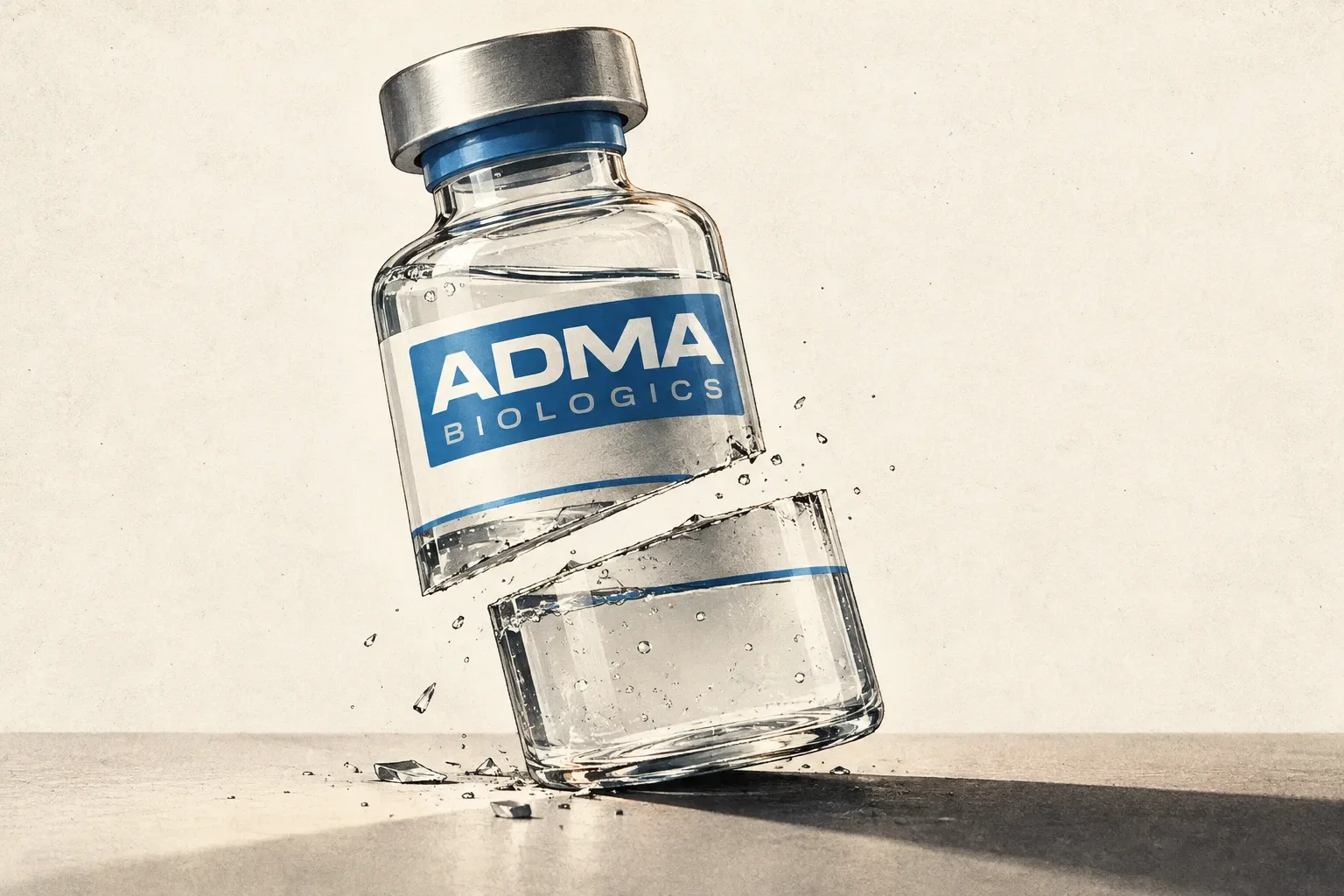
ADMA Biologics $ADMA is a small American manufacturer of blood plasma drugs with a single factory in Florida. Next to giants like Grifols, Takeda, or CSL, it is a dwarf, but one that largely collects plasma itself and produces everything at home in the USA. That is why it long avoided the tariff debate, and why the market long treated it more as a manufacturing company than as a biotech.
Where does that flagship number actually come from? In 2020, the company had revenue of 42.2 million USD. For 2025, it reported 510 million USD. That is a twelvefold increase in five years, i.e., exactly those 64.6% annually. Every screen looking for growth companies shows it among the top results.
But a look at the present shows something completely different. In the first half of 2026, ADMA earned 238.9 million USD compared to 236.8 million a year earlier. In the second quarter, revenue grew by 2%. The market reacted brutally: from a high of 20.46 USD on December 12, 2025, the price fell to 7.21 USD on March 26, 2026. Today the stock trades around 10 USD, and the company has a market capitalization of about 2.3 billion USD.
Is this the right moment to enter, or are those right who claim that the value of this company is still much lower?