


In my latest video, I said France was borrowing at more than 4.8%. Now it’s 5%, the highest since 2002.
A bond yield is the price a country pays to borrow money. When it rises, the market demands a higher return because it has less confidence in the company or country.
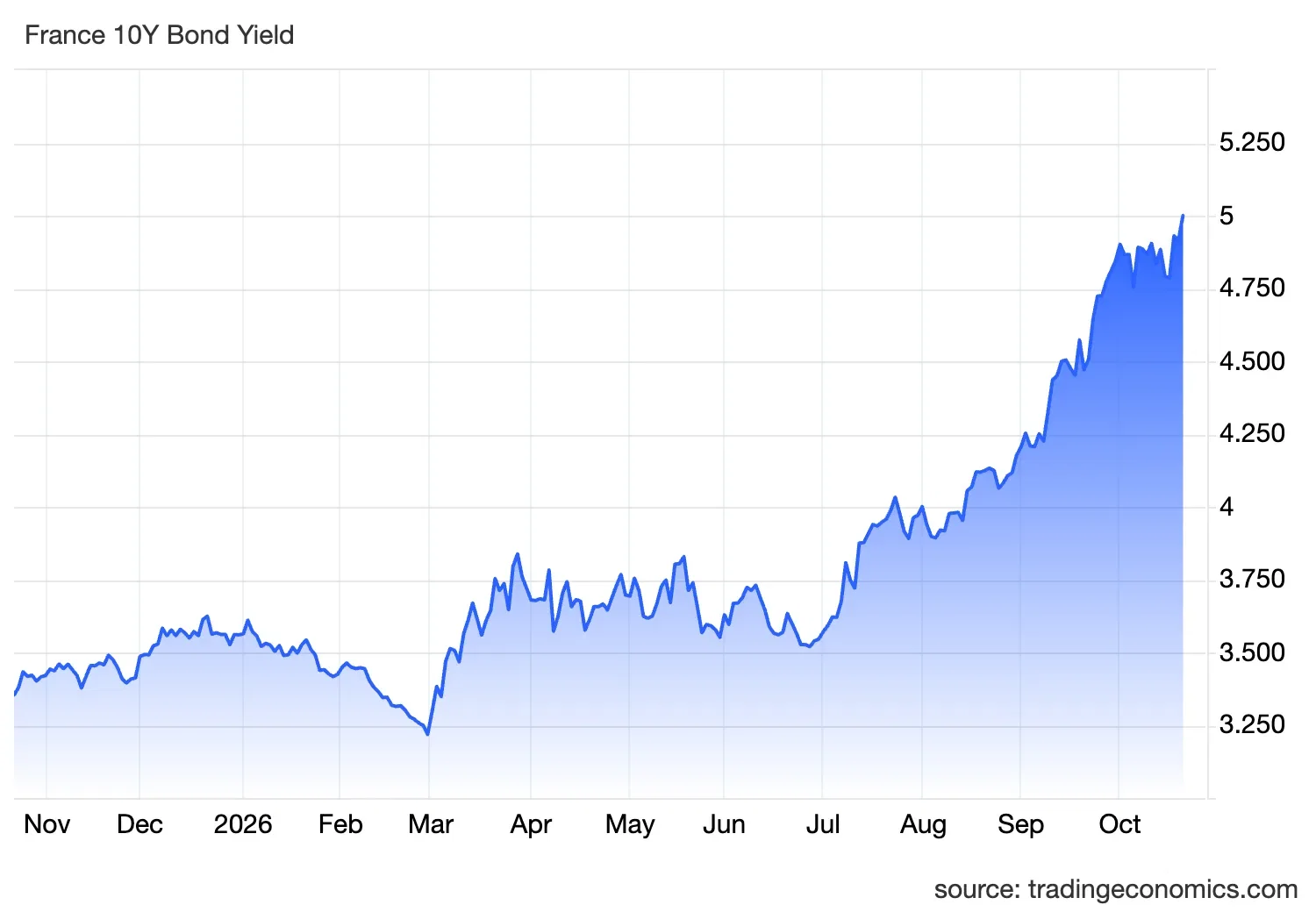
And now remember that vicious circle from the video. France owes 3.6 trillion euros. Cheap bonds issued between 2015 and 2021 are gradually maturing, and the government has to replace them with new, more expensive ones. Every additional percentage point means billions that don’t go to schools, but to creditors. Students are protesting over schools in particular.
But higher yields don’t hurt only the government. They make loans more expensive for businesses and households, too. French banks are hit hardest because they hold large amounts of French government bonds.
Right now, I’m mainly watching two things:
1. Friday, October 23, when Moody’s publishes its rating of France (currently Aa3 with a negative outlook)
2. whether Prime Minister Lecornu can push the budget through parliament, where his government does not have a majority
France isn’t Greece, and it can still borrow without difficulty. But the market is clearly showing it’s running out of patience. And a lot could still happen before the presidential election in April.
You can find the full analysis, from the protests and debt to the candidates, in my latest video on my YouTube channel or on Bulios.