


Markets rise after the election, but some AI-linked stocks are falling. What are investors actually valuing?
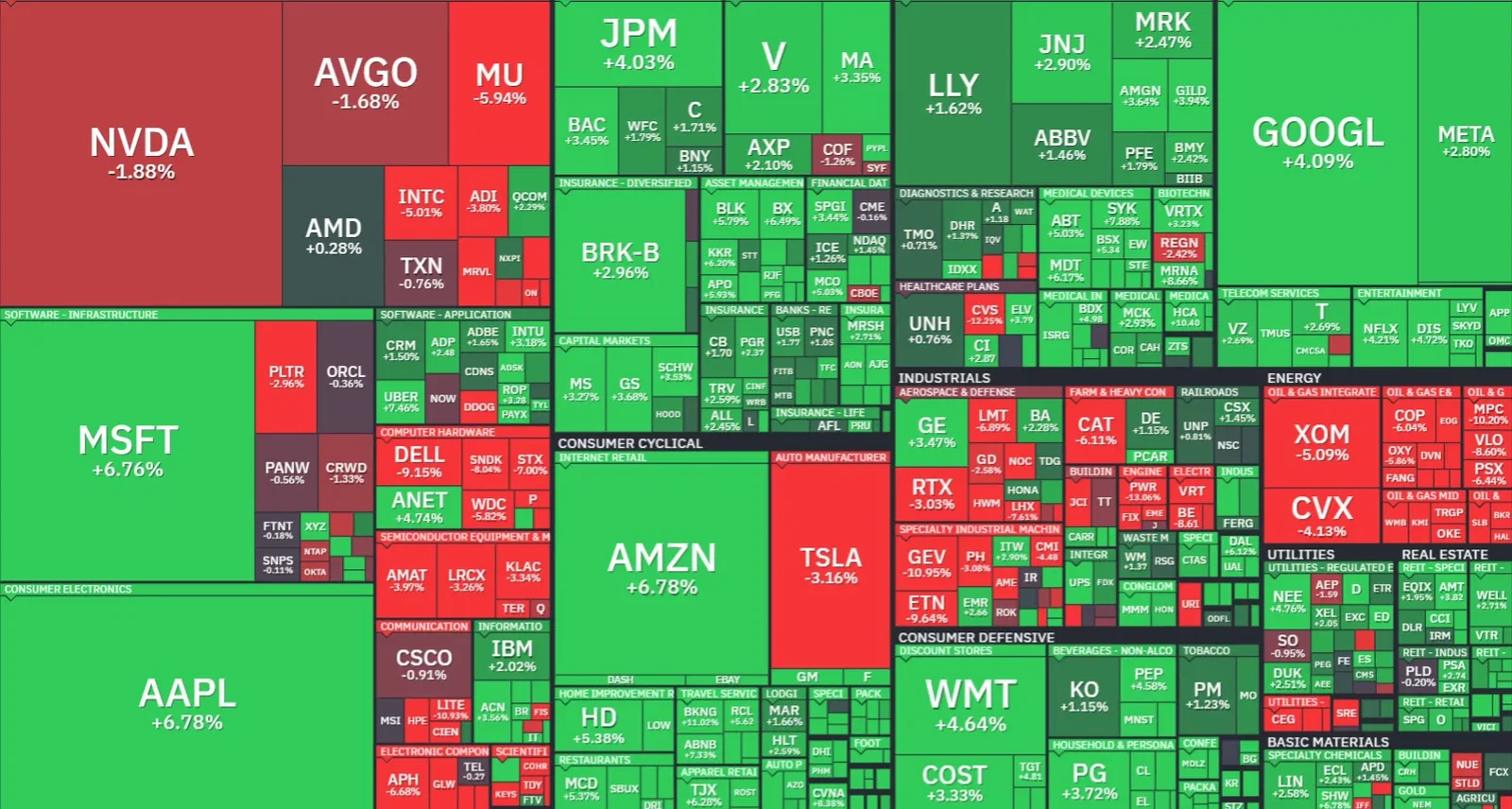
Today’s S&P500 map shows major differences. Amazon and Microsoft are rising, while several suppliers of chips, cooling systems, and electrical equipment are falling. The same political change can affect different parts of the industry in different ways.
The broader market is getting a boost from the end of election uncertainty and lower bond yields. A divided government also makes it harder to push through major changes. Investors may therefore not see the outcome as a threat to every company’s profits.
Texas is key for AI. Governor-elect Gina Hinojosa supports pausing new data centers until rules are adopted to protect local communities. She also wants developers to bear the costs of necessary infrastructure and lose their tax incentives. This is not a proposal for a permanent ban on AI construction. But it is certainly a risk of longer timelines and higher costs.
For a developer, a delay could mean a later start to revenue. For a chip or cooling supplier, it could mean postponed orders. At the same time, this could increase the value of existing centers and sites with grid connections, which will be harder for competitors to build.
With Amazon and Google, the market may also see the other side: slower investment could ease pressure on free cash flow in the short term. Investors have recently been concerned about the huge spending on AI and the returns it will generate. But lower capex doesn’t seem like such a positive to me... because if a company lacks capacity, it may also limit future revenue growth.
Another possible boost is the expectation of agreements on selected tariffs, spending, or curbs on the war with Iran (as Goldman Sachs is mentioning today, for example).
My take
The election result doesn’t mean weaker demand for computing power. It only changes the risk around how quickly and at what cost new capacity will be built. For individual companies, I’d keep an eye on permits, grid connections, launch timelines, and cash available to cover potential delays. That’s where we’ll see who is hurt by the new conditions and who might benefit from a stronger position.
What’s your take? Are you buying anything?