


4 European Banks with P/E Below 10 and Growing Dividends

Four large European banks are reporting record profits, returning 80 to 100 % of net income to shareholders and trading at roughly 10 to 13 times this year's earnings. But after a two-year rally in bank stocks, the question remains whether their valuations are still attractive or whether prices already reflect the peak of the interest rate cycle and the risks of a stagnant European economy.
Key points
Low P/E ratios are no longer widespread. At current prices and based on management's earnings forecasts for 2026, the P/E ratios of the banks covered range from roughly 10 to 13. Some fall below 10 only when based on targets for 2027 to 2028.
High profitability is largely structural. The most efficient banks achieve ROTE above 20 % with a cost-to-income ratio of around one-third. Beyond higher interest rates, this is driven by cost savings and growing fee income.
Dividends are growing faster than earnings. This is due to higher payout ratios and a declining share count thanks to buybacks. Dividends and buybacks combined amount to approximately 7 to 9 % of market capitalization annually, based on payout policies.
Capital buffers are solid, but risks vary by country. In southern Europe, the main risks are high government debt and extraordinary bank taxes; in Germany, a stagnant industrial sector; and in the Netherlands, concentration in the mortgage market.
None of the four banks is a classic value trap. But the market is questioning whether they can maintain current profitability in a weaker economy and with lower interest rates. For one of the banks, the share price is also primarily driven by an ongoing takeover.
European banks after the end of the zero-rate era
Between 2016 and 2022, the European Central Bank kept interest rates negative. For banks, this meant compressed net interest margins, because deposits could not be charged below zero while loan yields were falling. The European sector traded far below book value at the time, and return on equity (ROE) remained around 5 to 7 %, below the cost of capital.
The inflationary wave of 2022 and 2023 and the ECB's subsequent rate hikes reversed the situation. Banks immediately raised loan rates, while raising deposit rates more slowly. Net interest income rose by tens of percent and profits reached historic highs. According to ECB supervisory statistics, the aggregate ROE of significant euro area banks reached 10.73 % in Q2 2026, its highest level since the time series began in 2015. The cost-to-income ratio fell to 53.06 %, aggregate CET1 stood at 16.00 % and the non-performing loan (NPL) ratio was 2.17 %.
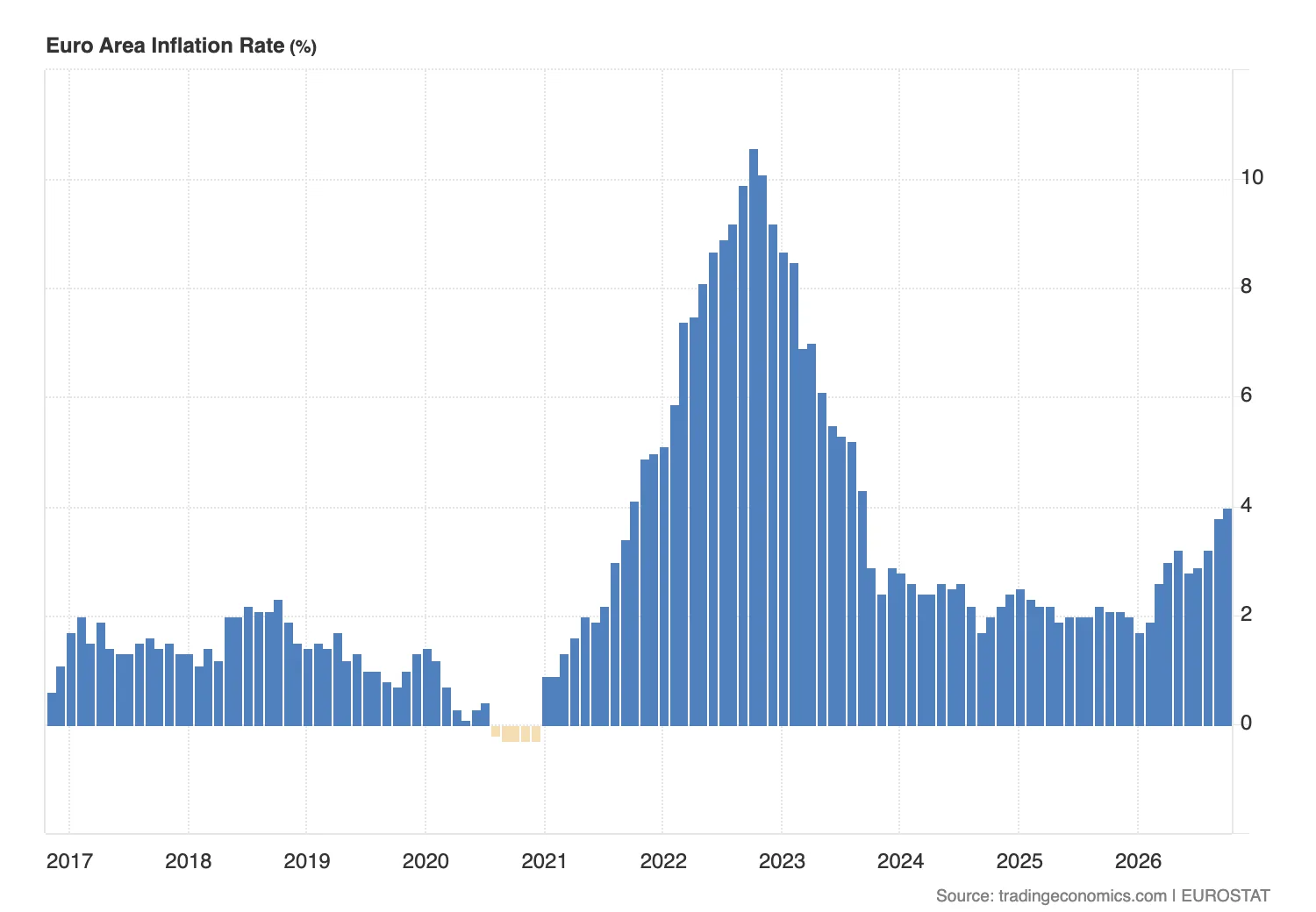
But the impact of higher rates is not unlimited. After rate cuts in 2024 and 2025, banks' interest income began to decline. UniCredit reported net interest income 4.3 % lower in 2025, while ABN AMRO's was down 3 %. Banks offset this with fees, interest rate hedging (so-called replication portfolios) and cost savings. Higher rates also eventually increase deposit costs and put pressure on borrowers, which can lead to higher loan loss provisions.
The ECB returned to rate hikes in 2026
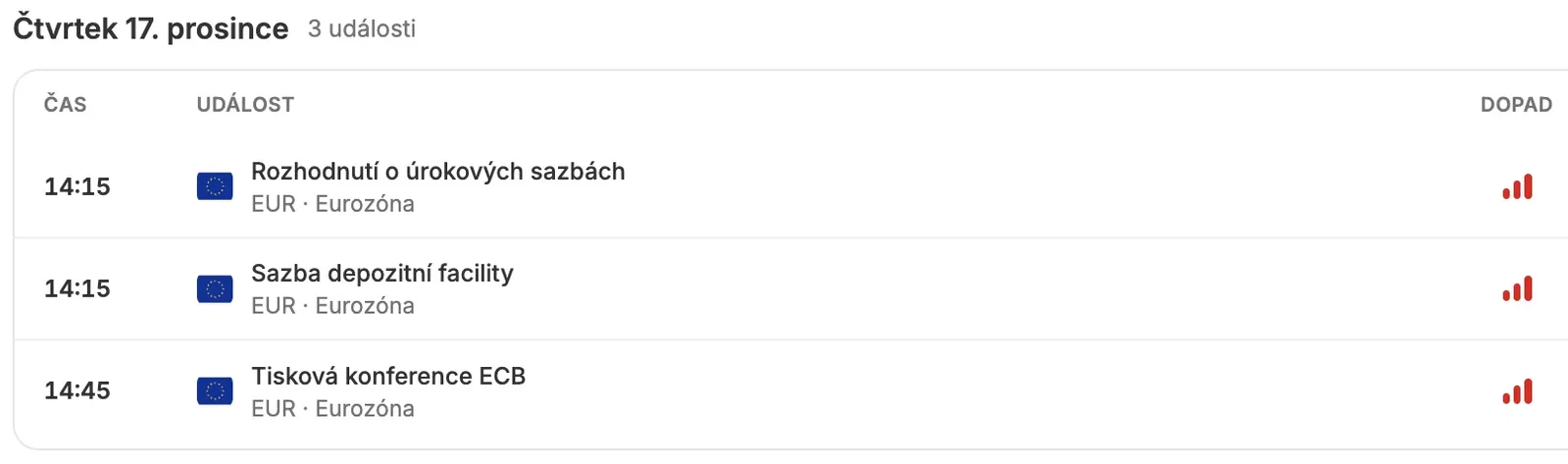
The new interest rate environment is being shaped by an energy shock linked to the conflict in the Middle East. After two rate hikes this year (in June and September), the ECB left its deposit rate at 2.50 % on October 29, 2026, saying that rising energy prices are increasing inflation risks while also weighing on growth prospects. According to Eurostat's flash estimate, euro area inflation rose to 4.0 % in October, while core inflation held at 2.5 %. The next decision will be made on December 17.
For banks, this cuts both ways. Higher short-term rates and a steeper yield curve support net interest income. Intesa expects a further significant increase in interest income in 2027, while ABN AMRO raised its 2026 commercial net interest income outlook to more than €6.9 bln. On the other hand, the energy shock is slowing the economy, and an economic slowdown is the main source of credit losses for banks.
Why European banks are cheaper than US banks
European banks have long traded at a discount to large US banks. There are several reasons. European banks had lower structural profitability in the previous decade, a fragmented market without a genuine banking union, higher regulatory capital requirements and closer links to their home countries' government bonds (the so-called bank-sovereign nexus). US banks also benefit from deeper capital markets and higher fee income. The discount has narrowed over the past two years as European banks increased ROE and began paying out most of their profits. Eliminating it entirely, however, would require the market to consider current profitability sustainable even at lower interest rates.
Economic environment: Italy, the Netherlands and Germany
Italy: stagnation, high debt and sensitivity to spreads
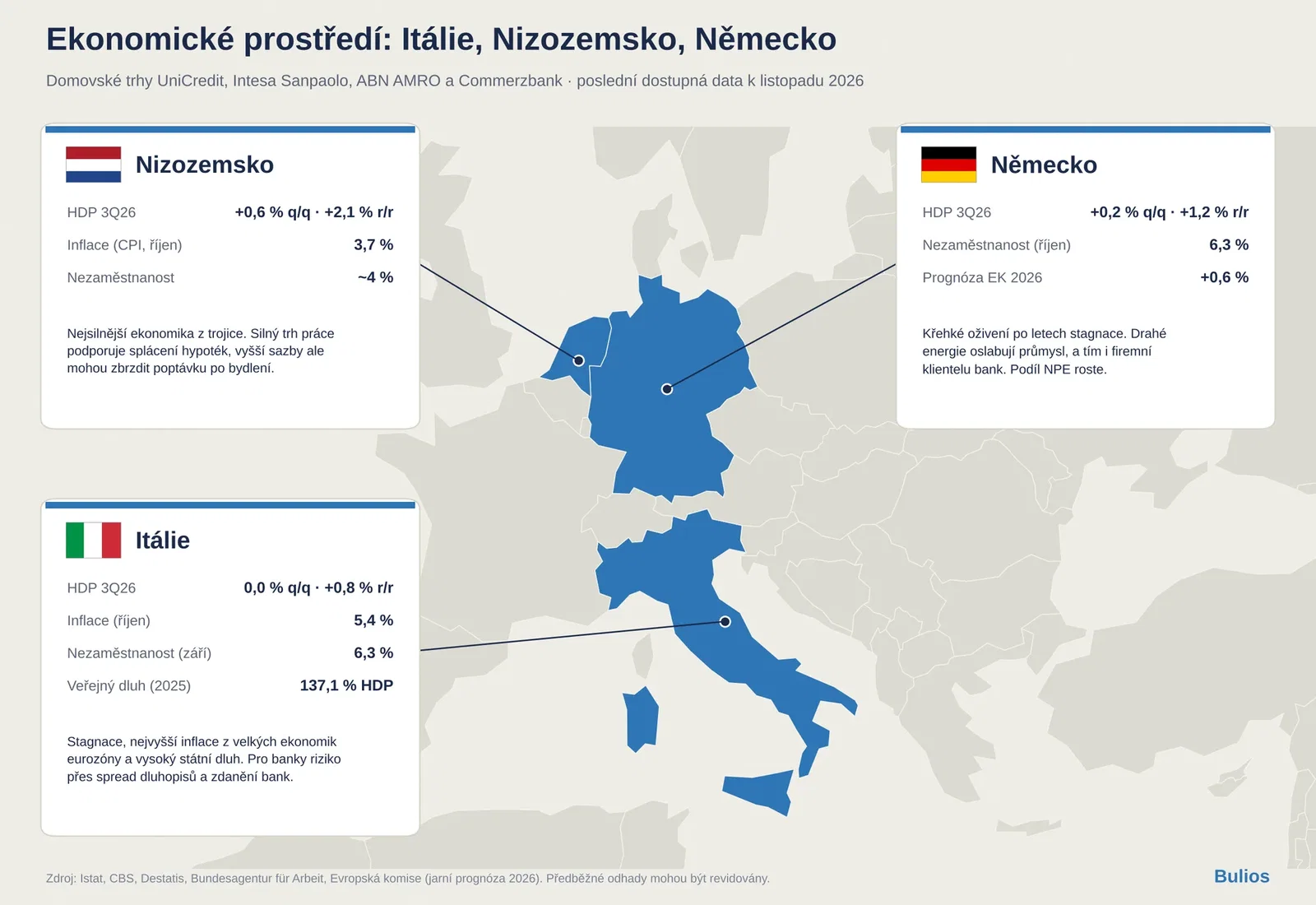
Italy is the home market for two of the four banks. According to Istat's preliminary estimate, GDP was unchanged quarter over quarter in Q3 2026 and rose 0.8 % year over year. Industry and net exports contributed to the slowdown, while services kept growth going. According to Istat's preliminary estimate for October, inflation in Italy rose to 5.4 %, the highest among the major euro area economies. Unemployment rose to 6.3 % in September from 5.9 % a year earlier, although employment increased by 198,000 people year over year.
Public finances remain the main structural risk. According to Istat, public debt reached 137.1 % of GDP in 2025. The government's October 2026 program document forecasts 138.1 % at the end of 2026 and 138.5 % in 2027, with the deficit expected to fall below 3 % of GDP. The spread between Italian and German 10-year bonds was around 103 basis points on November 9.
This has three direct effects on UniCredit and Intesa:
Bond portfolios: Italian banks hold significant amounts of domestic government bonds, so a widening spread reduces their capital through revaluation.
Tax risk: Intesa reported an impact of around €0.9 bln on its income statement and equity from Italy's 2026 budget law. Political pressure for extraordinary bank taxes is a recurring theme in Italy.
Credit quality: stagnant GDP and higher inflation put pressure on households and small businesses, although Italy's private sector is among the least indebted in the euro area.
The Netherlands: strongest of the three
According to CBS, the Dutch economy grew 0.6 % quarter over quarter and 2.1 % year over year in Q3 2026, its fastest pace since the end of 2022. Growth was driven by machinery manufacturing, including chipmaking equipment, and household consumption. Inflation (CPI) rose to 3.7 % in October, while unemployment remains around 4 %. But according to CBS, business confidence has been negative for 19 consecutive quarters.
The mortgage market is key for ABN AMRO. Low unemployment supports mortgage repayments, but higher rates could dampen housing demand, according to the bank's management. A strong labor market also helps explain why the bank again reported a net release of loan loss provisions in Q3.
Germany: weak economic conditions and structural problems
According to Destatis, German GDP grew 0.2 % quarter over quarter and 1.2 % year over year in Q3 2026. This marks a recovery after stagnation from 2023 to 2025, but it is fragile. In its spring forecast, the European Commission lowered its German growth estimate for 2026 to 0.6 %. Registered unemployment stood at 6.3 % in October according to the Federal Employment Agency, with 44,000 more unemployed people than a year earlier. High energy prices are undermining the competitiveness of industry, which is at the core of Commerzbank's corporate client base.
For Commerzbank, this means greater sensitivity to corporate credit risk. The non-performing exposure (NPE) ratio rose from 1.0 % in Q3 2025 to 1.2 % in Q3 2026. Government investment programs in infrastructure and defense are a positive for the profitability outlook, supporting corporate demand for financing.
UniCredit
Transformation under Andrea Orcel
Since Andrea Orcel became CEO in 2021, UniCredit has undergone one of the most significant transformations in European banking. The "UniCredit Unlocked" strategy was built on cost discipline, divestment of non-core holdings, reducing balance sheet risk and high shareholder payouts. The "UniCredit Unlimited" plan, launched in February 2026, builds on it. Net profit rose from €1.5 bln in 2021 to €10.6 bln in 2025 (adjusted for one-off tax items; reported profit was €10.9 bln).
Geography and revenue mix
UniCredit is diversified across four regions. According to its 9M 2026 results, Italy generated €9.0 bln in revenue, Germany (HVB) €4.3 bln, Austria €2.0 bln and Central and Eastern Europe €3.8 bln. Return on allocated capital ranges from 23 % in Germany to 31 % in Italy. Diversification reduces dependence on the Italian economy, but the bank remains sensitive to Italian spreads.
Q3 2026 results
According to results published on November 9, 2026, Q3 net profit rose 24 % year over year to €3.3 bln, and reached €9.4 bln for the first nine months (+16 % adjusted for a one-off gain of €653 mln in Q2 2025). Revenue rose 12 % to €6.9 bln, net interest income increased 8 % and fees, including insurance, rose 11 %. Costs fell 1 % and the cost-to-income ratio reached a record 32.8 %. The cost of risk was 18 basis points, and the bank holds €1.5 bln in reserves for future losses (so-called overlays). ROTE reached 25.5 %.
Capital and shareholder payouts
CET1 stands at 15.0 % after deducting the €4.75 bln buyback for 2025 and accrued 9M 2026 payouts. Organic capital generation reached 275 basis points in the first nine months. The payout policy targets 80 % of adjusted net profit, including 50 % in cash dividends. The 2025 dividend was €3.149 per share (+31 %). For 2026, the board approved an interim dividend of €3.00 per share (€4.5 bln in total), with an ex-dividend date of November 23 and payment on November 25, 2026. The AGM will propose a final dividend in 2027. The bank raised its 2026 profit outlook to "well above €11.5 bln".
Earnings quality and acquisition strategy
UniCredit's improved profitability is largely structural: nominal costs are lower than in 2021, fees are growing and the bank has reduced balance sheet risk. However, part of its profit comes from its share of Commerzbank's results and other equity-accounted investments. Higher rates also help. ROTE above 20 % should therefore be viewed as the upper range of sustainable profitability, not as the new norm at every stage of the cycle.
The main strategic event is the takeover of Commerzbank $CBK.DE. Following its exchange offer, UniCredit holds 47.59 % of the share capital, equivalent to 49.65 % of voting rights. On October 15, 2026, the ECB approved an increase in its stake above the previous regulatory threshold. UniCredit expects to gain control and establish new governance at Commerzbank by Q1 2027, subject to further approvals. The merger with HVB could take place sooner than originally expected, according to the bank.