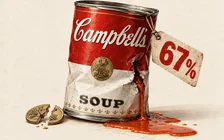
Ray Dalio spoke during the Milken Institute Asia Summit in Singapore.

This very well-known billionaire investor and founder of Bridgewater Associates has now spoken out a bit at a time when the Fed's actions on rate hikes before the end of the year are still uncertain and inflation is certainly not yet sparked.

Ray Dalio says for now he prefers to hold cash, not bonds. "I don't want to own debt, bonds and things like that," the Bridgewater Associates founder said when asked how he would deploy capital in today's investment environment. And he added that ,"temporarily, right now, cash I think is good ... and interest rates are fine. I don't think it's going to be sustained that way."
Dalio added that the biggest mistake most investors make is , "believing that markets that have done well are good investments ."
When asked how a new investor should deploy capital, Dalio's advice was. , "Be in the right geographies, diversify, pay attention to the implications of disruptions, and choose asset classes that are creating new technologies and leveraging them in the best possible way.
Now to the debts and bonds on which he commented.
He pointed out that when debt makes up a substantial part of a country's economy, "the situation tends to worsen and accelerate". Because you have to have interest rates that are high enough for the creditor, but not so high that they harm the debtor. "We are at that tipping point of acceleration. But the real problem comes when individuals or investors don't hold bonds because it comes as supply-and-demand, one person's debt or another person's assets," he explained.
He warned that investors will sell their bonds if they don't get high enough real interest rates. And when bonds sell off, prices fall and yields rise because they have an inverse relationship. As a result, the cost of borrowing will increase and inflationary pressures will increase, which will be a difficult task for central banks.
'When interest rates rise, the central bank then has to make a decision: Do they let them go up and suffer the consequences, or do they print money and buy the bonds? And that has inflationary consequences," Dalio added.
"We're seeing that dynamic now. I personally believe that long-term bonds are not a good investment," he stressed.
Clearly, another investor is taking the, shall I say, more conservative option of holding cash towards the end of the year, because what the $SPY $^GSPC $^NDX markets have shown in the first half of 2023 now looks like a sideways, if not downward, move at best. I certainly don't want to make predictions though, no one has a crystal ball. 😊
Here I would like to develop the discussion, how do you feel about bonds? And further, whether there is any economist for example, because I am not and I believe enough of us are, kind of about relatively "translating" into the language of a trader, a novice investor, how bonds actually work in the economy, what it means for banks, government = investor. 😊