
Hollywood is waking up to one of the most dramatic media clashes in decades. Just days after Netflix emerged as the apparent winner of the long-running auction for Warner Bros. Discovery, Paramount Skydance has detonated the narrative with an unexpected twist: a hostile takeover bid worth $108.4 billion. The offer aims to stop what was poised to become the largest acquisition in streaming history. Until now, the market had largely accepted that Netflix would secure Warner’s studios, television assets and HBO Max for roughly $72 billion — a combination that would give it unprecedented control over the entertainment landscape.
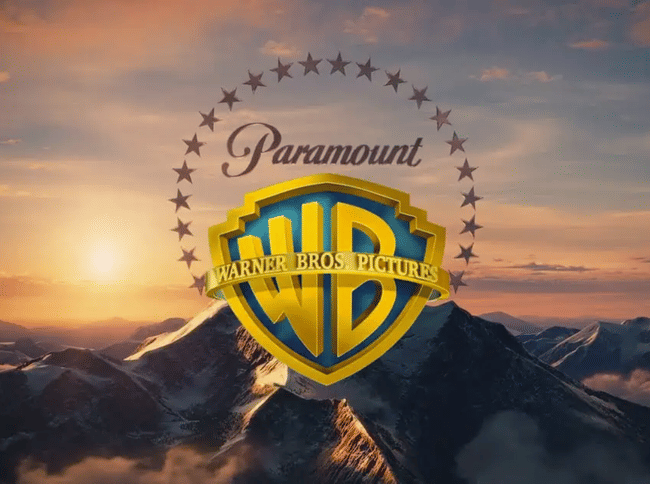
But the Paramount bid reshapes the battlefield entirely. The company is pushing to become a media powerhouse capable of competing with Netflix as well as tech giants like Apple and Amazon. At the same time, Paramount argues that Warner Bros. skewed the sale process by favouring Netflix from the beginning, unfairly disadvantaging other bidders. The political dimension is also intensifying: President Trump publicly questioned whether Netflix and Warner Bros. should be allowed to merge and hinted he may intervene. At stake is power, content ownership, and the future structure of Hollywood itself.
Paramount pulls out its biggest weapon: $108 billion and the desire to become a media hegemon
Paramount Skydance $PARA has been pushing its "all-in" strategy since September, when it sent its first unsolicited takeover bid to Warner Bros. After a series of rejections, it is now taking an aggressive tactic, offering $30 a share, more than Netflix $NFLX, whose bid values $WBD at about $28 a share. The difference could be decisive - especially considering that Paramount, backed by the Ellison dynasty fortune, is probably the only strategic player that can offer Warners a combination of capital, synergies and Hollywood roots.
Although Paramount has a turbulent history of rivalry with Disney, Universal and Warner Bros., its new management sees the deal as an opportunity to build a conglomerate with a huge catalog of IP that would include both Paramount Pictures and Warner Bros. Discovery. For Netflix, on the other hand, the goal is to strengthen its own streaming business, while Paramount is looking to strengthen its entire media empire. It is this divergent motivation that is now creating the biggest strategic clash in modern Hollywood history.
Netflix is not giving up: A historic offer and an unusually high breakup fee
Netflix is sticking to its original strategy. Its offer includes a shocking breakup fee of $5.8 billion - the largest ever offered by a streaming platform. In doing so, Netflix is showing that it is prepared to risk everything to gain control of HBO, its vast film library and its historic Burbank studios. For a company that has so far grown up without its own studio and without a vast archive, this is a strategic change that fundamentally defines its future for the next 20 years.
Netflix argues that the acquisition will bring lower prices to consumers by bundling services. But critics see the opposite: the giant combination could lead to higher prices, reduced competition and the loss of thousands of jobs. Hollywood unions are also stepping in, warning that the "superstreamer" could further disrupt the entertainment industry's job market.
- Don't overlook: Netflix to acquire Warner Bros. studios and HBO Max in groundbreaking $72 billion deal
Politics enters Hollywood: Trump, the Senate and the antitrust storm
Although the acquisition is proceeding at an extraordinary pace, regulation remains the biggest hurdle. A potential Netflix + Warner Bros. conglomerate would have over 450 million subscribers, control two of the largest libraries of film and television content, and become the largest commercial player in streaming history. This immediately raised concerns on Capitol Hill.
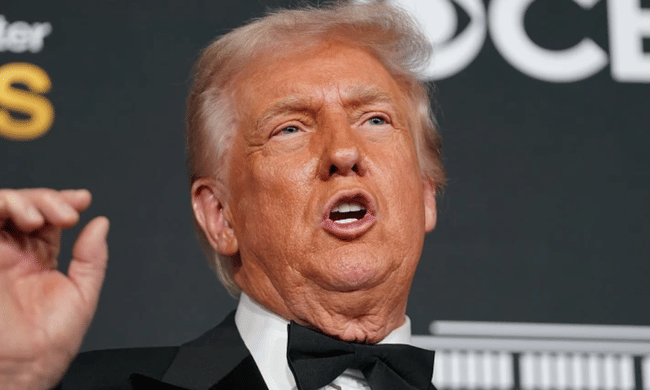
President Trump saidthat "Netflix and Warner Bros. may have a problem with market dominance" and that he himself would have "a say in what happens". Republican Senators Darrell Issa and Mike Lee called on regulators to stop or severely limit the transaction. Hollywood thus finds itself in the midst of a political storm like the one it last experienced with the Disney-Fox merger.
Paramount vs. Netflix: two visions of the future of content collide
Beneath the surface, these are fundamentally different strategies. Paramount wants to create a traditional media conglomerate that will link two historic studios and their cinematic universes. Netflix, on the other hand, wants to use IP to expand into new areas - gaming, live streaming or merchandising.
With the giant Warner Bros. catalog, it would get an immediate head start in gaming strategy, where it is only gaining experience so far. The acquisition would also open the way for him to enter entirely new areas such as theme parks, licensed products or major film events.
Whoever wins the battle, one thing is certain: This marks the end of an era in which streaming platforms operated separately from traditional studios. Now begins an era where the lines between Hollywood and the tech world will be definitively erased.
Future scenarios: who can win the battle for Warner Bros.
Events surrounding Warner Bros. have now reached a stage where three fundamentally different scenarios are possible. Each of them would determine the shape of the Hollywood and streaming market for many years to come. The first, and simplest, is that Paramount's hostile attack succeeds. If Warner Bros. accepts a higher offer and investors push to maximize value, Paramount Skydance may indeed take control of the studio. This scenario would combine the two traditional Hollywood brands and create a conglomerate built on the old studio model - with fixed franchises, licensed content and a production structure close to what Hollywood has known for the last hundred years.
The second scenario assumes that Netflix will defend its position and eventually complete the acquisition. This would mean a cleaner, simpler and faster transaction for Warner Bros. as Netflix also offers a record breakup fee and as a global streaming platform, it understands well how to monetize content in the digital environment. Unless regulators present an insurmountable obstacle, this scenario would be the least complicated in the short term - and revolutionary for Netflix in the long term.
A third, increasingly realistic scenario is that regulation stops both transactions. The heightened political tensions, concerns about the concentration of power, and the attention the case has received on Capitol Hill could lead to Warner Bros. finding itself at an impasse: it will not be able to access either Paramount or Netflix. In that case, a spin-off of assets, a restructuring, or a search for an entirely new buyer that does not raise antitrust concerns would likely follow. This scenario is the least predictable - and the most destabilizing for investors and Hollywood as a whole.