
Microsoft has unveiled one of its most ambitious investment rounds to date, committing 23 billion dollars to accelerate its AI footprint worldwide — with India emerging as the crown jewel of this plan. Satya Nadella now positions the country not merely as a major market, but as the future backbone of Microsoft’s global compute capacity. In a world where demand for AI infrastructure outpaces supply, the company is moving to secure long-term dominance.
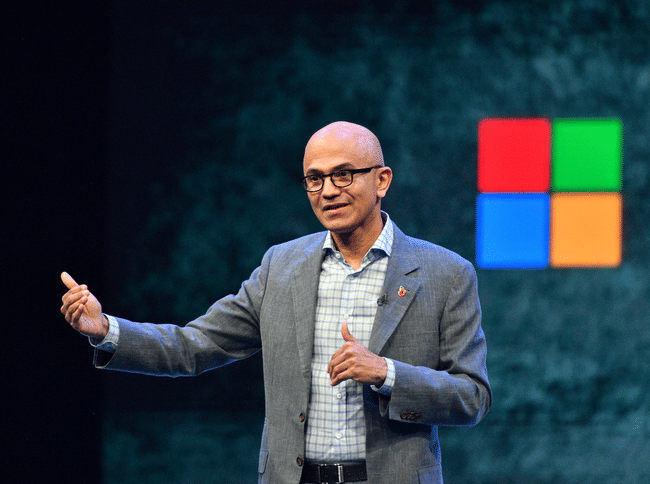
But the strategy radiates far beyond Asia. Alongside the Indian mega-cluster, Microsoft is expanding Canadian data centers, strengthening AI-native security systems and launching new cloud regions across Europe and the Middle East. The message is unmistakable: the company aims to weave a planet-scale network capable of absorbing the explosive growth of AI workloads for years to come.
India as a future AI superhub
The $17.5 billion investment represents Microsoft's largest-ever Asian $MSFTproject . The company wants to build several new data centers in India, boost capacity Azure and secure a head start in a region where demand for AI computing is expected to grow at one of the fastest rates. The first new centre is due to be launched in mid-2026, kicking off a transformation that could bring India closer to becoming a tech superpower.
This investment builds on an earlier $3 billion plan and gives Microsoft the opportunity to occupy the space before Amazon $AMZN or Google $GOOGdo the same . In a dynamic economy where AI adoption is spreading at a pace that has surpassed analysts' expectations, this is a move that could determine the balance of power for the next decade.
Canada strengthens its role as a research and security hub
Together with an Indian project Microsoft also announced an expansion in Canada, where it will invest more than C$7.5 billion over two years. The new capabilities are expected to be available in the second half of 2026 and will complement the previously announced infrastructure framework, which will reach nearly C$19 billion by 2027.
Microsoft is expanding here:
- Azure on-premises cloud for regulated institutions
- a collaboration with AI startup Cohere, whose models will be available on Azure
- and most importantly, a new Threat Intelligence Hubto enhance cybersecurity, AI forensics research and collaboration with the Canadian government
As a result, Canada will become one of the major North American hubs in AI security - a segment that is as crucial as the data centres themselves.
Microsoft's global AI roadmap is filling up fast
Within months, Microsoft announced billions of dollars of investment in:
- Portugal
- United Arab Emirates
- India
- Canada
This rapid succession of decisions shows that the company is responding to the dramatically increasing demand for AI computing power. At the same time, Microsoft acknowledges that Azure capacity will be scarce until at least 2026. In the last fiscal quarter alone, the company spent a record $35 billion in capital expenditures - and warns that it will grow even more aggressively in 2026.
Why Microsoft is acting so quickly
The main motivation is to keep pace in the race for AI markets, which today are decided by who can offer the most available capacity. Big Tech is experiencing an era of record valuations, but also growing pressure from investors who expect tangible results. Data centers are the most tangible pillar on which the entire AI economy stands today - without them, it would be impossible to train models, run cloud services, or support generative AI for enterprises.
Moreover, Microsoft faces competition:
- AWS, which is investing in its own chips and datacenters
- Google, which is significantly bolstering its Cloud TPU roadmap
- and younger players led by competitors focused on training models
Impact by 2030: A network that can change the dynamics of the AI market
If Microsoft actually completes all the announced projects, it will have a unique advantage by 2030. India would become Asia's largest Azure hub, Canada a major base for AI security and research, and European and Middle Eastern projects would fill strategic regions needed for global distribution of computing power.
By then, Microsoft may have a similar dominance in AI infrastructure as Google had in search fifteen years ago - one that competitors are struggling to catch up to.
The risks and weaknesses of Microsoft's AI expansion
While Microsoft's investment looks monumental, and the company is one of the few actively building global infrastructure on such a large scale today, there are factors that could slow the pace of expansion. The first is the enormous capital intensity of the entire project. Microsoft is already reporting a record CAPEX of over $35 billion for the quarter and announcing further growth, which may weigh on cash flow and sensitively set investor expectations in the long run. For hyperscalers, however, the return on investment in datacenters is a long haul - the results take years to come, and that's only if demand doesn't drop.
Another weakness is the limits in supply chains. The AI boom has caused a global shortage of GPUs, network cards, fibre optic jumpers and transformers for power grids. Microsoft can invest tens of billions, but without enough chips, electricity and materials, construction will slow. The company itself points out that Azure's capacity will be stretched until at least 2026 - suggesting demand outstrips supply by multiples.
The energy intensity of AI datacenters is also a significant risk. Each new Azure region requires massive transmission reinforcements, infrastructure modifications, and often negotiations with local regulators. These processes are slow and often drag on for years. At the same time, regulatory pressures can emerge as governments around the world begin to address how large an environmental and energy footprint AI infrastructure will leave.
Tech Insight: How Microsoft is building next-generation AI infrastructure
Behind the investments in India, Canada and other regions are not just traditional data centers, but a whole new generation of AI infrastructure designed to train and run giant models. Microsoft is building so-called hyperscale clusters with hundreds of thousands of GPUs that connect with extremely fast Ethernet and InfiniBand data networks - the technology needed to train models the size of GPT-4.1, Gemini or Claude. The computational core of these clusters today consists mainly of Nvidia H100 a H200but increasingly, custom chips are also expected to play a role Maia 100 for training and Cobalt 100 for inference.
The power consumption of these centres is measured in the hundreds of megawatts - comparable to a small city. That's why Microsoft is investing not only in data buildings, but also in power infrastructure, transformers, cooling and optimized modular systems. Modern Azure datacenters use extensive liquid cooling systems to keep GPU clusters running, and are also experimenting with new types of server racks designed specifically for AI.
Optimising data links is also an important part of the strategy. Minimal latency between GPUs is essential for training large models. For this reason, Microsoft is investing in the design of "dragonfly+" and "fat tree" network structures that reduce the risk of network congestion. At the same time, it is strengthening its own software layer - Microsoft DeepSpeed - to improve the efficiency of training large models and reduce their computational complexity.
When these elements come together, the result is an infrastructure that is unmatched by conventional cloud datacenters. These are extremely specialized units where a single training cluster can cost over a billion dollars and take years to build. Microsoft is now building this infrastructure in multiple countries simultaneously, a pace that is historically unprecedented from a technology perspective.