Nvidia Makes a Strategic Bet on Intel: Capital Meets Industrial Policy

Nvidia’s $5 billion equity investment in Intel is not a routine financial allocation, but a calculated move within a rapidly reshaping semiconductor landscape. At a time when chipmaking capacity has become a matter of national resilience rather than pure market efficiency, this transaction places Nvidia at the intersection of technology leadership and industrial strategy. The deal sends a clear message: the future of advanced computing in the US will not be built in isolation.
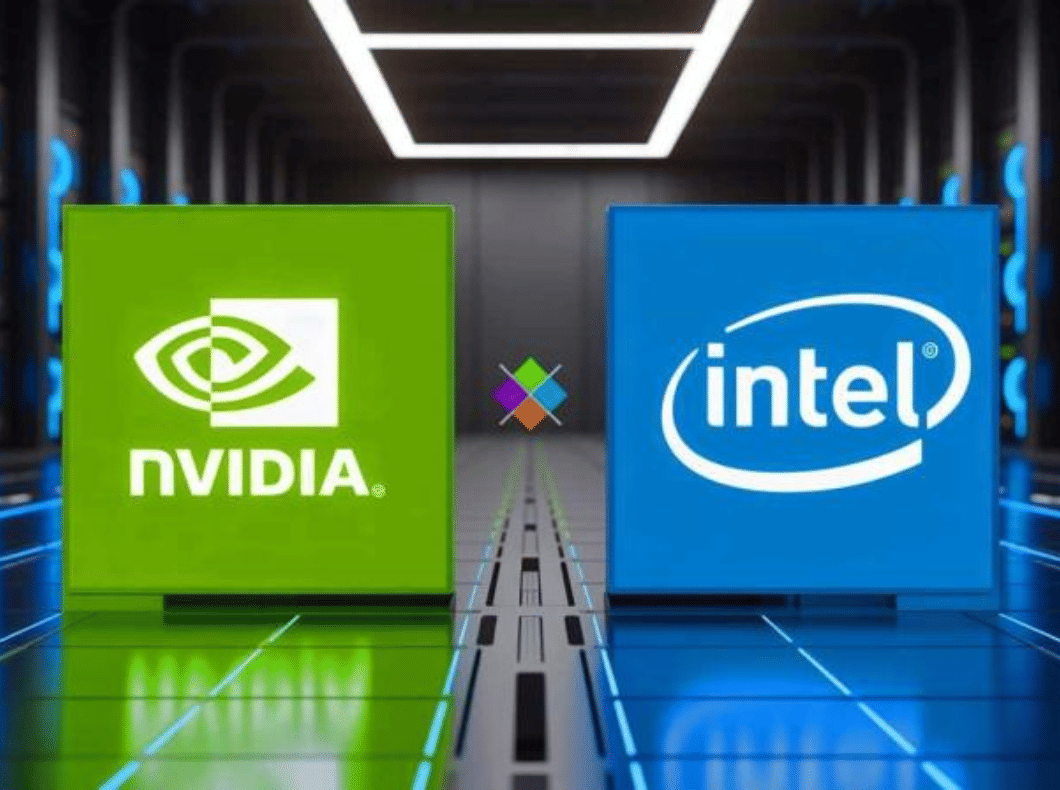
What makes the move notable is not Intel’s current performance, but its role in the broader supply chain. As the US pushes to rebuild domestic semiconductor manufacturing, Intel remains one of the few players capable of operating at scale. Nvidia’s capital injection strengthens that effort while quietly reducing its own long-term dependency on external foundries, particularly in an increasingly fragmented geopolitical environment.
Financial oxygen for Intel after years of heavy investment
For Intel, $INTC represents a clear relief for Nvidia's $NVDA entry . In recent years, the company has invested massively in building new factories in the US and Europe to regain technological sovereignty and compete with manufacturers such as TSMC $TSM and Samsung $SMSN.L. However, these moves have put a significant strain on its balance sheet, increased debt and put pressure on investors to return capital.
Nvidia's $5 billion investment:
Strengthens Intel's cash position without the need for additional debt
comes from a strategic partner, not a speculative investor
increases the credibility of Intel's long-term manufacturing strategy
The market sees the move as confirmation that Intel - despite past mistakes - remains a key link in the US chip ecosystem.
Why Nvidia is investing in a company that competes with it
From Nvidia's perspective, this is not a classic stock investment with the goal of short-term profit. Nvidia is buying Intel not to control it, but because the future of AI will not just be about chip design, but also about manufacturing capacity, geopolitics and supply chain stability.
Nvidia is extremely dependent on external manufacturing, especially at TSMC. As the AI boom continues to accelerate, the availability of advanced manufacturing becomes a strategic bottleneck. Intel, which is transforming itself into an open third-party chipmaker, may be one of the few alternative manufacturing options in the US and Europe in the long term.
Thus, the investment may:
open the door to future manufacturing collaborations
strengthen US technological autonomy vis-à-vis Asia
reduce systemic risk for the entire AI ecosystem
Regulators give the green light, market remains cautious
US antitrust authorities have approved the investment, confirming that the transaction is not perceived as anti-competitive. Nvidia does not become a dominant shareholder and does not gain control over Intel's strategy.
Nevertheless, the market reaction was rather weak. Nvidia's shares weakened slightly, while Intel's shares remained without significant movement. This suggests that investors are reading the move as a long-term strategy rather than an immediate catalyst for profitability for now.
A symbol of a broader change in the chip industry
This transaction illustrates well how relationships are changing in the semiconductor world. Previously clearly separated roles - chip designer, manufacturer, customer - are beginning to blend. In the era of artificial intelligence, it is no longer just about technological superiority, but about:
production stability
political support
the ability to finance extremely expensive capacity
By investing in Intel, Nvidia is effectively saying that a strong and financially stable Intel is in its own strategic interest. For Intel, it is again a confirmation that its efforts to return to the big leagues are supported by even the strongest players in the market.
What investors can take away from this
For investors, this is not a simple "winner and loser" story. Nvidia remains the dominant force in the AI revolution, but at the same time, it is securing future flexibility. Intel, on the other hand, is gaining time, capital and confidence, but still needs to deliver the technological results to justify that confidence.
This deal is not a bet for next quarter. It's a bet on what the global chip industry will look like in the next ten years - and that's why it's worth paying attention to.