
The arrest of three people in Taiwan on suspicion of forging documents to export Super Micro AI servers to China has brought two things into play at once: how hard the authorities want to enforce US export restrictions, and how sensitive key players like Nvidia are reacting. Nvidia boss Jensen Huang was exceptionally public about his partner Super Micro's behaviour when he arrived in Taiwan and called on the company to significantly tighten compliance. For investors around SMCI, this opens up an uncomfortable but important topic - legal and regulatory risk in an otherwise strong AI infrastructure growth story.
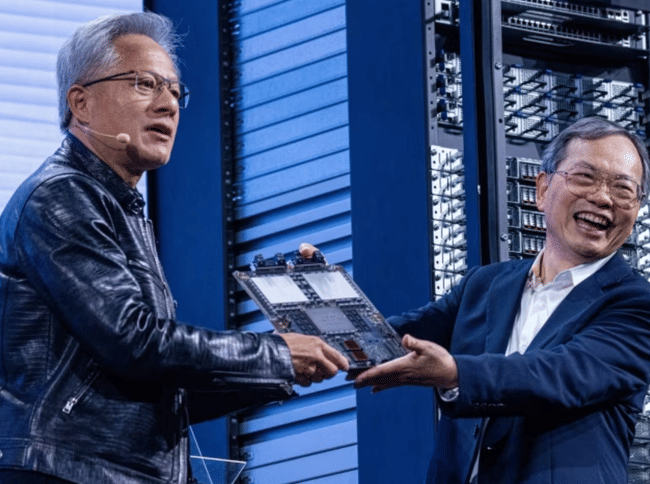
Below are the highlights of the story: what exactly is the server export issue, what exactly Huang said, how Super Micro has reacted since March, what the stock price is doing, what the company's numbers look like despite the case, and how analysts are looking at it.
What happened: Taiwan's first crackdown on 'circumventing' export restrictions
Taiwanese authorities detained three people this week on suspicion of helping to circumvent US export rules for AI servers to China. They were reportedly making false statements about servers made by US firm Super Micro to get them into China, Hong Kong and Macau despite restrictions on the export of high-performance chips such as Nvidia's AI accelerators.
So it was a classic "intermediate layer" in the chain: hardware with Nvidia chips was assembled at Super Micro, but the information in the accompanying documentation was meant to obscure the actual final market. For Taiwan, this is the first visible crackdown directly on smuggling or circumvention of controls in the semiconductor and AI server sectors, suggesting that US pressure to enforce restrictions is also translating into practice in regions where hardware is actually manufactured and re-exported.
Huang's message: Super Micro needs to get its act together
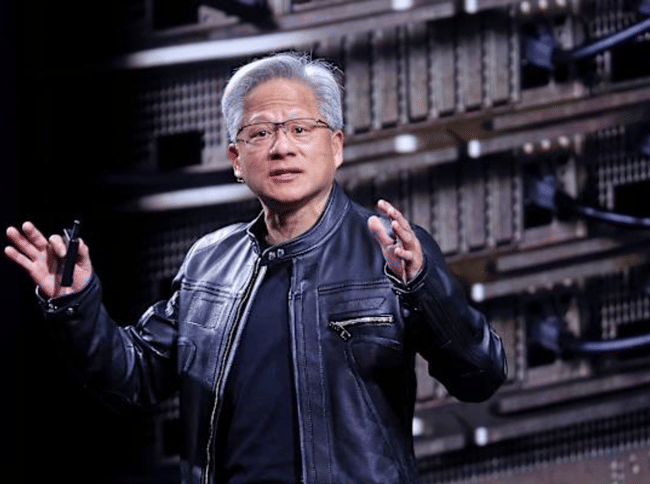
Jensen Huang commented on the whole thing right after arriving in Taiwan, which is unusual in itself - he doesn't usually comment publicly on his partner companies' compliance. But this time he stressed:
Nvidia, he said, "rigorously" explains export regulations to all its partners.
At the same time, he added that "at the end of the day, Super Micro has to run its own company".
That tone is clear between the lines:
Nvidia is making it clear that it doesn't want to bear reputational or regulatory risk for what happens "further down the chain."
At the same time, it is putting pressure on Super Micro to tighten up processes internally and clearly demonstrate that it takes export rules seriously.
For Nvidia's shareholders, this is a signal that the company recognizes the sensitivity of exporting to China and is trying to transfer risks to partners. For Super Micro shareholders, it's a warning finger: if the company fails to correct its mistakes, it could complicate its relationship with a key chip supplier.
March indictments in the US: three people, company still in the shadows
But the story didn't start in Taiwan, but back in March in the US. At the time, the Justice Department charged three people associated with Super Micro $SMCI with violating export control laws.
The charges face Yih-Shyan "Wally" Liaw, a longtime senior vice president of business development and board member.
Also, Ruei-Tsang "Steven" Chang, a sales manager in Taiwan.
And Ting-Wei "Willy" Sun, outside contractor.
Super Micro, as a company, was not named as a defendant in the indictment, but it has a reputational connection to the case. Management's response was:
put two employees on administrative leave.
terminated the relationship with the supplier immediately
Wally Liaw resigned as a board member effective March 20
the company stressed that the actions of the accused were in violation of internal compliance policies
and declared full cooperation with investigators and a commitment to comply with U.S. export and re-export laws
From a risk management perspective, this is an exemplary response: cut individuals loose, strengthen verbal commitments, and cooperate. Whether this will be enough for state authorities and partners like Nvidia $NVDA will be seen in the coming months. May 26 is also an important date, reportedly a milestone in the investor class action lawsuit.
What makes the SMCI exchange rate: high volatility in an environment of high expectations
Super Micro shares have been volatile in recent weeks. We have a mix of news:
short-term gains following the announcement of strong results and margin expansion
but in the week following Huang's comments and Taiwan's intervention, they fell by around the low teens from a local peak before recovering some of the fall
It's a typical "AI winner under the magnifying glass" profile: the numbers look strong, but as soon as a legal or supplier issue appears on the horizon, the market reaction tends to be violent.
Fundamentals: over 10 billion in sales in the quarter and profit growth
Despite the legal issues, Super Micro reported very strong results for the third quarter of fiscal 2026.
Net sales were approximately $10.2 billion (down from $12.7 billion in the second quarter, but more than double the $4.6 billion in the same period a year ago).
Net income of about $483 million, versus $401 million in the second quarter and $109 million a year ago.
Diluted earnings per share around $0.72 (vs. $0.60 in Q2 and $0.17 last year).
Investors reacted positively to the results, with the stock jumping about a fifth after the announcement, even though revenue missed analysts' highest estimates by more than $2 billion. The main driver was the return of gross margin to a level that was nearly half of market expectations - this is often even more important in AI infrastructure than the top line itself.
Management Outlook:
Fiscal fourth quarter revenue in the range of approximately $11 billion to $12.5 billion
For the full year 2026, expected revenue between approximately $38.9 billion and $40.4 billion
CEO Charles Liang added that "business fundamentals are stronger than ever", which from a fundamental perspective supports the thesis that demand for AI servers remains robust. The question is how much it may be hampered by supply issues and regulatory constraints.
What this means for Nvidia, Super Micro and the entire AI chain
From an investment perspective, there are three layers intersecting here:
Nvidia needs its partners to be "clean" in terms of export rules. Any scandal in the chain jeopardizes reputation and the ability to sell accelerators to sensitive countries without further political pressure. It is no coincidence that Jensen Huang is publicly pushing for better compliance.
Super Micro is sitting on a strong AI infrastructure foundation (revenue growth, margins, demand), but it also carries a "legal overhang" that won't be resolved in one quarter. For the stock, this means it can be punished for every investigative report, even if the numbers remain good.
The AI hardware chain as a whole is getting a clear signal: the era of looser exports to China is over, and attempts at creative workarounds will be addressed even at the individual and local branch level.