Investors are a herd, says new editorial board member Petr Novotný

The editorial board overseeing content quality at Bulios has a new member. It is Petr Novotný - a man who was at the birth of Czech investment journalism and previously spent fifteen years managing client capital as a private banker.
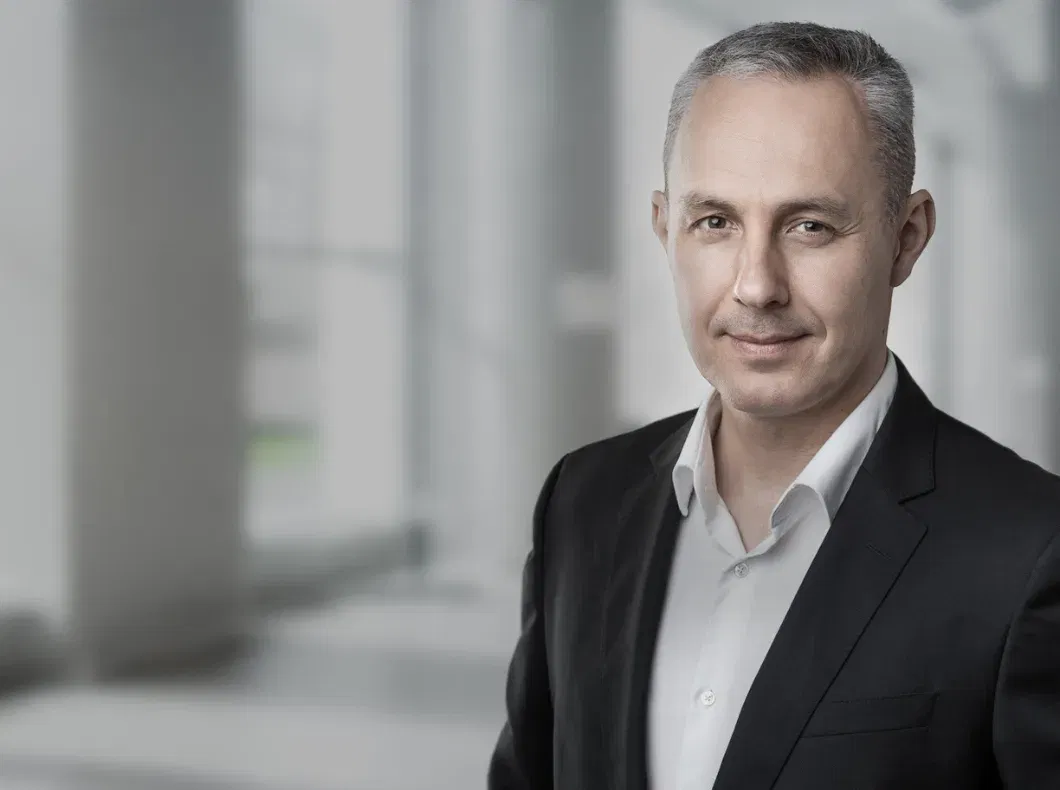
In the interview, he talks about why crowd psychology repeats in every crisis, what Czech education still lacks, and why for every investment it is crucial to know whether the advisor has their own skin in the game.
Who is Petr Novotný
He has been involved in investing for over thirty years. He began his career in the 1990s as a licensed stockbroker and private banker - for fifteen years he managed capital for demanding clients at Merrill Lynch, Citibank, HVB Bank and Eastbrokers.
At the same time, he was at the beginning of investment journalism in Czechia. Since 2006 he was the dramaturge and host of the programs Investorský magazín on ČT24 and Studio BURZA on ČT24, filming over two hundred episodes. He is the founder of Investicniweb.cz, one of the first Czech portals for retail investors, which he led for fifteen years.
Today he focuses on alternative investments and megatrends as a partner at Financial Garant and co-founder of five investment funds.
Why the editorial board was created
Investment content has a real impact on how people handle their money. With that comes responsibility. We want readers to know, with every article, that it has passed through the hands of people who understand it, and that nobody is leading them toward a specific investment or hiding paid promotion.
The editorial board is a step in that direction. Its task is to independently oversee that our content remains accurate, clear and unbiased. Board members cooperate with us independently and their role is simple: to be a guarantee of quality for the reader.
From television studio to social media
For fifteen years you led Investicniweb.cz, one of the first Czech portals for retail investors, and before that you made investment programs on Czech Television and TV Prima. How has what Czech investors want from media - and what they actually need - changed over that time?
I consider the start of investment news and media in Czechia to be autumn 2006, when the first episode of Investorský magazín aired on ČT24. The weekly program combined educational elements with current market events. I filmed over 200 episodes and another 150+ in the studio of Investiční web. We offered retail investors a basic insight into investing and hundreds of interesting interviews with people from the investment business from Czechia and abroad. I was inspired by the news formats on the financial stations CNBC and Bloomberg.
Then attention (not only) of the investing public shifted from TV to web news, and today the young generation consumes investment content mostly on social media. The more knowledgeable part already does so using AI tools. So much for a brief excursion into the past, to better frame the answer to your question.
It still holds that many people, when they imagine investing, picture high and fast returns with minimal risk. But that is almost unattainable in the real investment world. When they go through their first sobering realization that this is not how it works and that hot tips from an investment blogger who has been investing since covid are not "guaranteed", they start looking for more serious sources of information. They also begin to educate themselves more and - as I like to say - do their "homework" before every investment decision.
You have been devoted to investment literacy for fifteen or more years. Where do you see the biggest gap in Czechia? And what do people still not understand, even though there is content about it everywhere?
Despite the ongoing appetite for get-rich-quick tips, I must note that general investment literacy has risen a lot in Czechia over the last two decades. Basic financial literacy has gradually made it into primary and secondary school curricula, but investing itself is still not taught there, which is a mistake. It is fine for young people to know the difference between a credit and a debit card, but unfortunately they learn little about how regular investing and diversification work.
What repeats in every crisis
You have been in the markets for over 30 years - you experienced the dot-com bubble, 2008 and the covid crash. What do these moments have in common in how ordinary investors behaved, and what repeats every time?
Investors are - and I don't want to offend anyone - a herd. Psychological factors still dominate and can override fundamentals. Today we see literally an explosion of so-called momentum investing, when investors simply buy whatever is hot (for example AI stocks), and on leverage. Here we observe enormous volatility and many people can burn their capital very quickly in such a "game".
I myself received a pile of historical lessons that cost me a lot of money. But from every crisis or market crash I tried to learn, so that I would be better prepared for the next crisis, which always comes. I started looking for alternative investments, megatrends and I try to build portfolios with clients for an environment where inflation is a bigger risk than deflation, resources are becoming scarce, global debt is accelerating, threats of military conflicts and social unrest are growing, and state surveillance of citizens is increasing unprecedentedly.
You are interested in longevity, agribusiness, AI or ESG - topics that are heavily marketed today as "stories of the future". How should a retail investor distinguish a real long-term trend from a fashionable wave that someone wants to profit from?
And we are back to investment literacy. To offer investors investments in megatrends or asymmetric investments, I must have bulletproof arguments, otherwise I won't get any money from them into my funds. Even more important for every investment is to know whether the investment advisor or manager has so-called skin in the game - in other words, whether they have their own money in it, which fundamentally increases the credibility of the investment.
What convinced you to accept a seat on the Bulios editorial board, and where do you currently see the greatest opportunity for Bulios in raising investment literacy?
Czechia is a small pond, and it is necessary to support all serious entities that try to increase investment literacy. Bulios certainly ranks among them, and therefore I am honored to be on the editorial board and to start contributing regularly on the content side as well.
-----
Petr Novotný is a partner at Financial Garant and co-founder of five investment funds; he also acts as an angel investor. As a member of the editorial board, he cooperates with us independently and without a fee. We edited the interview for clarity; the content, opinions and wording are his own. The text does not contain investment recommendations.