


Company lured Mbappé away from Nike. Now it's targeting the global market and analysts estimate 40% growth

The Swiss brand was founded in 2010 around a single running outsole. Today it has revenue of over CHF 3bn, a gross margin of 65% and more than CHF 1.2bn in net cash. Yet its shares have lost about a third of their value since the start of the year because the market punished the slowdown in America. Management now promises nearly double revenue by 2029 and has approved the company's first share buyback in its history.
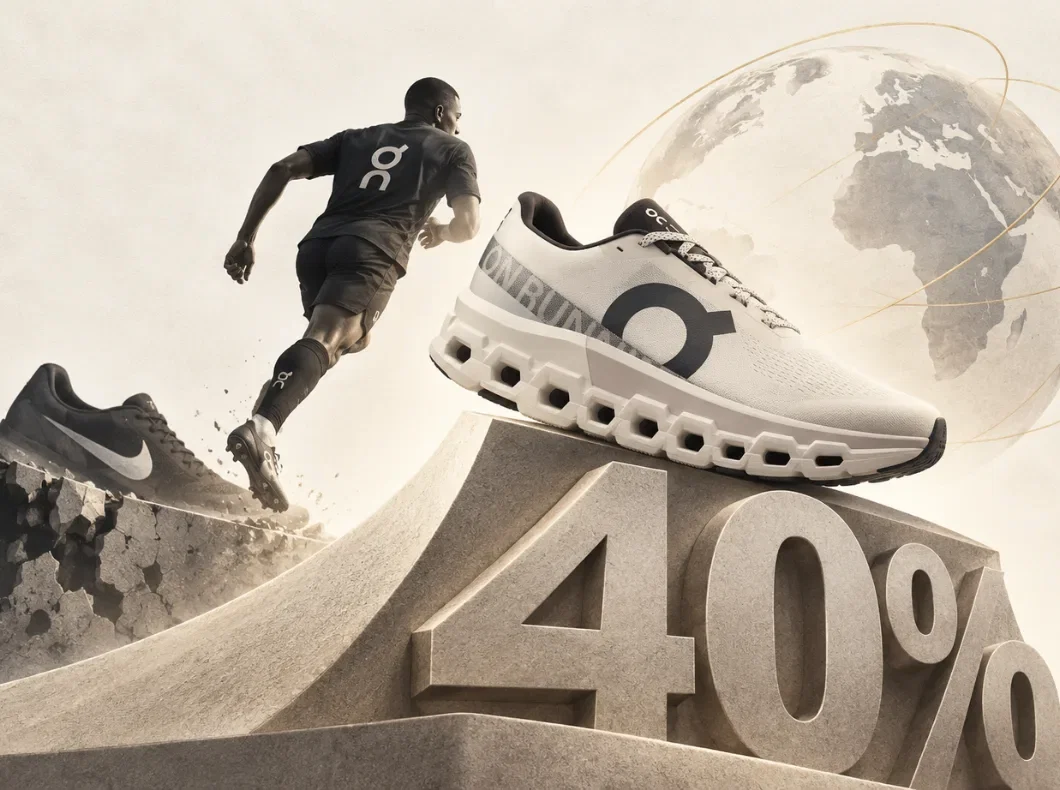
Key points
Gross margin 65.4%: in the second quarter of 2026 it reached a record and is more than 20 percentage points higher than Nike's. The company sells almost exclusively at full price.
Asia and Pacific +54.7%: revenue in the region is growing the fastest in constant currencies and already accounts for over 20% of total revenue. The American market, meanwhile, slowed to 13%.
Direct sales 45.7% of revenue: the company's own e-shop and stores are growing almost three times faster than wholesale and are increasing margin and control over pricing.
Target of CHF 5.6bn in 2029: management expects revenue growth of around 17% per year and an adjusted EBITDA margin of at least 22%.
Forward P/E around 17x: after the share-price drop, the valuation has approached the industry average, even though the company is growing about twice as fast as Adidas.
For nearly twenty years, Kylian Mbappé wore exclusively shoes with the Nike logo $NKE. In July 2026 his contract expired and the American giant, according to sources, did not renew it. Two months later, the Swiss company, which until then had not sponsored a single player in football, announced its new partner. The deal includes a cash and a share component, so the all-time leading scorer in World Cup history became a co-owner of the brand whose boots he will help develop himself.
The move came in the worst year for the company's shares since its stock-market listing. In August they recorded their biggest one-day drop in history after management lowered its revenue growth outlook, and before September's Investor Day they had lost over 40% since the start of the year. Operating results, however, do not reflect the slowdown. In the second quarter the company achieved record profitability and direct sales to customers grew by 34% in constant currencies.
The average analyst target price ranges between USD 41 and 45. Compared with today's price, that implies upside potential of roughly 40%. According to the new management plan, revenue is set to grow more slowly, at around 17% per year until 2029. The new medium-term strategy, the entry into football and a valuation that after the drop approached the industry average argue for share-price growth. Against it stand the American slowdown, the strong Swiss franc and strengthening competition.
Company presentation
Three founders and one outsole
On Holding $ONON was founded in 2010 in Zurich. It was founded by former professional triathlete Olivier Bernhard and his friends David Allemann and Caspar Coppetti. The basis was CloudTec technology, an outsole made of hollow elements that compress on landing and firm up on push-off. In fifteen years, the niche running brand became one of the fastest-growing sports companies in the world.
Key milestones:
2010: company founded in Zurich and first running model with the CloudTec outsole
2019: Roger Federer joins the company as an investor and strategic partner, opening the path into tennis
September 2021: initial public offering on the New York Stock Exchange NYSE
2023: Investor Day with the goal of doubling revenue by 2026
2025: revenue exceeds CHF 3bn for the first time
May 2026: founders Allemann and Coppetti take over leadership as co-CEOs
September 2026: signing with Mbappé and new strategy until 2029
Footwear today accounts for the decisive part of revenue. Apparel is the fastest-growing segment, and the tennis collection is experiencing rapid growth thanks to players such as Iga Świątek, Ben Shelton and João Fonseca.
Business model: premium price instead of volume
The company's strategy rests on a simple idea. On does not want to be the biggest sports brand, it wants to be the most expensive and the most desirable. According to co-founder Caspar Coppetti's comments to CNBC, the average price level of products has risen from USD 145 to USD 270 since Investor Day 2023. At the same time, the company actively limits discount campaigns and controls how much goods it delivers to retail partners.
Three pillars of the model:
Full-price sales: the company avoids clearance sales that would weaken brand perception. If demand at partners slows, it prefers to deliver less goods to them.
Growing share of direct sales: its own e-shop and branded stores bring higher margin, control over pricing and customer data.
Innovations developed with athletes: elite athletes participate in product development. Mbappé has now been given the same role.
Revenue split by channel in the second quarter of 2026:
Channel | Q2 2026 revenue (CHF m) | Reported growth | Growth in constant currencies | Share of revenue |
|---|---|---|---|---|
Direct sales (DTC) | 388.4 | 26.0% | 34.3% | 45.7% |
Wholesale | 461.9 | 4.8% | 12.7% | 54.3% |
Total | 850.3 | 13.5% | 21.6% | 100% |
Direct sales grew almost three times faster than wholesale and its share reached a record for the second quarter. The result is a rising gross margin, because the company keeps a larger part of the price on every pair of shoes sold.