


Microsoft Just Showed Who Will Bear the Losses in the AI Boom

The worst week of the AI boom wiped out a trillion dollars, and investors fled to the company spending the most on AI. One terminated contract in England reveals why that makes sense—and where the catch is.
Key points
In a single week, a trillion dollars disappeared from the market value of the 20 largest AI companies, while Microsoft closed at a record high.
A clause in a $43.8 billion contract changes the entire meaning of Microsoft’s hundred-billion-dollar orders.
The canceled data center in Essex, England, hit a company that is just heading for the stock market.
Microsoft will spend roughly $175 billion on infrastructure this year, but its reported figure fell without any spending cuts.
Last year, the stock fell 35% after its October 28 report despite strong results—and the same date is coming around again this year.
The week the money fled to the biggest spender
Minulý týden měl AI boom poprvé opravdu špatnou náladu. Dvacet nejhodnotnějších AI a čipových firem světa ztratilo během několika dní přes bilion dolarů tržní hodnoty. SK Hynix propadl za jediný den o více než 10 %, Samsung o 8,7 % a neocloud CoreWeave $CRWV uzavřel týden s mínusem 25 %. Goldman Sachs v poznámce pro klienty napočítal, že hedge fondy prodávaly AI akcie druhým nejrychlejším tempem za více než rok a peníze přesouvaly z menších AI jmen do "stabilnějších" velkých technologických firem.
And this is where the paradox begins. Microsoft $MSFT closed at a record $543.45 on Tuesday, October 13, that same week: its first record in a year, up 54% from its June low, with $1.4 trillion in value added over four months. On Friday, it finished at $529.05, less than 3% below the record, while its suppliers were losing tens of percent.
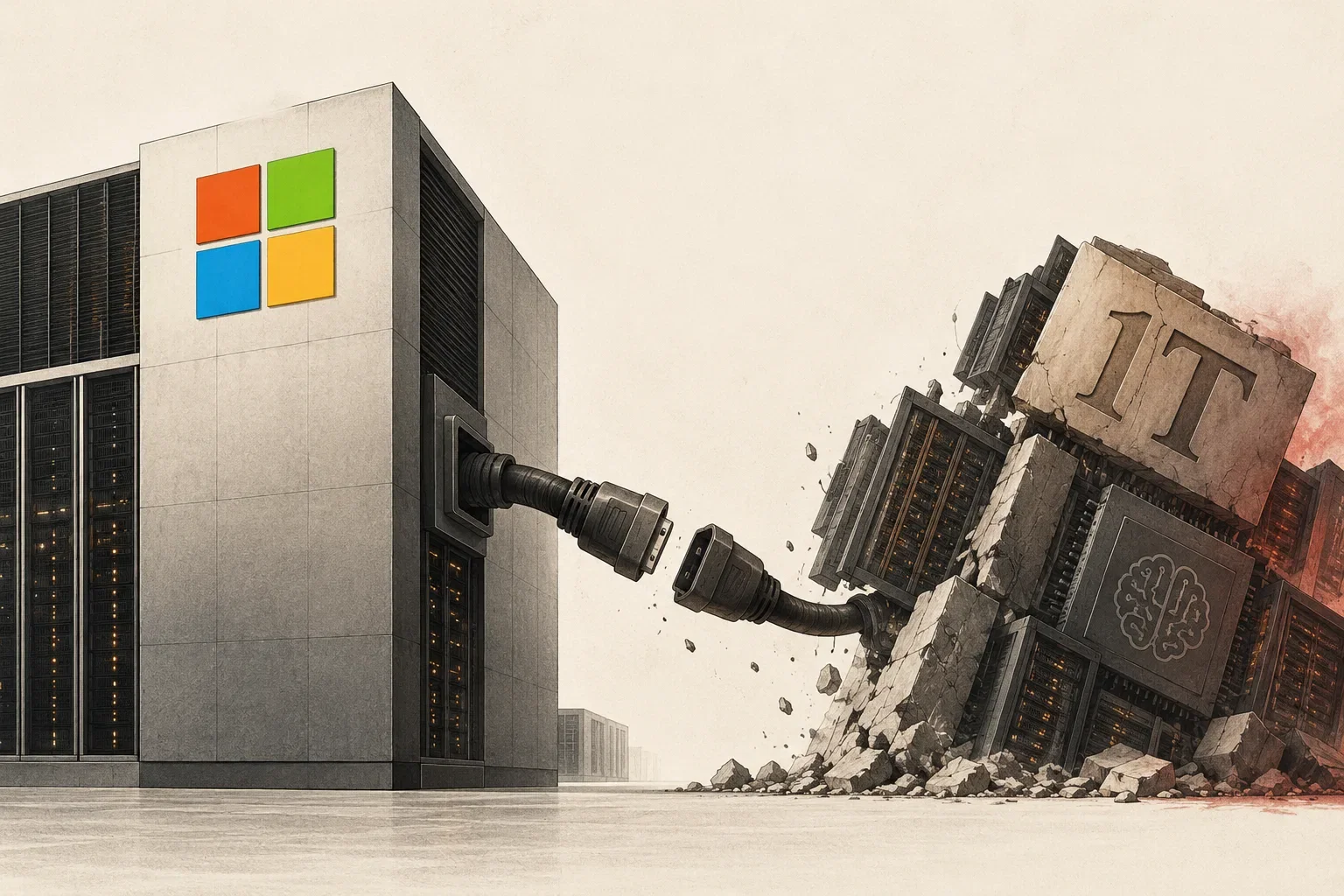
So the market fled its fear of AI financing straight into the arms of the company financing AI the most. Microsoft is investing roughly $175 billion in infrastructure this year, more than anyone else in the world. If anyone should bear the risk that this buildout won’t pay off, it should be Microsoft. The market sees things differently, though. And one terminated contract in England shows why the market may be right—and why that is also a problem.