


These 4 Stocks Are Undervalued by 30%

The market can be unforgiving even to companies that continue to generate billions of dollars in cash. Some stocks are now down tens of percent from their highs, even though their fundamentals hardly justify such pessimistic valuations. According to the Fair Price Index, several well-known stocks are trading roughly 30% below their fair value. Is this an opportunity—or a trap for value investors?
Key points
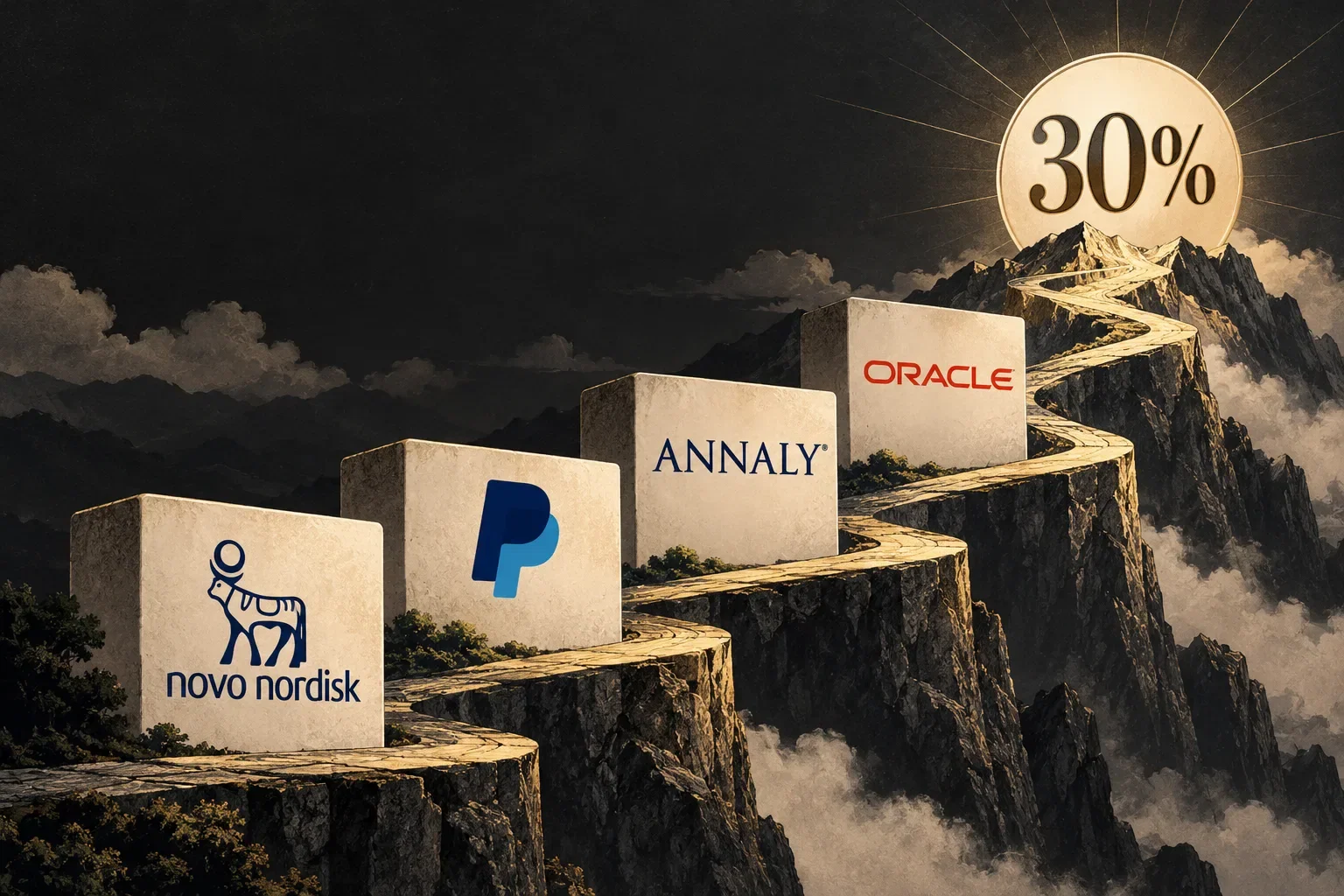
According to the Fair Price Index, four well-known stocks are trading approximately 30% below their fair value. Some have fallen more than 70% from their all-time highs. Is investor pessimism justified?
Billions of dollars in cash and strong operating margins are no longer enough to satisfy investors. The market is now valuing some exceptionally profitable companies as if they had no future growth.
One of the companies analyzed received a takeover offer at a nearly 30% premium. Management rejected it, and the stock is now trading below the offered price. What does that say about its true value?
A dividend yield above 16% may look like an exceptional opportunity at first glance. But for this type of company, entirely different metrics matter than for ordinary dividend stocks.
Record revenue growth and contracted orders worth hundreds of billions of dollars may not be enough to lift a stock. How could massive AI investments turn an apparently cheap company into a risky bet?
The stock market in 2026 is clearly separating winners from losers. While capital flows into a narrow group of companies involved in building AI infrastructure, a number of established companies are experiencing one of the toughest periods in their history. Their stocks are falling not because they have stopped making money, but because the market has stopped believing in their growth story. At times like these, the market price can drift further from a company’s intrinsic value than its fundamentals would warrant.
As a screening tool, we used the Fair Price Index on Bulios, which calculates a stock’s fair value based on fundamental data and compares it with the current market price. For the four companies we’re looking at today, the index shows a discount of roughly 30%. But each belongs to a completely different world. They include a pharmaceutical giant, a fintech platform, a mortgage REIT with a double-digit dividend yield, and a software company that has become one of the largest builders of AI data centers.
However, a low valuation is never, by itself, a reason to buy. The market often has a good reason why a particular stock is cheap. The goal of this analysis is therefore not just to point out the discount, but to examine exactly what the market is pricing in for each company, what risks are reflected in the price, and what would have to happen for the gap between the price and fair value to close.