


GM Bought Back 45% of Its Own Shares. Why Is It Still So Cheap?

Three pieces of good news in one day, yet the stock suffered its worst decline in 15 months. The market wasn’t looking at General Motors’ results, but at what lies behind its record cash flow—and whether the $20 billion buyback is doing what it promises.
Key points
GM beat revenue and earnings estimates, announced a record $20 billion buyback, and its stock fell nearly 7%
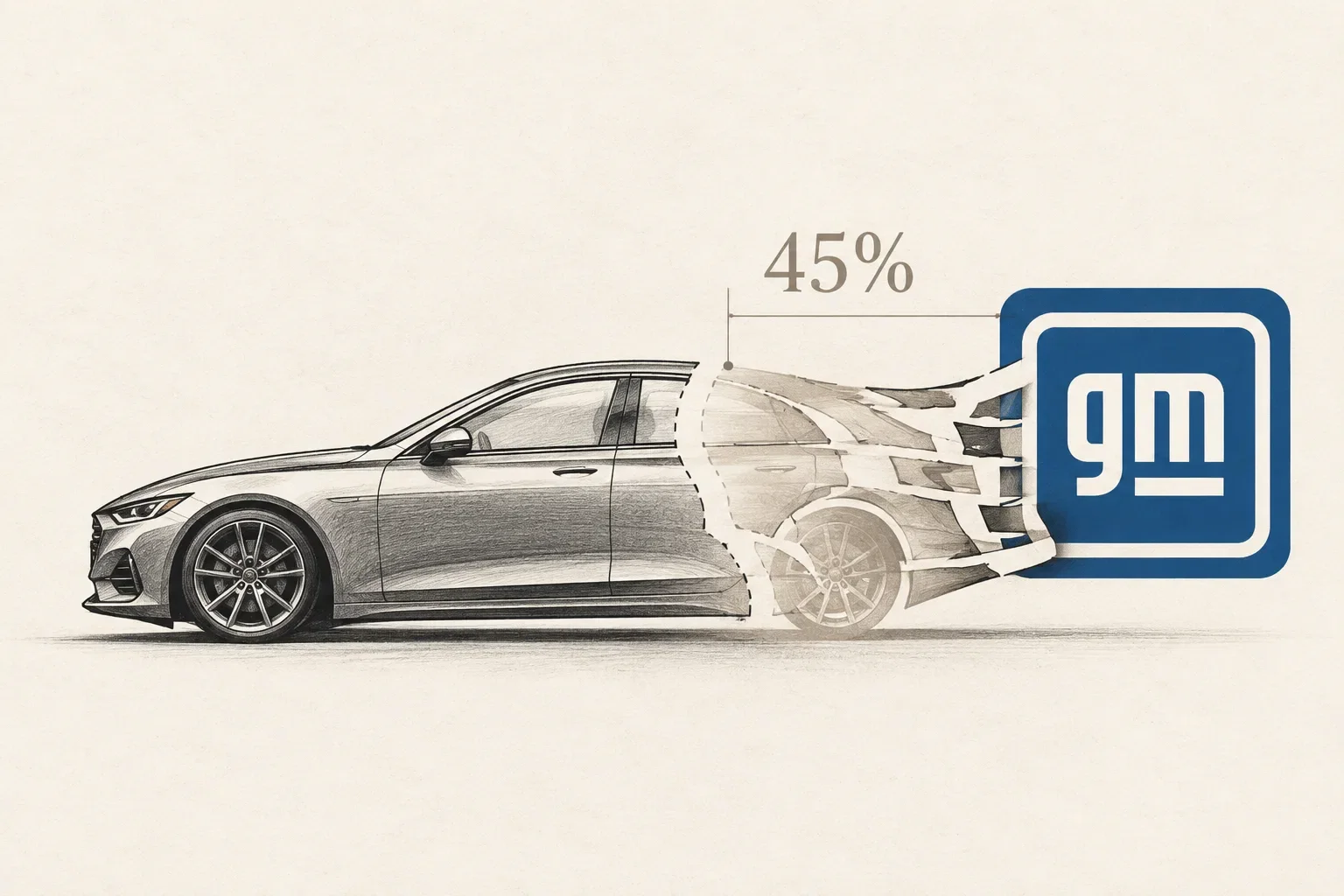
The automaker has retired 45% of its own shares over the past decade, yet its earnings multiple continues to shrink
EPS grew 32%, while operating profit grew just 22%—and there’s one specific reason for the difference
The increased cash flow outlook rests on three items that, according to the CFO, won’t recur next year
The UAW union reacted to the buyback within hours, and the bill for it could come due in 2028
The day $20 billion wasn’t enough
General Motors $GM delivered the kind of quarter every CFO would want on October 20. Revenue of $50.0 billion beat estimates by $1.5 billion, adjusted EPS of $3.70 beat the $3.56 consensus, and operating income, or EBIT, grew 22% year over year to $4.1 billion. The North American margin jumped from 6.2% to 8.7%.
On top of that, the company raised its free cash flow outlook to $11.5 billion to $12.5 billion and announced the largest share buyback in the history of the U.S. auto industry: according to the earnings press release, the board approved a $20 billion authorization, or roughly 30% of the company’s entire market value.
Yet the stock closed at $77.09, down 6.84%. It was its worst day since July 2025, and the share price ended up 16% below this year’s record of $91.85. Three announcements that would normally have been enough to lift the stock lost out to one the company only partly spelled out. What exactly did investors hear in it?