


The Safest Stock in Your Portfolio Just Took a Hit from Brazil

Coca-Cola raised its outlook for the third straight time, yet its stock fell. The numbers show that growth for the “American safe haven” is now driven mainly by Brazil, Mexico, and India—and Brazil’s real just lost nearly 12% in a single day.
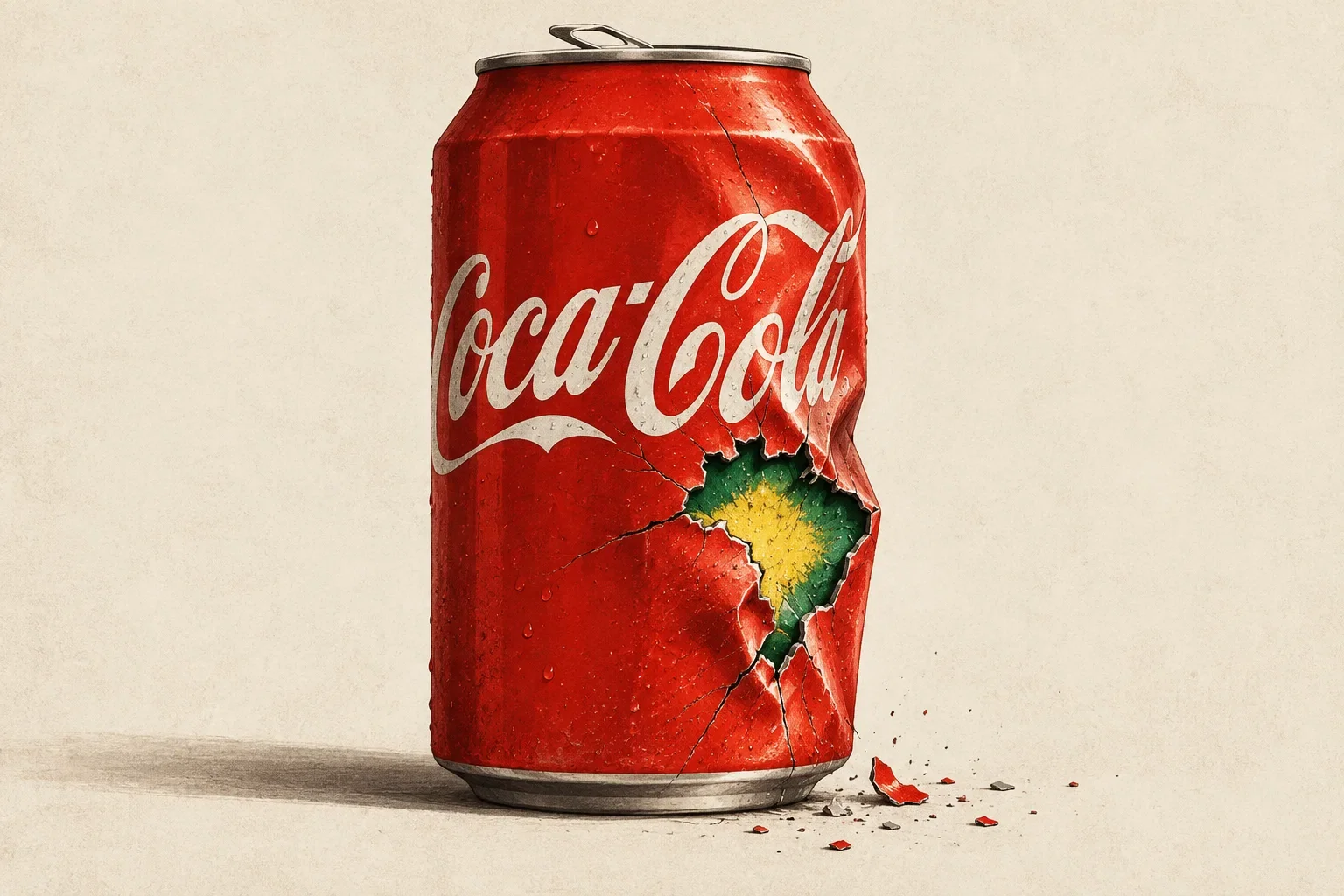
Key points
Coca-Cola raised its outlook for the third straight time, beat estimates, and yet its stock closed lower than the day before
North America had zero volume growth in the third quarter, while one region added 29% to operating profit
Not all of the 11% growth in earnings per share came from selling drinks; some of it came from something entirely different
On the conference call, the CFO admitted that the fresh outlook does not take one major event into account at all
The company is facing a tax dispute whose potential impact it once estimated at around $18 billion
The day when good news didn’t count
Coca-Cola $KO did exactly what was expected of it on October 27. Third-quarter revenue rose 7% to $13.4 billion, comparable earnings per share rose 11% to $0.91, and management raised its full-year outlook for the third straight time: organic revenue growth of at least 5%, comparable earnings-per-share growth of at least 11%, and free cash flow of at least $13 billion. Both figures beat analysts’ estimates.
And yet the stock closed at $91.18, lower than the day before. There’s nothing mysterious about that. Coca-Cola is up 30.4% this year, while the S&P 500 index has gained just 12.1% over the past 12 months. Investors are now paying a P/E of 27.4 for a stock with a beta of 0.32—that is, a stock that moves three times less than the market. That’s above the company’s five-year average (25.5) and well above the non-alcoholic beverage industry average (19.7).
In other words, the market had already priced in a good quarter. And beneath the surface of the earnings report is something that’s harder to factor into the price of a “boring safe haven.”