


Cheap Money in Europe Is Over. These Stocks Will Feel It Before Earnings Are Out

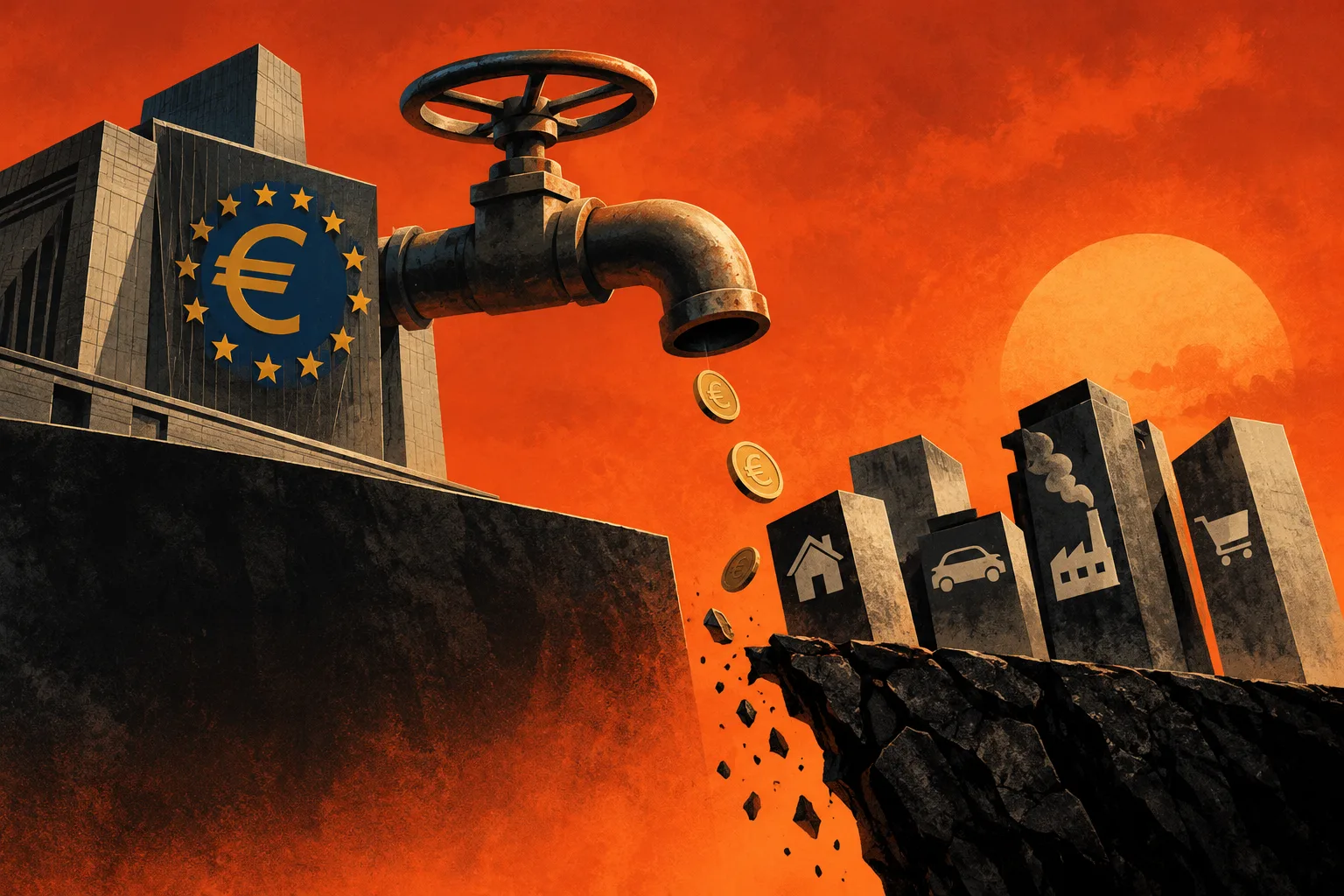
The ECB has raised rates only twice, and yet eurozone banks are turning off the credit tap at the fastest pace in fifteen years. Which companies in your portfolio will be hit first, who will benefit instead, and where will it show up in earnings before the market prices it in?
Key points
The ECB published a survey of 159 eurozone banks, and its numbers are reminiscent of the start of a credit crisis.
Demand for mortgages plunged by 27%, and banks expect an even worse figure for the fourth quarter.
Data collection ended on October 6, before French yields broke through 5% and before the sell-off in AI stocks.
The only segment where banks want to lend more is precisely the one global investors are pulling back from.
Europe’s largest residential landlord has lost around 33% this year, without a single piece of bad news about rents.
A credit crisis no one declared
While markets spent October debating whether the AI bubble would burst, the European Central Bank quietly published a document the average investor doesn’t read. It’s a quarterly survey of lending conditions among 159 eurozone banks. And the numbers look like the start of a credit crisis, even though no one has declared one.
A net 9% of banks tightened their terms for corporate loans in the third quarter, even though the banks themselves had expected just 5% back in the summer. Instead of the expected 4% increase, corporate demand for loans fell by 6%. Demand for mortgages plunged by 27%, while banks had expected 12%. And the share of rejected applications increased across all segments: households, businesses, and consumer loans. Banks expect even worse numbers for the fourth quarter: a 36% plunge in mortgage demand and further tightening across all categories.
But the most important information is hidden in a footnote. Data collection ended on October 6. That was two weeks before France’s 10-year yield broke through 5%, and a week before the global sell-off in AI stocks. The survey therefore captures a world that was still relatively calm. The reality at the end of October is probably worse than the numbers suggest.